Banx Media Platform logo
HEALTH

The Unsettled Ledger Between Prevention and Possibility

Hormonal contraceptives may slightly raise breast cancer risk in some users. The evidence is nuanced — not a verdict, but a signal that requires clarity, not panic.

S

Siti Kurnia

EXPERIENCED
5 min read
12 Views
Credibility Score: 84/100
The Unsettled Ledger Between Prevention and Possibility

We like to narrate contraception as mastery over uncertainty — a calendar rewritten on our own terms. But inside that cultural comfort, there is a quieter conversation happening in oncology and epidemiology labs: the subtle change in breast tissue risk over a lifetime of hormonal exposure.

Recent reporting this month shows once again how fragile the evidence feels. Some hormonal contraceptive formulations — pills, rings, implants — appear to correlate with higher relative breast cancer risk. It is not a single smoking gun, nor a certainty, nor a blanket warning. It is a statistical texture: small risk difference, multiplied across millions of users, producing signals that epidemiologists must take seriously.

This tension — autonomy versus biology — mirrors the broader shift in health literacy. Patients are increasingly reading the data themselves. Researchers are increasingly publishing nuance instead of slogans. And clinicians now must perform a very modern balancing act: preserving freedom of choice while acknowledging what is not yet known.

Because it is also true that pregnancy itself, and childbirth later in life, also carry breast cancer risk variables. And contraception prevents pregnancy. So even when one curve in the graph bends up a little, another curve may bend down. Risk is a network, not a headline.

There is no moral here. Only this: health systems and regulators need to keep funding large longitudinal cohorts, and journalists need to keep reminding the public that “increased risk” is a relational phrase. For most healthy women, the absolute risk remains low. But the data deserves sunlight — not fear, not denial, but illumination. AI image disclaimer

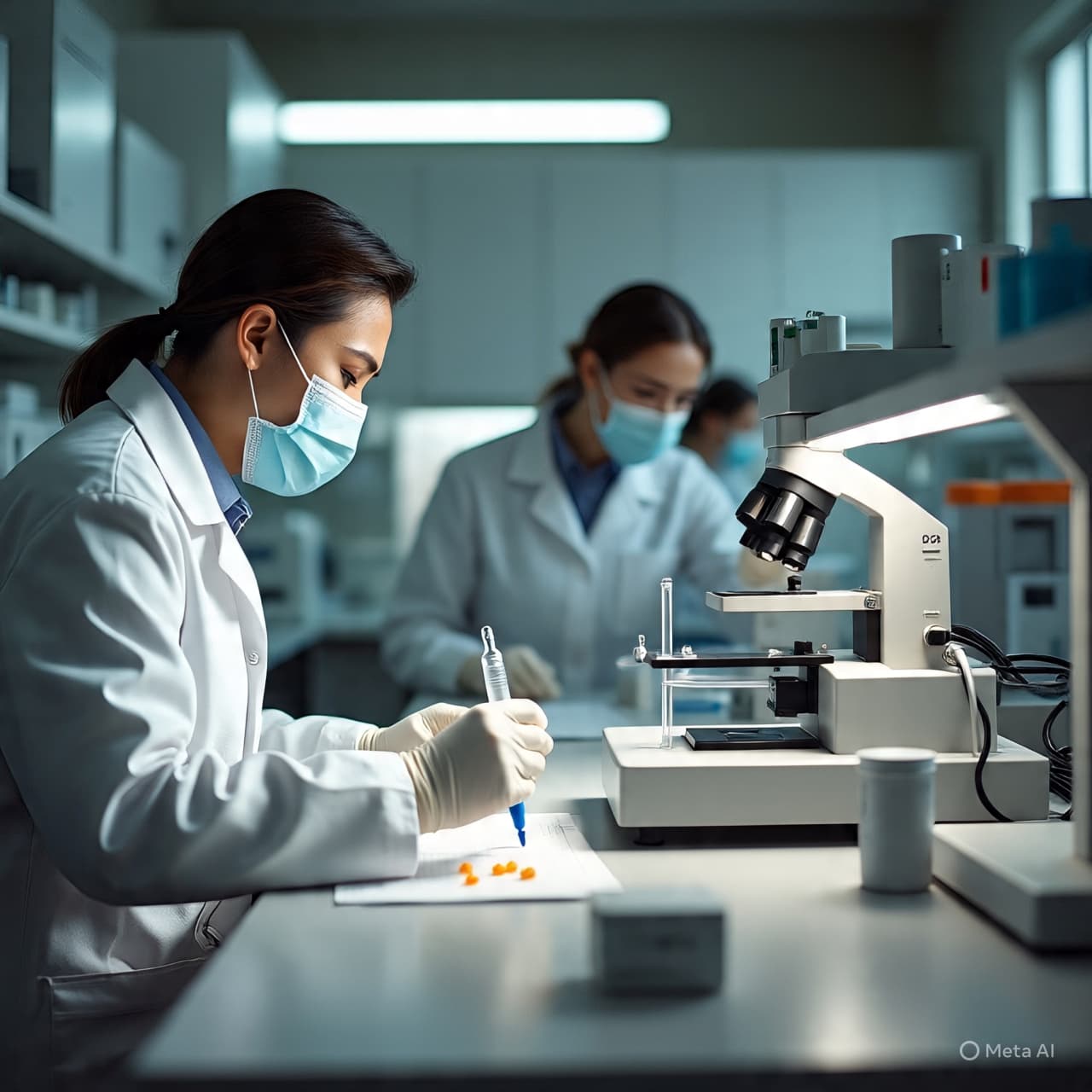
Images are conceptual and may not represent real patients.

### Sources

Reuters The Guardian Science News Nature

Published by Banx Network. This article is part of the Banx decentralized media programme, powered by the BXE token on the XRP Ledger.

#Lab#Hormonal#birth
Decentralized Media

Powered by the XRP Ledger & BXE Token

This article is part of the XRP Ledger decentralized media ecosystem. Become an author, publish original content, and earn rewards through the BXE token.

Newsletter

Stay ahead of the news — and win free BXE every week

Subscribe for the latest news headlines and get automatically entered into our weekly BXE token giveaway.

No spam. Unsubscribe anytime.

Share this story

Help others stay informed about crypto news

Related articles

Keep exploring the latest stories.

View more
When Britain's Laboratories Turn Toward Tomorrow, Artificial Intelligence Finds New Ground in Medical Discovery

When Britain's Laboratories Turn Toward Tomorrow, Artificial Intelligence Finds New Ground in Medical Discovery

British researchers are expanding the use of AI in drug discovery, using advanced models to analyze biological data and accelerate early-stage research

Walking on Fire: A Call for Safer Paths

Walking on Fire: A Call for Safer Paths

A grandfather faces the amputation of both legs after tripping on a scorching hot footpath, highlighting the severe risks of extreme heat on urban infrastructu…

Beneath America's Pharmaceutical Horizon, Global Drugmakers Build New Factories While Science Follows Investment Westward

Beneath America's Pharmaceutical Horizon, Global Drugmakers Build New Factories While Science Follows Investment Westward

Global pharmaceutical companies are committing roughly $500 billion to U.S. manufacturing and research as they expand domestic production capacity.