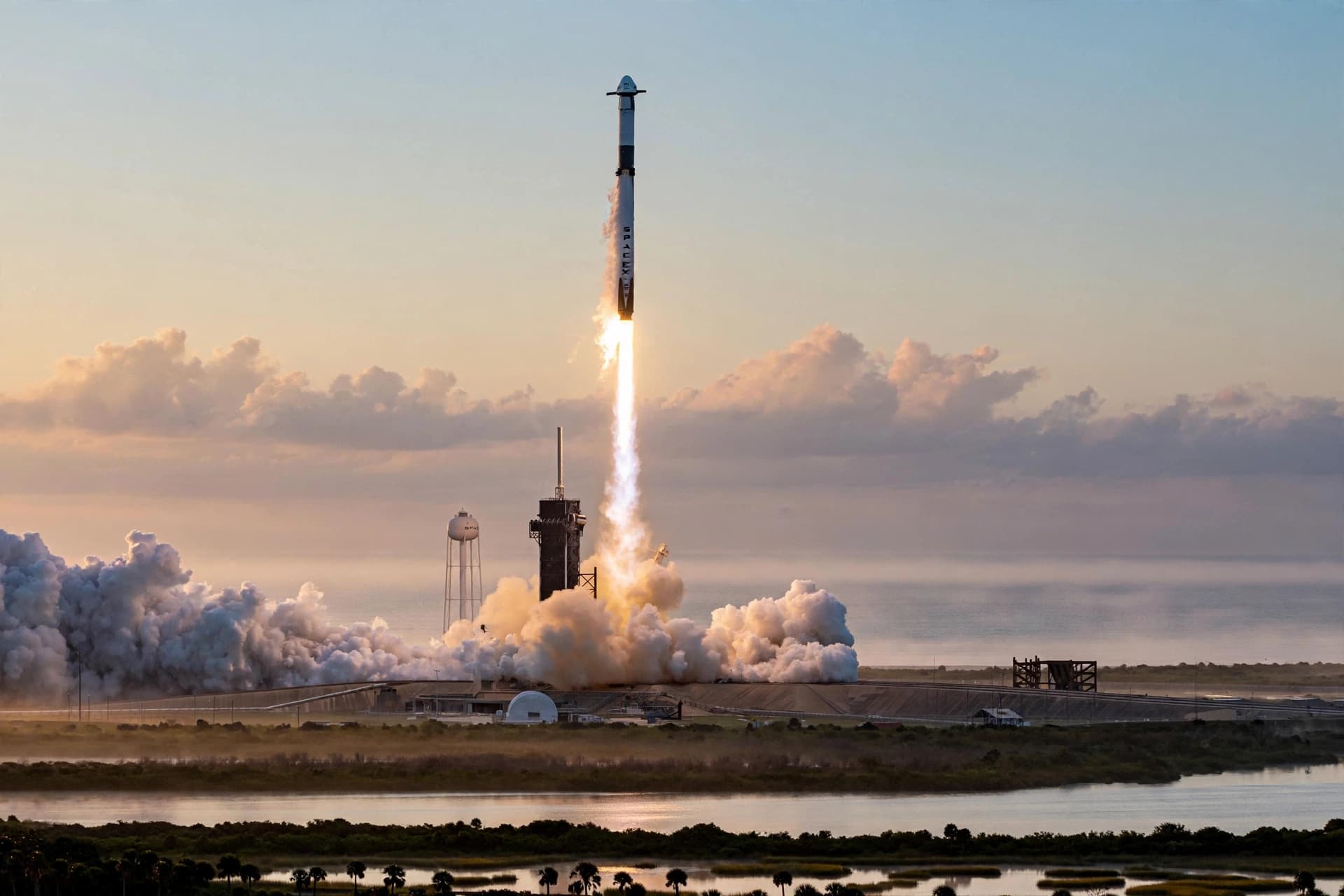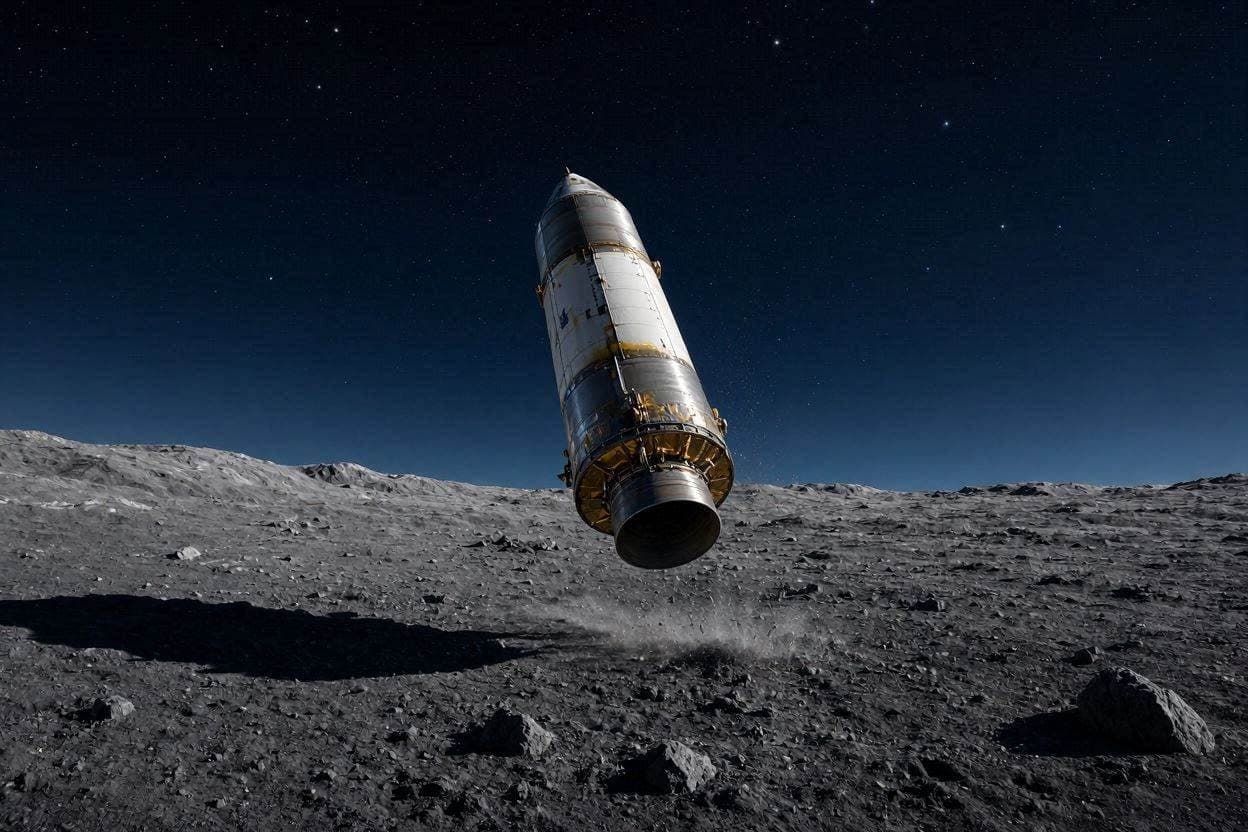
In the silent theater of space, where orbits are dictated by gravity and time, human artifacts often outlive their original purpose. Tonight, a discarded upper stage of a SpaceX Falcon 9 rocket, weighing approximately 9,000 pounds, is set to collide with the Moon’s surface. This event, while not a planned scientific experiment, offers a rare and somewhat eerie spectacle for those who know where to look. It is a reminder that our reach into the cosmos leaves behind traces, even in the most remote corners of the solar system.
The impact is expected to occur near the Einstein Crater on the lunar far side, striking at a speed of roughly 5,400 miles per hour. Because the collision will happen on the side of the Moon facing away from Earth, direct visual observation of the impact itself will be impossible for ground-based telescopes. However, the resulting plume of dust and debris may rise high enough to be detected by orbiting spacecraft, such as NASA’s Lunar Reconnaissance Orbiter. For amateur astronomers, the event is more about tracking the object’s final journey than witnessing the crash itself.
This incident highlights the growing issue of space debris and the challenges of managing defunct hardware in cislunar space. Unlike low-Earth orbit, where atmospheric drag eventually pulls objects back to burn up, the Moon has no atmosphere to slow down incoming projectiles. As commercial spaceflight expands, the number of spent stages and satellites in these trajectories increases, raising questions about long-term sustainability and the preservation of lunar heritage sites.
SpaceX has acknowledged the situation, noting that the stage was left in a disposal orbit intended to avoid conflict with operational missions. However, the complex interplay of gravitational forces from the Earth, Moon, and Sun eventually led to this unintended encounter. The company continues to work on improving its de-orbiting procedures for future missions, aiming to reduce the footprint of its operations in deep space.
For scientists, the impact presents an unexpected opportunity. Although unplanned, the crash will generate seismic waves and ejecta that could provide data on the Moon’s subsurface structure. Analyzing the resulting crater and dust cloud can offer insights into the composition of the regolith in that specific region. It acts as a natural probe, revealing layers of material that have remained untouched for billions of years.
Public interest in the event has been mixed, with some expressing concern over the "littering" of space, while others view it as a fascinating astronomical occurrence. Educational institutions and astronomy clubs are using the occasion to discuss orbital mechanics and the history of space exploration. It offers a tangible example of how objects move in space, making abstract concepts more accessible to students and enthusiasts alike.
As the clock ticks down to the predicted impact time, the astronomical community watches with keen interest. The event serves as a case study in the unintended consequences of space exploration. It underscores the need for international cooperation in tracking space debris and developing better end-of-life strategies for spacecraft.
Tonight’s lunar impact is a brief but significant event in the ongoing narrative of human presence in space. While the crash itself remains hidden from direct view, its implications are clear. It reminds us that every launch leaves a mark, and responsible stewardship of the cosmic environment is as important as the exploration itself.
AI Image Disclaimer: The visual elements accompanying this report are AI-generated interpretations designed to illustrate the orbital and impact context of the story.
Sources: NPR Space.com Phys.org
Published by Banx Network. This article is part of the Banx decentralized media programme, powered by the BXE token on the XRP Ledger.