There is a romance to the idea that life on Earth arrived from the sky, carried in the frozen heart of a comet. It has the shape of a good story: a wandering body of ice and dust, rich with the chemistry of life, finding its way to a young planet and leaving behind the ingredients for something extraordinary. The romance is not new. Scientists have speculated about cometary delivery for decades, and missions like Rosetta have confirmed that comets do indeed carry organic compounds—glycine, phosphorus, hydrogen cyanide—that matter for prebiotic chemistry .
But a new study suggests that the romance, however appealing, is unlikely to have been realized in the way we imagined. Researchers at the University of Cambridge's Institute of Astronomy, led by Dr. Richard Anslow, modeled the delivery of these compounds by short-period comets and found a series of obstacles that make the scenario improbable . The problem is not that comets lacked the right molecules. The problem is what happens when those molecules arrive.
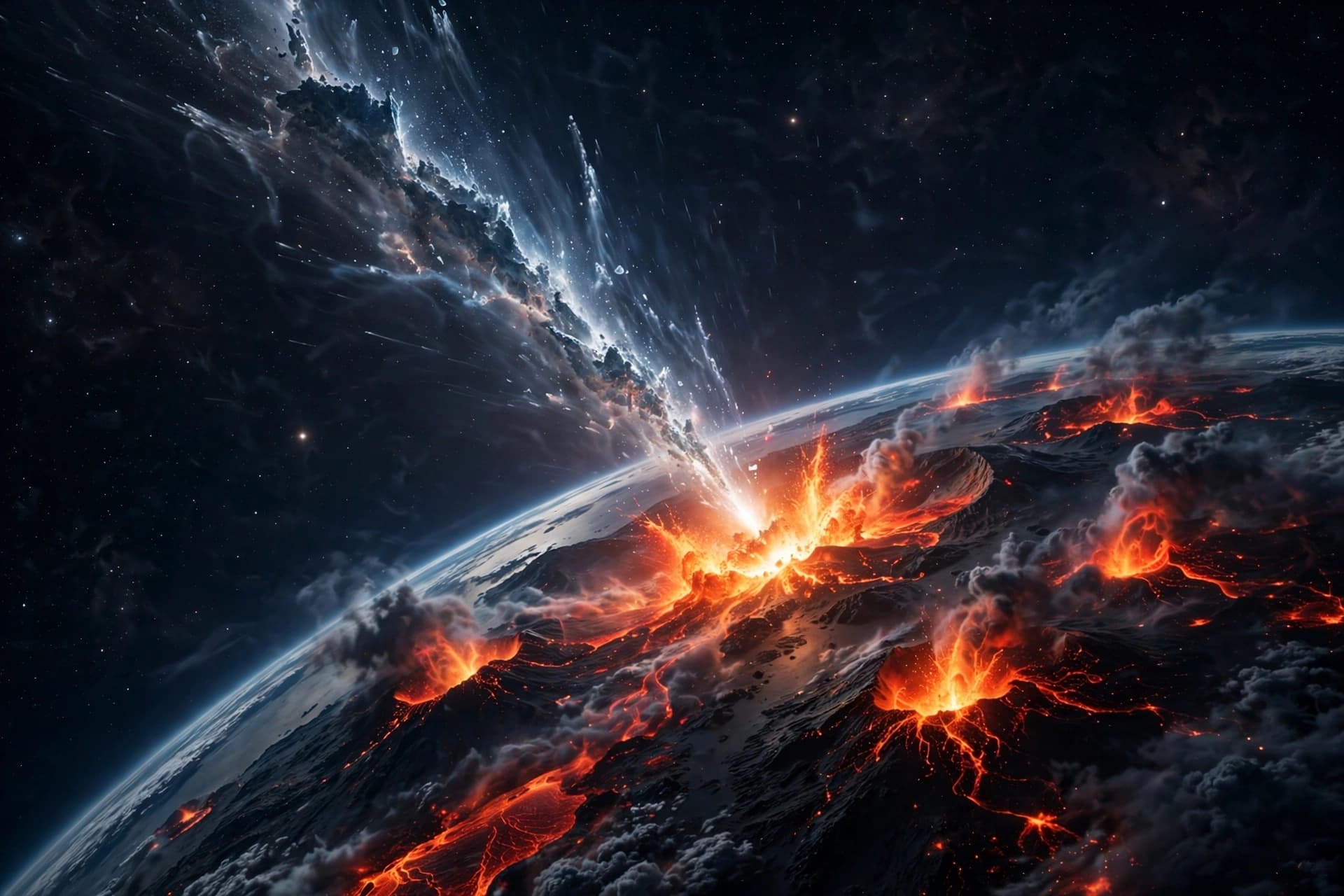
Comet impacts are violent events. A comet striking Earth does not gently deposit its cargo; it arrives at hypervelocity, generating temperatures and pressures that destroy fragile organic compounds. The very chemistry that makes comets interesting is also, in the context of impact, extremely vulnerable. Anslow and his colleagues focused on hydrogen cyanide, a molecule central to many prebiotic synthesis pathways, and examined whether enough of it could survive the journey from comet to surface .
Their conclusion was that the window for survival is narrow and the supply is insufficient. Smaller comets, which might impact at lower velocities and thus preserve more organic material, tend to break apart as they enter the inner solar system, torn by tidal forces and rotational instability. Larger comets, which survive the journey, strike with more energy, and the fraction of their organic payload that survives is correspondingly small. The bombardment rate also declined over time, meaning that the period during which comets could have delivered meaningful quantities of prebiotic material was limited .
The researchers are careful not to claim that cometary delivery was impossible. They call it "exceedingly rare," which is a phrase that leaves room for the occasional lucky strike . But rare is not the same as reliable, and the origin of life required a reliable supply of the right chemistry in the right place at the right time. If comets were not that supply, then the chemistry must have come from somewhere else—perhaps from Earth itself, or from asteroids, or from processes we have not yet fully understood.
This is not the first time the cometary delivery hypothesis has faced scrutiny. A 1990 paper in Science concluded that organics would not survive impacts at velocities greater than about 10 kilometers per second, and that even comets as small as 100 meters in radius could not be slowed sufficiently by a standard atmosphere . The new work does not overturn that finding so much as refine it, incorporating more recent data on comet dynamics and impact physics. The picture that emerges is not of a single decisive delivery event but of a long and inefficient process, one that may have contributed some material but probably not enough to explain the origin of life's chemistry.
There is something sobering in this. The comet-as-seed hypothesis was attractive partly because it was elegant—a neat solution to a hard problem. The new work suggests that the problem is harder than elegance allows. The chemistry of life on Earth may have been assembled here, from materials that were already present, through processes that were messy and gradual and entirely local. That is a less romantic story, but it may be closer to the truth.
Anslow himself described the old view as a "get out of jail free card," a way of imagining that a planet could be seeded with everything it needed from elsewhere . The new research suggests that the card was never in the deck. Comets did carry organic compounds. They did strike the Earth. But the compounds did not survive, or did not survive in sufficient quantities, and the story of how life began must be told without them.
The universe, it turns out, is not in the habit of handing out free passes. The chemistry of life had to be earned, one reaction at a time, on a young and restless planet. That is a harder story to tell, but it has the virtue of being ours.
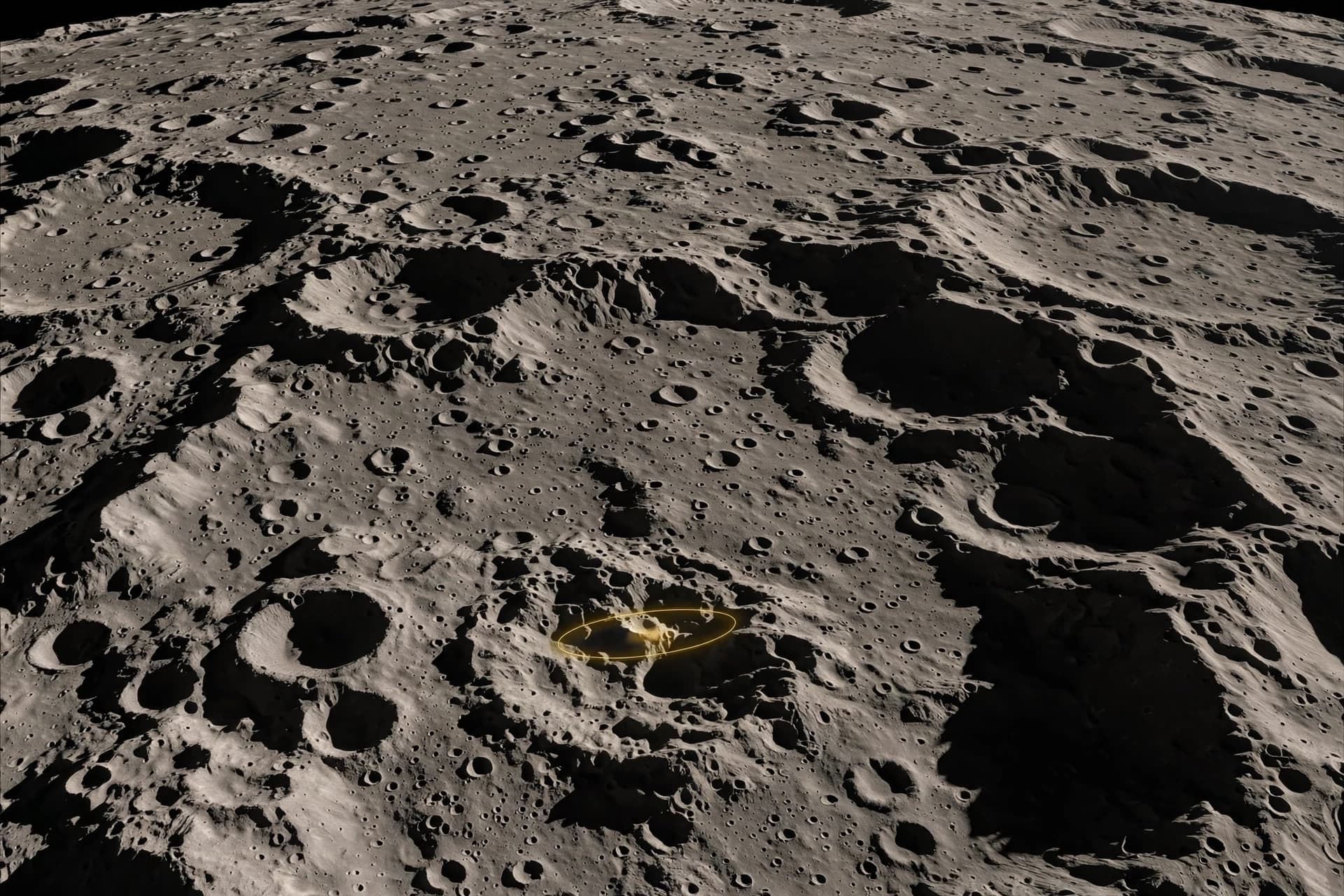
Image note: The visual content accompanying this article was generated by artificial intelligence and is not a photograph of the comets or research described.
Sources: Universe Today, Scientific Reports, University of Cambridge Institute of Astronomy, Science
Published by Banx Network. This article is part of the Banx decentralized media programme, powered by the BXE token on the XRP Ledger.