
Key Highlights
- Discovery:Astronomers have identified a unique cosmic phenomenon resembling a crystal ball.
- Gravitational Lensing:This effect allows for the observation of distant cosmic structures.
- Broader Impact:Findings contribute to understanding dark matter and galactic evolution.
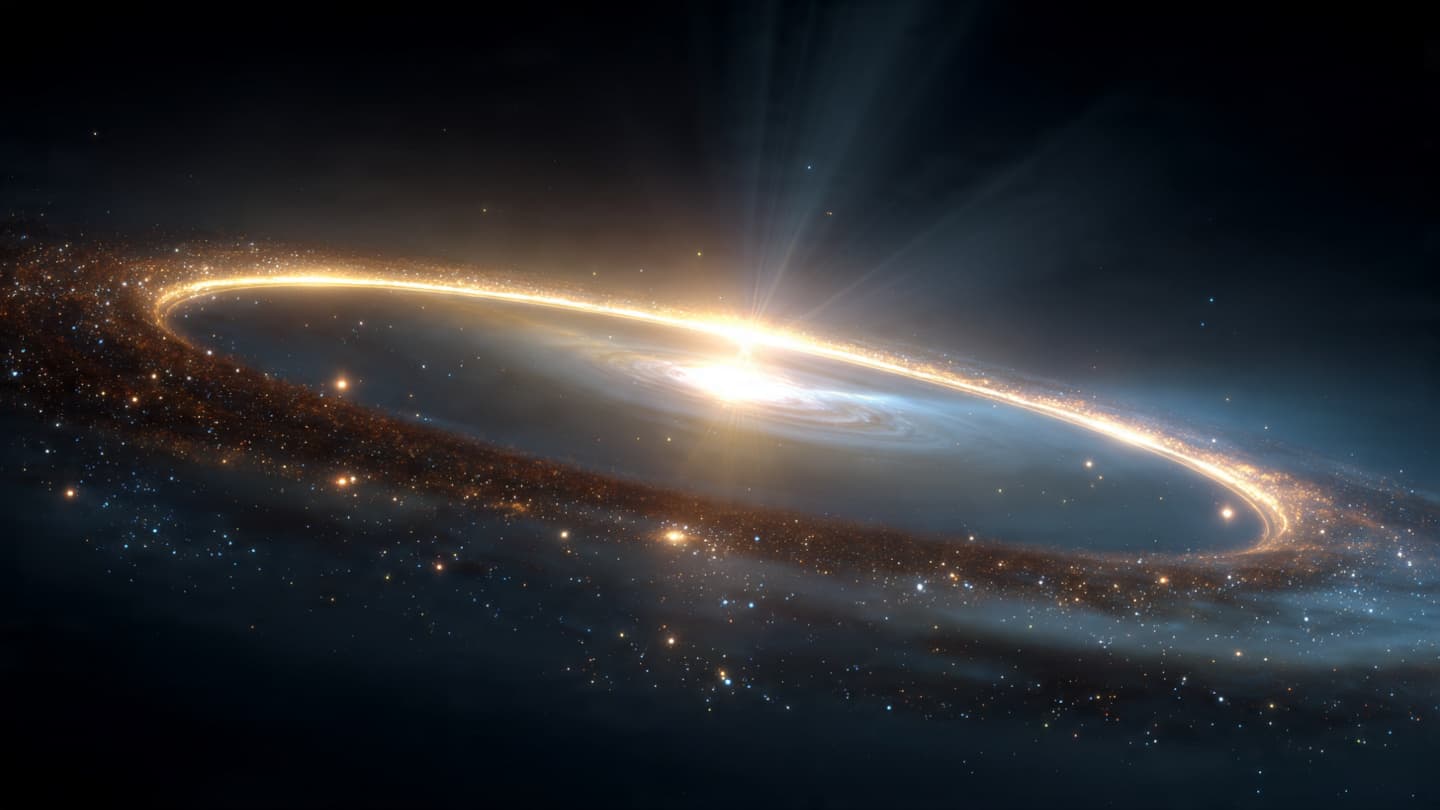
Astronomers have recently made a groundbreaking discovery that offers a unique glimpse into the universe, likened to a cosmic crystal ball. This phenomenon, tied to gravitational lensing, allows researchers to observe multiple perspectives of the cosmos, revealing insights into both its past and future. Gravitational lensing occurs when a massive object, such as a galaxy or galaxy cluster, bends the light from more distant sources, creating distorted images that can be studied in detail.
The specific astronomical object under discussion has garnered attention due to its unusual configuration, which provides a rare opportunity for scientists to investigate distant cosmic structures while simultaneously learning more about the massive object acting as the lens. This dual perspective is akin to looking through an intricate crystal sculpture, where light has traveled across billions of years, offering a wealth of information about the composition, motion, and history of galaxies that existed in a much younger universe.
Such discoveries are invaluable as they transform gravity into a natural telescope. Instead of relying solely on human-made instruments, researchers can utilize the universe's own architecture to magnify distant targets, revealing hidden details that would otherwise remain obscured. This method not only enhances our understanding of the cosmos but also provides a more profound appreciation of the intricate workings of gravitational forces.
The implications of this research extend beyond mere observation. Each gravitational lens serves as a crucial piece in the larger puzzle of understanding dark matter, galactic evolution, and the distribution of mass throughout the universe. As scientists continue to analyze these cosmic phenomena, they gather essential data that contributes to our overall comprehension of the universe's structure and behavior.
Advancements in modern observatories and imaging technologies have significantly improved the precision of these discoveries. Each new example of gravitational lensing showcases nature's ability to surprise even the most seasoned astronomers, reinforcing the idea that the universe is far richer and more complex than our everyday intuition might suggest.
As researchers delve deeper into this remarkable celestial arrangement, it stands as a testament to the universe's capacity to transform abstract physical laws into spectacular and informative displays. The ongoing study of these phenomena not only enhances our knowledge of the cosmos but also inspires future generations of scientists to explore the mysteries that lie beyond our planet.
Published by Banx Network. This article is part of the Banx decentralized media programme, powered by the BXE token on the XRP Ledger.



