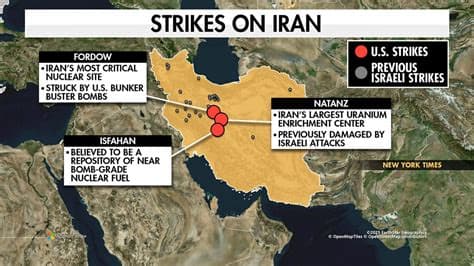
Recent developments suggest that the United States is involved in Israeli military strikes targeting Iran. This involvement represents a notable escalation in the already tense geopolitical landscape of the Middle East, particularly regarding U.S.-Iran relations.
Sources indicate that U.S. support may include intelligence sharing, logistical assistance, and operational planning, aiming to counter Iran's expanding influence in the region. This collaboration could potentially heighten tensions and provoke a stronger response from Iran, which may view these actions as direct aggression.
Analysts highlight that this partnership reflects a broader strategy by both the U.S. and Israel to address concerns over Iran’s nuclear program and its military activities in Syria and other neighboring countries. The aim is to prevent Iran from bolstering its military capabilities, which could destabilize the region further.
Critics of this approach argue that increased military involvement could lead to a wider conflict, drawing more countries into hostilities and jeopardizing regional stability. Furthermore, the ramifications of the U.S. participation in Israeli strikes may complicate diplomatic efforts to negotiate a resolution to the ongoing tensions surrounding Iran's nuclear ambitions.
As the situation develops, it will be critical to monitor the responses from Iran and the international community. The dynamics of U.S. involvement in such operations will undoubtedly influence future strategies and relationships in the region, with significant implications for global security and diplomacy.
Published by Banx Network. This article is part of the Banx decentralized media programme, powered by the BXE token on the XRP Ledger.