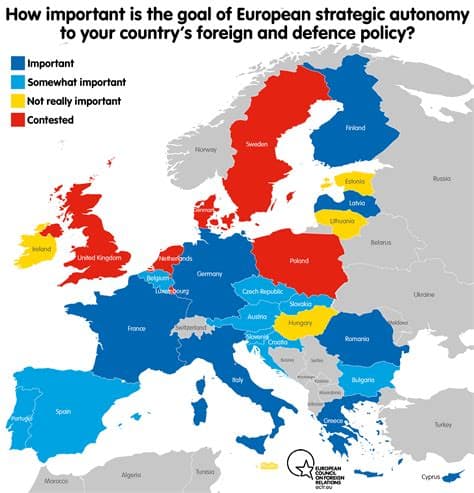
In an era marked by rising global challenges, a coalition of 50 influential intellectuals, including political leaders, academics, and thinkers, has issued a compelling call for the establishment of a "United States of Europe." This declaration advocates for increased strategic sovereignty among European nations, emphasizing the importance of unity in navigating complex geopolitical landscapes.
The signatories, hailing from various countries and disciplines, argue that Europe must forge a more cohesive identity to effectively address pressing issues such as climate change, economic instability, and security threats. They believe that by relinquishing fragmented approaches in favor of collective action, Europe can emerge as a stronger global player.
Professor Anna Schmidt, a leading political theorist, stated, “Europe is at a crossroads. We must choose to work together or risk falling behind in an increasingly fragmented world. A united Europe can pursue independent policies that reflect our shared values and interests.”
The authors propose several strategic initiatives, including the establishment of a unified defense policy, coordinated economic strategies, and improved crisis management mechanisms. By doing so, they aim to reduce reliance on external powers and ensure that European priorities are reflected in global governance.
Critics of the proposal caution that such a move may dilute national sovereignty and raise challenges in implementing a cohesive policy framework. However, supporters argue that the benefits of unity far outweigh the potential drawbacks, particularly in light of recent global events that highlight vulnerabilities in isolationist approaches.
As Europe navigates challenges posed by geopolitical tensions, migration crises, and economic pressures, the call for a "United States of Europe" resonates with many who believe that a collaborative approach is essential for long-term stability and progress. The intellectuals' statement has sparked discussions across the continent, prompting policymakers to reconsider the possibilities for deeper integration.
As the dialogue unfolds, the vision of a strategically sovereign Europe reflects a collective aspiration to create a resilient and dynamic entity capable of addressing the complexities of the modern world. By fostering unity and shared purpose, these intellectuals hope to pave the way for a future that champions collaboration while upholding the diverse identities that define the European landscape.
Published by Banx Network. This article is part of the Banx decentralized media programme, powered by the BXE token on the XRP Ledger.