1. The Hidden Infrastructure Keeping the World Connected
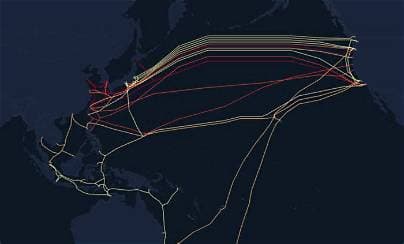
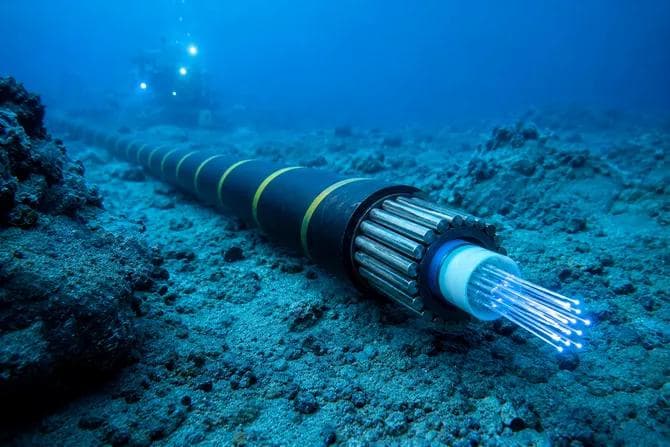
The modern internet is often imagined as a wireless network of satellites, mobile phones and data centres. Yet much of its international connectivity depends on cables resting on the ocean floor.
These submarine fibre-optic cables carry more than 99% of international data traffic, according to the International Telecommunication Union (ITU) [1]. They connect continents and provide the pathways through which digital services exchange information across borders.
When someone makes an international bank transfer, accesses a cloud platform hosted overseas or joins a video call with colleagues on another continent, the underlying data may travel through these undersea networks.
The cables also support government communications, international commerce, financial trading and essential digital services. They are therefore not merely telecommunications assets. They form part of the infrastructure on which modern economies depend.
The ITU estimates that around 500 submarine cable systems, extending more than 1.7 million kilometres, underpin global connectivity [2].
Despite their importance, most people rarely think about them. They remain out of sight until a cable fails, a region experiences connectivity problems or a security incident raises questions about the resilience of the network.
That invisibility creates a strategic problem. The global economy depends on infrastructure that can be difficult to monitor, protect and repair across vast stretches of ocean.
2. Why Undersea Cables Matter More Than Satellites Satellite internet has expanded rapidly, and satellite networks can provide important backup connectivity. However, they have not replaced submarine cables as the foundation of international data transmission.
Fibre-optic cables can carry enormous quantities of data with low latency, making them well suited to the constant traffic generated by financial markets, cloud services, streaming platforms and multinational businesses.
Satellites serve different purposes. They can connect remote locations and provide alternative routes when terrestrial infrastructure is unavailable, but their capacity, cost and performance characteristics mean they cannot simply absorb all the traffic carried by damaged submarine cable systems.
This distinction matters during a major disruption. A satellite connection might help restore essential communications for a remote site, but it is not necessarily capable of replacing a high-capacity cable route serving entire regions.
The global network is also more complicated than a collection of individual cables. Routes connect through landing stations on coastlines, where submarine systems link to terrestrial telecommunications networks. Data can then travel onwards through other cables, data centres and national networks.
This interconnected design provides flexibility, but it also means that a disruption's impact depends on which cables are affected, where they connect, how much spare capacity exists and whether traffic can be rerouted.
A single damaged cable does not automatically disconnect a country from the internet. Multiple failures in a strategically important region, however, could be much harder to absorb. 3. The World Is Already Seeing Cable Disruptions Damage to submarine cables is not a hypothetical risk. It occurs regularly, and most incidents are not proven acts of sabotage.
The ITU reports that more than 170 cable repairs were recorded worldwide during 2025, equivalent to almost four cable failures a week on average [2]. Accidental damage from fishing activity and ship anchors, alongside natural hazards and equipment failures, accounts for much of the problem.
However, recent incidents have highlighted the possible geopolitical consequences of damage to critical infrastructure.
In September 2025, damage to four submarine cables in the Red Sea disrupted internet connectivity across parts of Africa, Asia and the Middle East. The incident affected services in multiple countries, while telecommunications providers attempted to reroute traffic over alternative connections [3].
The episode demonstrated how a regional cable failure can have consequences far beyond the location of the physical damage. It also exposed the importance of spare capacity and alternative routes.
The Baltic Sea has faced a separate series of incidents involving damaged telecommunications and power cables. Some have prompted investigations into possible sabotage, although authorities have not established deliberate wrongdoing in every case.
The distinction is important: suspicious circumstances are not proof of a coordinated attack. But repeated incidents have encouraged governments to consider whether existing protection and monitoring arrangements are sufficient.
The strategic concern is not simply that cables can break. It is that a malicious actor might deliberately exploit the difficulty of protecting infrastructure spread across vast maritime areas. 4. Why Governments Are Worried About Sabotage Submarine cables present an unusual security challenge because they are essential, geographically dispersed and difficult to guard continuously.
A cable may cross international waters, pass through busy shipping routes and connect countries with different legal systems. Monitoring every section of every route is impractical.
Ships also have legitimate reasons to operate near cable routes, including fishing, commercial shipping, surveying and maintenance. Establishing whether a particular vessel caused damage accidentally or deliberately can require detailed evidence, technical investigation and international cooperation.
In September 2026, Reuters reported that Britain, Norway and the United States had tracked and confronted Russian deep-sea vessels near Svalbard earlier in the year. The report said the activity involved a Russian exercise that simulated the use of a covert capability to disable undersea cables. Officials said the exercise caused no cable damage [4].
The report added to concerns that some states may be developing or rehearsing capabilities relevant to attacks on critical seabed infrastructure.
The broader issue is one of deterrence. If a state believes it can disrupt another country's communications while making responsibility difficult to prove, the infrastructure may become an attractive target during a period of tension.
However, governments must distinguish credible threats from unverified allegations. Public attribution can be difficult, and careless accusations risk escalating international disputes.
The challenge is to deter attacks, improve surveillance and establish consequences for deliberate damage without treating every cable failure as an act of hostile interference. 5. The Red Sea and Strait of Hormuz: Strategic Chokepoints Not every cable route carries the same strategic importance.
Some regions are especially significant because they concentrate shipping, energy infrastructure and international communications into relatively narrow geographical corridors.
The Red Sea is one such area. Cables connecting Europe, the Middle East and Asia pass through a region already exposed to conflict and shipping disruption. Damage to several systems can constrain the alternative routes available to network operators.
The Strait of Hormuz has also attracted attention amid escalating regional tensions.
On 23 October 2026, Reuters reported that Iranian officials had described plans to target undersea communications cables in the Gulf if military strikes by the United States and Israel resumed [5]. The report noted that less than 1% of international bandwidth passes through the strait itself, limiting the likely direct effect on global connectivity.
That qualification matters. A threat involving a strategically sensitive location does not automatically imply that the entire internet would be disrupted.
Nevertheless, a regional outage could still be economically damaging. Businesses that depend on reliable international links may experience slower connections, interrupted services or difficulties reaching cloud systems and overseas partners.
The wider risk depends on the number of cables affected, the availability of alternative routes and whether repair vessels can operate safely.
A cable disruption in one corridor may be manageable. Multiple simultaneous disruptions across several important routes could create a much more serious challenge. 6. What Would Happen to Banks and Financial Markets? Modern finance relies on rapid, reliable communication between institutions, payment providers, trading venues and data centres.
Submarine cables help carry the data that supports international payments, securities trading, risk management, market information and communication between financial institutions.
A major cable outage would not necessarily cause banks to lose their money or destroy financial records. Institutions generally use multiple systems, backup facilities and alternative network routes to maintain operations.
However, disruption could make some services slower, more expensive or temporarily unavailable.
Potential consequences include delays in international payments, interruptions to communications with overseas offices, reduced access to certain digital services and problems connecting to systems hosted in affected regions.
Financial markets could also face operational challenges if connectivity between trading venues, brokers and service providers deteriorated.
The outcome would depend on the affected routes and the resilience of each institution. Some firms could switch to alternative connections with limited disruption, while others might experience longer outages if their networks depend heavily on a small number of links.
The most serious concern is a compound event: cable damage occurring alongside a cyberattack, power failure or broader military crisis. Multiple disruptions can reduce the effectiveness of backup systems that would normally protect financial operations.
For banks and financial authorities, resilience therefore means more than protecting individual data centres. It also requires understanding the international infrastructure that connects them. 7. Could Cloud Computing and AI Be Affected? Cloud computing has made businesses increasingly dependent on remote infrastructure.
Companies use cloud platforms to store information, run applications, manage customer accounts, process transactions and support employees across multiple locations. AI services can add another layer of dependence, particularly when models are hosted in remote data centres and accessed through online services.
Submarine cable damage could interrupt or degrade connections between users, cloud regions and overseas systems. The effect might include higher latency, slower data transfers, temporary service failures or reduced access to particular applications.
That does not mean every cloud service would stop working. Large providers often operate multiple data centres and use redundant network routes. Some systems can continue running locally even when their connection to other locations is degraded.
However, resilience is not uniform across all businesses. Smaller organisations may rely on a single cloud region, one internet provider or a narrow set of international connections without fully understanding the dependencies.
AI could increase the importance of these links as businesses integrate remote models, data pipelines and automated services into everyday operations.
For example, an organisation might retain its customer database in one region while relying on an AI service hosted elsewhere. A network disruption could affect the connection between those systems even if neither data centre has suffered physical damage.
Businesses should therefore consider cable and network dependencies when designing continuity plans, particularly if a service must remain available during a regional emergency. 8. How Would the United Kingdom Be Affected? The United Kingdom is connected to the wider world through a network of submarine telecommunications cables. These routes support international internet traffic, financial services, businesses and communications with Europe and other global markets.
A 2025 report by the UK Parliament's Joint Committee on the National Security Strategy warned that the UK's international internet connectivity depends heavily on subsea cables. It highlighted concerns about geopolitical risks, infrastructure monitoring and the need to strengthen resilience [6].
The report also recognised that the UK benefits from multiple routes and established repair processes for routine cable failures. This provides an important degree of protection, although it does not remove the risk of a serious, coordinated disruption.
London's role as a global financial centre makes reliable international connectivity particularly important. Banks, payment firms, exchanges, cloud providers and multinational businesses all rely on communications that cross national borders.
A disruption would not necessarily shut down the City of London. The effects would depend on which routes failed and how quickly traffic could be rerouted.
However, a prolonged outage affecting several routes could raise costs, delay transactions and complicate the operation of services connecting the UK with overseas markets.
The UK also faces a broader security challenge: protecting infrastructure that may be owned and operated by private companies but is essential to national economic and security interests.
Government, industry and international partners must therefore coordinate their approach to surveillance, repair capacity, information sharing and emergency planning. 9. Why Repairing a Cable Is Not as Simple as Fixing a Road When a submarine cable breaks, restoring service can be a complex engineering operation.
Repair teams must identify the location of the fault, dispatch a suitable cable repair vessel, retrieve the damaged section, repair or replace it and return the cable to the seabed. Weather, water depth, sea conditions, maritime permissions and the availability of specialised equipment can all affect the process.
The ITU notes that cable installation can take more than two years from design to deployment [2]. Repairing an existing cable is a different process, but it still requires specialised vessels, trained crews and equipment that cannot be produced or deployed instantly.
Repair times can be extended when several cables fail at once because the same limited pool of vessels and specialist teams may be needed across different locations.
Conflict creates additional complications. A repair vessel may be unable to enter an affected area safely, while insurance costs, sanctions, access restrictions or the risk of further damage could delay work.
This creates an important distinction between a brief outage and a prolonged disruption. Alternative routes may maintain most services initially, but if damage persists and spare capacity becomes constrained, the impact can deepen over time.
The vulnerability is not just the cable itself. It is also the limited ability to repair multiple damaged systems quickly under difficult conditions. 10. Could an Attack Actually Shut Down the Internet? The prospect of a global internet shutdown makes for dramatic headlines, but it is not the most likely consequence of an isolated cable attack.
The internet is a distributed network. Traffic can often be rerouted through other cables, terrestrial connections and alternative network paths when one link fails.
The actual impact depends on the amount of spare capacity, the geographical location of the damage, the number of affected routes and the network design of individual providers.
A single cable failure may produce little visible disruption for many users. A cluster of failures in a region with limited alternatives could cause slower speeds, higher latency and interruptions to services.
The situation becomes more serious if multiple cable systems and their supporting infrastructure are disrupted at the same time. Even where alternative routes exist, they may not have enough capacity to carry all the displaced traffic.
Some countries and island communities are particularly vulnerable because they depend on a small number of international connections. For these locations, the loss of one important route can have a disproportionate effect.
A more realistic risk than a simultaneous worldwide blackout is therefore a series of regional disruptions, potentially accompanied by financial, commercial and political consequences.
That scenario is still serious. The global economy does not need to lose the entire internet for businesses and essential services to suffer significant disruption. 11. How Would Governments Respond to a Major Cable Attack? A suspected deliberate attack would create a challenge for governments that extends beyond telecommunications.
Authorities would need to determine what happened, assess the immediate impact, protect other infrastructure and decide whether the incident represented an accident, criminal act or hostile operation.
Maritime surveillance could help establish which vessels were present near the affected cable. Investigators might examine vessel movements, equipment records, underwater evidence and communications data. Intelligence agencies could also assess whether the incident formed part of a wider campaign.
If a foreign state were suspected, governments would face difficult decisions about attribution and retaliation.
Possible responses could include diplomatic protests, sanctions, increased maritime patrols, international investigations and measures to strengthen protection around vulnerable infrastructure.
Military action would be a far more consequential step and would depend on the evidence, the severity of the incident and the wider political circumstances.
The international nature of submarine cables complicates the response. A cable may be owned by a consortium of companies, pass through several jurisdictions and serve multiple countries. Cooperation is therefore essential to investigation, repair and deterrence.
The challenge is to make deliberate attacks more difficult and more costly without allowing uncertainty over responsibility to trigger unnecessary escalation. 12. Can the World Make Undersea Cables Safer? Protecting submarine cables requires a combination of engineering, monitoring, planning and international cooperation.
Several measures could strengthen resilience.
More diverse routes: Connecting countries through a wider range of cable systems can reduce dependence on a small number of links or geographical corridors.
Improved monitoring: Better use of maritime surveillance, vessel tracking and infrastructure monitoring can help authorities identify suspicious activity and respond more quickly to incidents.
Faster repairs: Expanding repair capacity and streamlining permissions could reduce the time required to restore damaged cables.
Better contingency planning: Telecommunications providers, cloud companies, banks and governments can test whether critical services would remain operational if important international routes failed.
Stronger cooperation: Governments, cable owners, repair operators and international organisations can share information and coordinate responses across borders.
The ITU's International Advisory Body on Submarine Cable Resilience approved recommendations in July 2026 aimed at improving the resilience of this infrastructure. Its work highlighted physical risks, geographical concentration, repair delays and the heavy dependence of some countries on a limited number of cable systems [1].
These measures cannot eliminate every risk. The ocean is vast, and cables will remain exposed to accidents, natural hazards and deliberate interference.
However, improving redundancy and reducing repair times can limit the consequences of individual failures and make coordinated disruption more difficult to sustain. 13. The Business Risk: What Companies Should Prepare For Cable resilience is not only a concern for governments and telecommunications operators. It also matters to ordinary businesses that rely on international digital services.
Many companies do not know which submarine routes carry their data. Their internet providers, cloud vendors and software suppliers manage much of the underlying infrastructure, leaving businesses dependent on arrangements they may never have examined.
Organisations can reduce this uncertainty by asking a few practical questions.
• Do critical applications depend on one cloud region or one network provider?
• Can employees continue essential work if international connectivity becomes slow or unavailable?
• Are important systems and data available through alternative routes or offline procedures?
• Have suppliers explained their continuity and disaster-recovery arrangements?
• Have backup systems been tested under realistic outage conditions? For financial institutions, payment companies and other critical services, the planning requirements may be more demanding. A backup connection is useful only if it has sufficient capacity and can support the systems that need to remain operational.
Smaller businesses can also benefit from basic preparation. Keeping secure copies of essential information, documenting alternative procedures and understanding supplier dependencies can reduce the impact of a wider connectivity incident.
The objective is not to predict exactly where the next cable failure will occur. It is to ensure that one infrastructure problem does not automatically become a business crisis. 14. Who Pays for Protecting the World's Digital Lifelines? Submarine cables are often privately owned, but their importance extends well beyond the companies that operate them.
Telecommunications providers and technology companies have commercial incentives to maintain reliable networks. Governments, meanwhile, have an interest in national security, economic continuity and access to essential services.
This creates a question about how the cost of additional protection should be shared.
Cable operators may be expected to invest in redundancy, monitoring and repair arrangements. Governments may fund maritime surveillance, improve regulation or coordinate security operations. International organisations can help develop standards and encourage cooperation.
However, additional protection can be expensive. Building alternative routes, maintaining specialist repair capacity and monitoring critical areas all require long-term investment.
The cost of resilience must also be weighed against the cost of disruption. A network designed solely to minimise short-term expenses may leave users exposed to failures that prove far more expensive when they occur.
Not every route requires the same level of protection. A sensible strategy would identify the most critical connections, understand their alternatives and prioritise investments where a failure would have the greatest consequences.
The goal should be a network that remains affordable and commercially viable while being resilient enough to withstand foreseeable disruptions. 15. Three Possible Futures for the Undersea Cable Network The next decade could bring several different outcomes for the infrastructure beneath the oceans.
Scenario One: A More Resilient Global Network
Governments and private operators invest in additional routes, better monitoring and faster repair capabilities. International cooperation improves, and businesses test their contingency plans more regularly.
Cable damage continues, but alternative connections limit the impact of individual incidents. The result is a more robust network, although one that still requires continuous investment.
Scenario Two: Persistent Regional Disruptions
Geopolitical tensions remain high, and cable damage becomes a recurring source of concern. Some incidents are accidental, while others prompt investigations into possible deliberate interference.
Most international traffic continues to flow, but certain regions experience periodic outages, higher connectivity costs and delays to essential services. Businesses and governments increasingly treat subsea resilience as a standard operational requirement.
Scenario Three: A Coordinated Infrastructure Crisis
Several important routes are disrupted during a wider international confrontation. Repair vessels face access or security difficulties, and alternative systems struggle to absorb the displaced traffic.
Regional communications, financial operations and cloud services experience prolonged disruption. Governments respond with emergency measures, increased surveillance and diplomatic or economic action.
This is a high-impact risk scenario, not a prediction that such an event will occur. Its severity would depend on the number of routes affected, the availability of alternatives and the speed of repair.
The lesson across all three scenarios is the same: resilience depends on preparation before an emergency begins. Conclusion: The Internet's Greatest Vulnerability May Be Beneath the Sea The global economy depends on a vast network of submarine cables that most people will never see. These fibre-optic systems carry the international data that supports financial transactions, cloud computing, communications and modern commerce.
Their importance makes them a strategic concern. Accidents and natural hazards already cause regular damage, while geopolitical tensions have increased attention on the possibility of deliberate interference.
Yet the danger should not be exaggerated. A damaged cable does not automatically bring down the internet, and alternative routes can often keep services operating. The real risk emerges when multiple failures overwhelm available capacity, repairs are delayed or critical regions lack sufficient alternatives.
For the United Kingdom and other connected economies, protecting subsea infrastructure is increasingly part of economic and national security planning. Governments need to cooperate with industry, improve monitoring and ensure that repair systems can respond when they are needed.
Businesses also have a role to play by understanding their network dependencies and preparing for disruptions that may originate far beyond their own offices or data centres.
The internet may feel wireless and almost limitless, but its international foundations remain physical. They cross oceans, depend on specialised engineering and can be difficult to repair during a crisis.
The question is not whether every cable can be protected from every threat. It is whether the world can build enough resilience that damage to a critical route does not become a much larger economic emergency.
Sources [1] International Telecommunication Union (ITU). International Advisory Body approves landmark report to strengthen submarine cable resilience, 10 July 2026. https://www.itu.int/en/mediacentre/Pages/PR-2026-07-10-Submarine-cable-resilience-report.aspx
[2] International Telecommunication Union (ITU). Submarine cable resilience. Background information, updated April 2026. https://www.itu.int/en/mediacentre/backgrounders/Pages/submarine-cable-resilience.aspx
[3] Associated Press. Commercial shipping likely cut Red Sea cables that disrupted internet access, experts say, September 2025. https://apnews.com/article/0b08fc5f02daf72710e0010c11ea21ae
[4] Reuters. NATO allies foil Russian subsea cable sabotage plot, 10 September 2026. https://www.reuters.com/world/europe/nato-allies-foil-russian-subsea-cable-sabotage-plot-2026-09-10/
[5] Reuters. Iran has detailed plans to hit Gulf undersea cables if war resumes, officials say, 23 October 2026. https://www.reuters.com/world/middle-east/iran-has-detailed-plans-hit-gulf-undersea-cables-if-war-resumes-officials-say-2026-10-23/
[6] UK Parliament, Joint Committee on the National Security Strategy. Subsea telecommunications cables: resilience and crisis preparedness, 19 September 2025. https://publications.parliament.uk/pa/jt5901/jtselect/jtnatsec/723/report.html
Published by Banx Network. This article is part of the Banx decentralized media programme, powered by the BXE token on the XRP Ledger.