In the quiet vastness of space, where time unfolds over millions of years, creation often appears as a slow and luminous whisper. The Trifid Nebula, long admired for its delicate beauty, now reveals new layers of its story—offering a glimpse into the patient artistry of star formation.
NASA’s Hubble Space Telescope has captured new imagery of the Trifid Nebula, providing scientists with a more detailed view of how stars are born within its dense clouds of gas and dust. The nebula, located thousands of light-years from Earth, has long been a subject of study due to its distinctive structure.
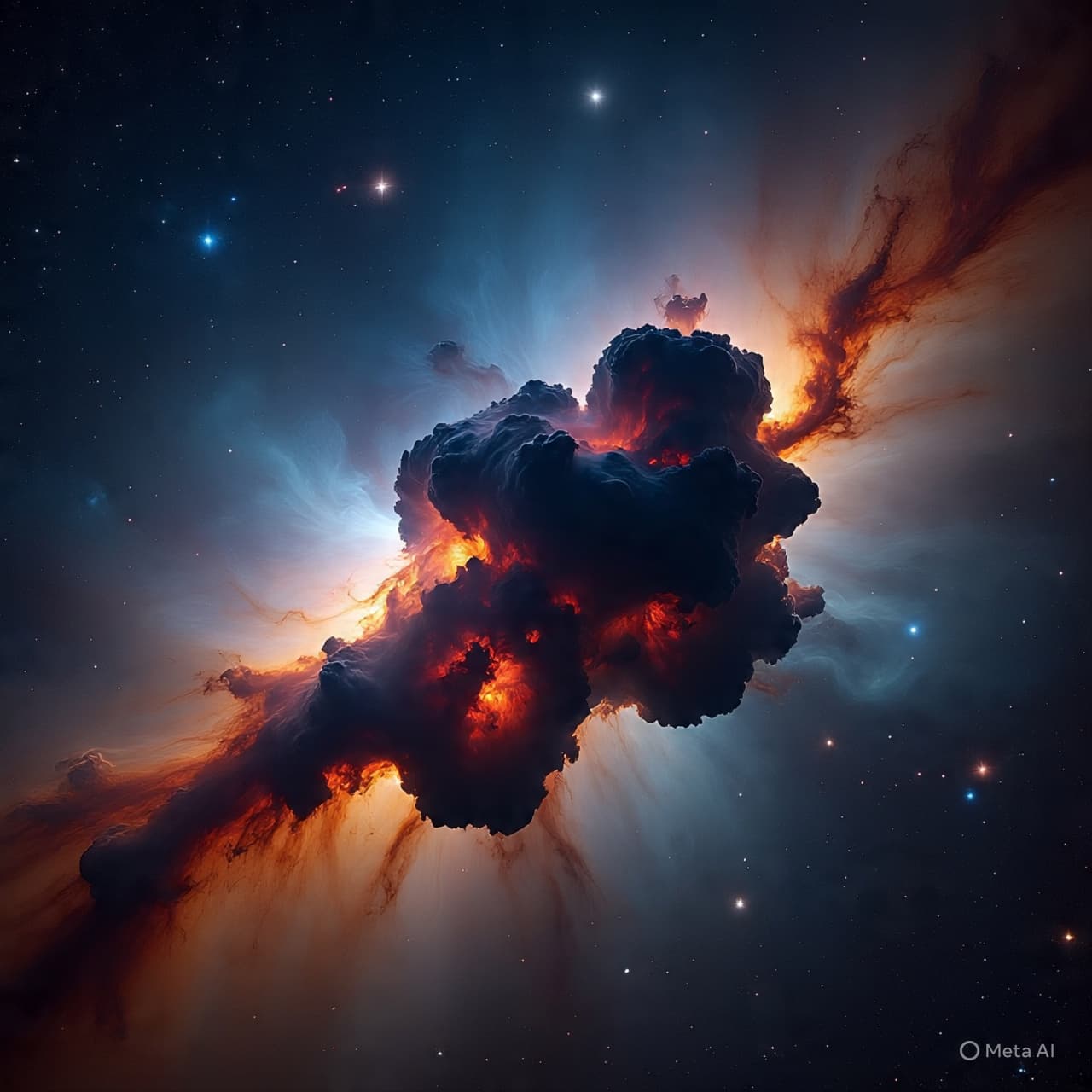
The latest observations highlight intricate patterns within the nebula, including regions where stellar material is actively condensing. These areas, often referred to as stellar nurseries, are where gravity draws particles together until nuclear fusion ignites, giving rise to new stars.
Hubble’s advanced imaging capabilities allow researchers to observe these processes with remarkable clarity. The telescope’s ability to capture light across different wavelengths helps reveal both the visible and hidden aspects of the nebula’s structure.
The Trifid Nebula is particularly notable for its combination of emission, reflection, and dark nebula features. This complex interplay creates striking contrasts, where bright regions coexist with shadowed lanes of dense material.
Scientists use such observations to refine models of star formation, which remains a fundamental area of astrophysical research. By studying environments like the Trifid Nebula, researchers can better understand how stars of varying sizes and compositions come into existence.
The new imagery also underscores the continued relevance of the Hubble Space Telescope, which has been in operation for more than three decades. Despite newer instruments being launched, Hubble continues to provide valuable data that complements other observations.
These findings contribute to a broader effort to map and understand the life cycle of stars, from their formation to their eventual evolution. Each new image adds depth to a field that relies heavily on both observation and interpretation.
As scientists continue to analyze the data, the Trifid Nebula stands as a reminder that even in the vast stillness of space, creation is an ongoing process—quiet, complex, and profoundly enduring.
AI Image Disclaimer: Some visuals in this article are AI-generated interpretations based on astronomical data.
Sources: NASA, ESA, Space.com, Scientific American
Published by Banx Network. This article is part of the Banx decentralized media programme, powered by the BXE token on the XRP Ledger.