
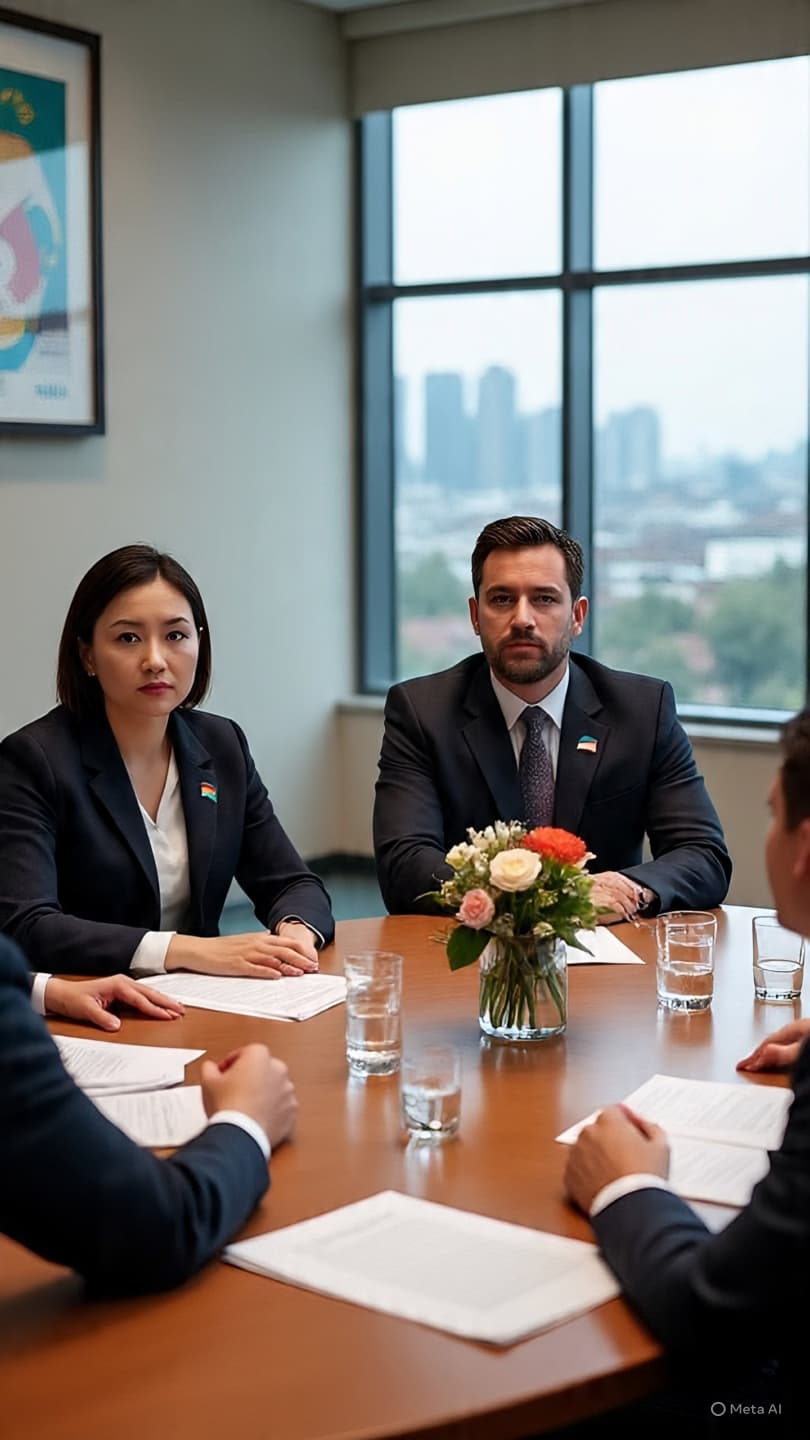
Key Highlights
- Pakistan proposes renewed dialogue between Iran and the US.
- The proposal aims to address unresolved tensions and economic sanctions.
- International responses are cautious but optimistic about potential de-escalation.
In the intricate landscape of international relations, diplomacy often resembles the ebb and flow of tides—advancing, retreating, and returning with renewed intent. Recently, Pakistan has emerged as a potential facilitator, proposing a second round of negotiations aimed at reviving dialogue between Iran and the United States. This initiative underscores a growing recognition that unresolved tensions cannot remain suspended indefinitely, particularly in a region marked by volatility and conflict.
Pakistan's strategic position at the crossroads of regional dynamics allows it to act as both an observer and a mediator. Officials in Islamabad have indicated that renewed talks could help address lingering disagreements, especially those related to security concerns and the economic sanctions imposed on Iran. While specific details of the proposal remain limited, it signals a willingness from Pakistan to engage constructively in a dialogue that has been fraught with challenges.
Historically, interactions between Iran and the United States have oscillated between engagement and strain. Trust-building efforts have often been undermined by shifting political priorities and external pressures, complicating the path toward meaningful dialogue. Analysts suggest that Pakistan's involvement could provide a neutral platform for discussions, leveraging its complex relationships with both nations to foster an environment conducive to mediation.
The international community has responded to Pakistan's proposal with cautious optimism. Some governments view this initiative as a positive step toward de-escalation, while others express skepticism regarding its feasibility in the current geopolitical climate. The delicate balance of interests at play makes the prospect of renewed dialogue both significant and uncertain.
Economic considerations further complicate the situation. Prolonged tensions between Iran and the US have far-reaching implications for global markets, particularly in the energy sector, where stability is closely tied to supply and pricing dynamics. For Iran, renewed negotiations could present an opportunity to address the sanctions that have severely impacted its economy. Conversely, for the United States, engaging in dialogue offers a pathway to manage regional stability while balancing broader strategic interests.
Observers note that successful diplomacy often hinges less on immediate outcomes and more on the willingness to continue the conversation. Even incremental progress can create momentum over time, paving the way for more substantial agreements in the future. As discussions surrounding Pakistan's proposal continue, the possibility of a second round of talks remains uncertain but holds significant potential for both nations.
In a world shaped by competing interests and complex relationships, the act of returning to the negotiating table can itself be a meaningful step toward resolving longstanding conflicts and fostering cooperation.
Published by Banx Network. This article is part of the Banx decentralized media programme, powered by the BXE token on the XRP Ledger.



