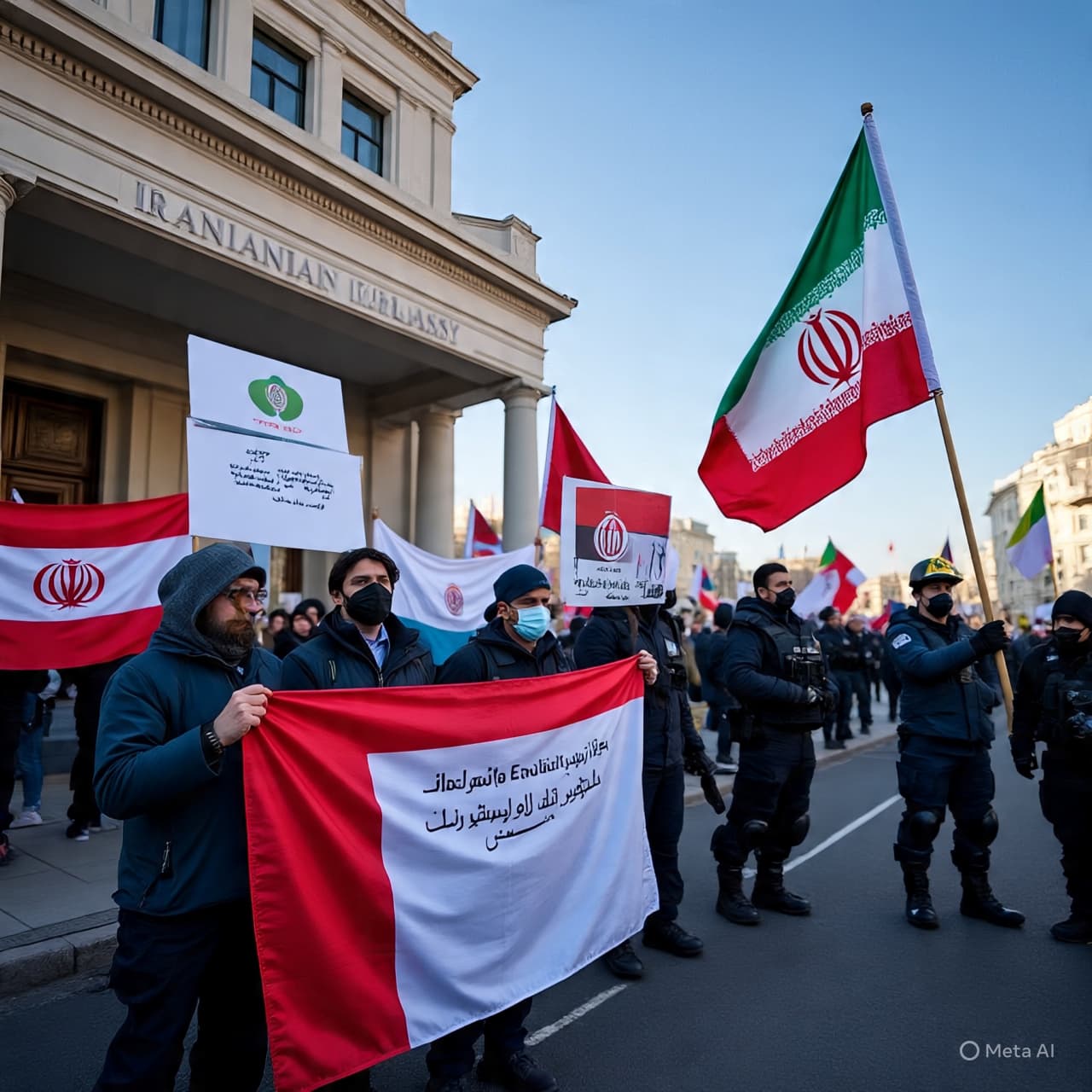
There are moments when a piece of cloth can carry the weight of generations — not merely fabric woven with color, but a tapestry of history, hopes, and sorrows. On a chilly Saturday in central London, such a moment unfolded in front of the stately building of the Iranian embassy, where activists gathered in solidarity with voices raised thousands of miles away. The air was filled with chants and determination, all circling around an emblem that had become a quiet but potent symbol of dissent.
Amid the hum of the city and the blare of distant traffic, a single figure climbed onto the embassy’s balcony, his steps deliberate against the ornate stonework. With careful hands, he pulled down the national flag of the Islamic Republic of Iran — a banner that, for many inside the capital of the United Kingdom, now bore the weight of deep dissatisfaction with the ongoing unrest at home. Moments later, he unfurled a different standard: the tri-colored pre-1979 flag, adorned with the lion and sun — a symbol invoked by those yearning for change.
This act was not merely theatrical but deeply symbolic, resonating with a broader tapestry of emotion that had already woven itself through diaspora communities and human rights circles around the world. Hundreds who had gathered below watched, some cheering and others holding placards that echoed calls for “Free Iran” and rights long felt stifled. It was a quiet but powerful assertion that banners carry stories — histories of struggle, identity, and aspiration.
The Metropolitan Police, present to ensure public safety, confirmed additional officers had been deployed to manage the crowd and maintain order, underscoring the delicate balance between peaceful assembly and the security of diplomatic premises. Two arrests were reported in connection with the demonstration.
Inside the embassy, the original flag was later seen restored to its place, its colors once again fluttering above the Kensington street. A photograph of it flying high was shared on the embassy’s official social media channels — a reminder of the resilience attributed to national symbols and of the diplomatic norms that govern sovereign spaces.
This scene in London unfolded as protests and unrest continue in Iran itself, where demonstrations began in late December over economic grievances and have since evolved into broader expressions of dissent, drawing international attention. It was a moment when the quiet stone and metal of an embassy facade became a canvas for voices seeking to be heard across oceans.
Symbols, whether flags or chants, carry with them more than just paint or fabric — they bear the echoes of the people who lift them, the histories they reference, and the future many envision. On this day in London, one flag came down and another rose — both reminding onlookers of the deep currents of feeling that connect distant streets to distant struggles.
AI Image Disclaimer Illustrations were produced with AI and serve as conceptual depictions.
Sources The Guardian Yahoo News UK GB News ITV News Barron’s
Published by Banx Network. This article is part of the Banx decentralized media programme, powered by the BXE token on the XRP Ledger.