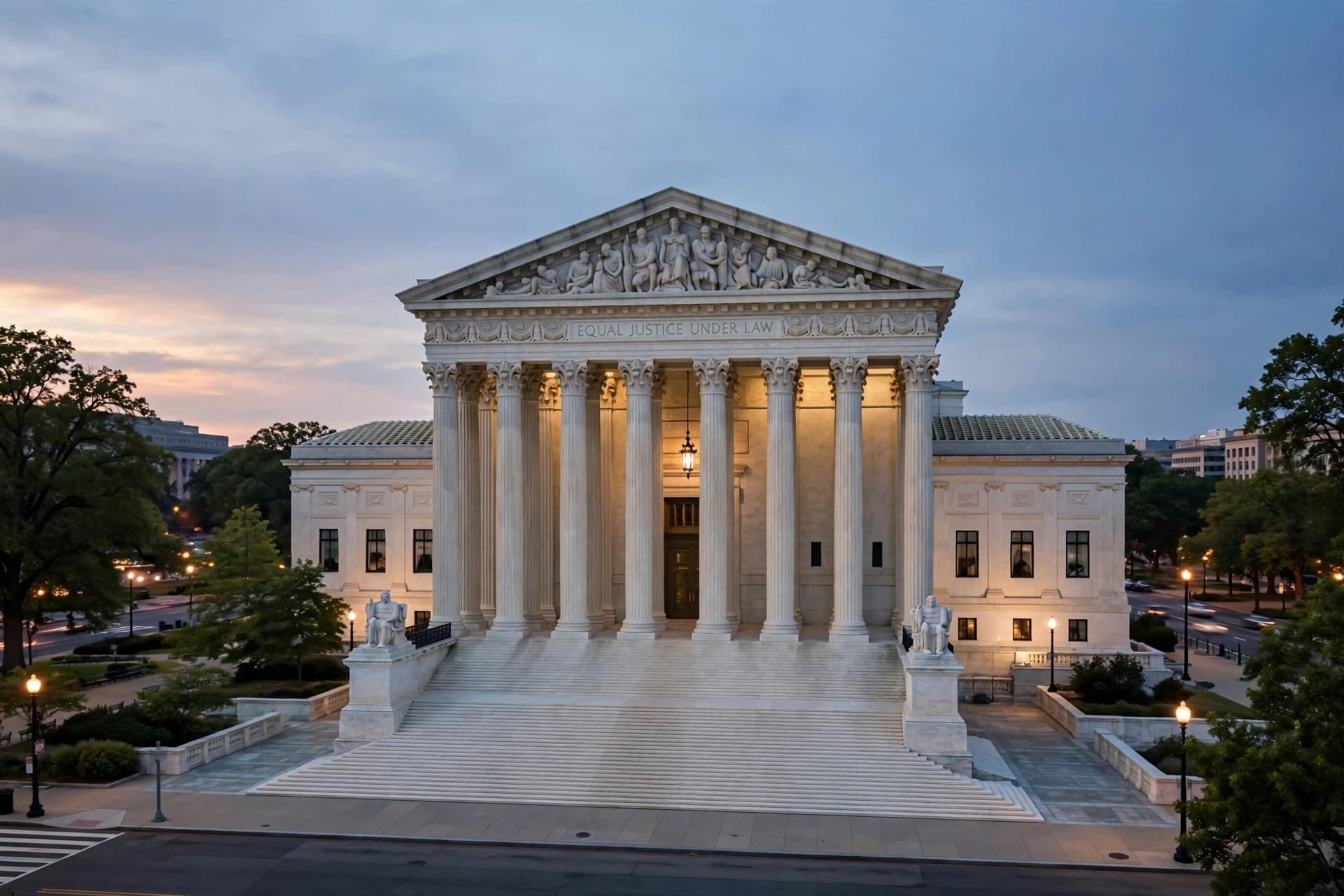
There is a certain weariness that comes with watching a institution meant to be steady bend under the weight of a hurried age. The Supreme Court was designed for deliberation—for briefs, arguments, and the slow work of judgment. But in recent years, it has found itself called upon again and again to act in days, sometimes hours, on questions that shape the lives of millions.
Justice Samuel Alito acknowledged that shift this week, telling The Associated Press that the escalating volume of emergency appeals before the court “isn’t a good thing,” but adding that there is little the court can do to change the trajectory . The number of emergency applications now rivals the annual tally of cases the justices consider with full briefing and oral argument, Alito wrote in a new book released Tuesday .
The surge has placed the court at the center of hotly debated issues during Trump’s second term, including the president’s proposed restrictions on mail ballots and his new ballroom construction . In emergency decisions, which are typically made in days or weeks and designed to be temporary, the president has a stronger track record of wins than in full-merits cases .
Alito also addressed the rhetoric directed at the court from the president and his administration. “I personally am not pleased with that,” he said. “Everybody in this country has the right to criticize what we do. The substance of their criticism can be quite harsh. If we deserve it, then that’s fine. But rhetoric is a different story” .
The justice rejected the characterization of his opinions as aligned with the MAGA movement. “It’s offensive,” he said. “I honestly try to decide every single case on the merits, every single application on the merits. And that’s true whether the president is Donald Trump or Joe Biden or Barack Obama or anybody else” .
Trump has praised Alito as “one of the Greatest of All Time” while criticizing other justices he appointed as “unpatriotic” . Alito said such rhetoric does not affect how the justices rule but does contribute to declining public trust in the court. “The terms used by presidents and by members of their administration … is far different from what we saw 15 years ago,” he said .
As for the emergency docket, Alito said the root cause lies in the increasing use of executive orders rather than legislation, which leads to lawsuits and quick rulings from lower courts that send cases rapidly to the high court. “Unless something changes there, and I don’t foresee it right now, I’m afraid this is going to continue,” he said .
The court, it seems, is caught between an institution built for patience and a political system that has little of it. Alito’s remarks offer a rare window into a justice’s view of that tension—and a quiet acknowledgment that the court cannot simply will the storm to pass.
AI Image Disclaimer: Visuals associated with this report are AI-generated and do not depict real events.
Sources: Associated Press, Star Tribune
Published by Banx Network. This article is part of the Banx decentralized media programme, powered by the BXE token on the XRP Ledger.