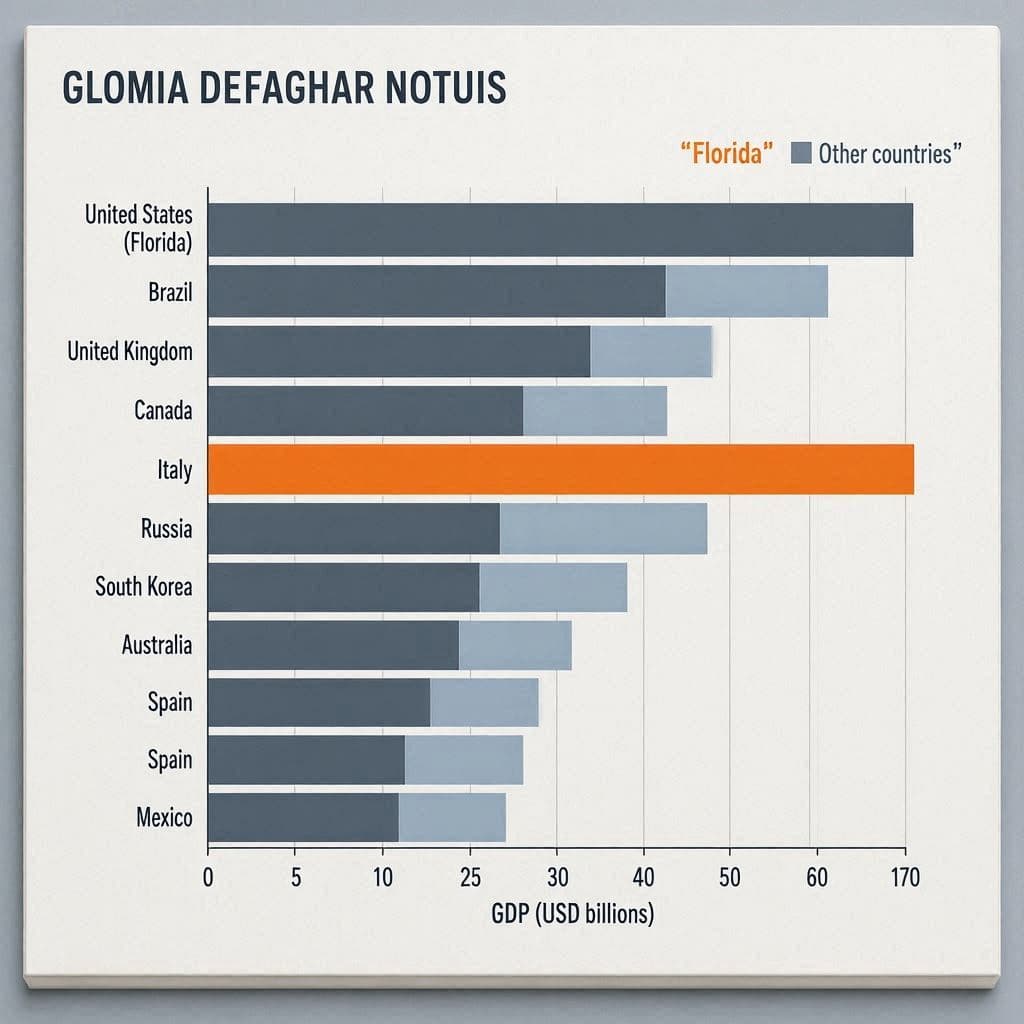
Economic narratives are often shaped by perception as much as by data. In recent years, Florida has emerged as a powerhouse, with its gross domestic product surpassing that of many sovereign nations. Now ranked as the 14th largest economy in the world, the Sunshine State’s growth stands in contrast to the struggles faced by some other regions. This rise invites reflection on the factors driving economic vitality, from tax policies to migration patterns, and challenges the notion that all states follow the same trajectory. It is a story of transformation, opportunity, and shifting demographic tides.
Body: Florida’s economic surge is driven by a combination of factors, including a business-friendly environment, no state income tax, and robust population growth. Companies and individuals alike have flocked to the state, attracted by lower costs of living and regulatory ease. This influx has spurred development in sectors ranging from technology to tourism, creating a diverse and resilient economic base. The result is a GDP that rivals countries like Australia and Mexico, marking a significant milestone in the state’s history.
The comparison to "blue states" experiencing a "death spiral" is a provocative one, often cited in political discourse. While some states face challenges with high taxes, outmigration, and budget deficits, Florida has leveraged its advantages to attract talent and capital. This divergence highlights the competitive nature of federalism, where states serve as laboratories for different policy approaches. Voters and businesses vote with their feet, seeking environments that align with their values and financial goals.
However, characterizing the situation in other states as a "death spiral" may oversimplify complex economic realities. Many high-tax states remain economic engines with high standards of living and robust public services. The narrative of decline often ignores the strengths of these regions, such as innovation hubs and educational institutions. A balanced view recognizes that different models can coexist, each with its own trade-offs and benefits.
Florida’s growth also brings challenges, such as housing affordability and infrastructure strain. Rapid expansion requires careful planning to ensure that quality of life is maintained. Policymakers face the task of managing growth sustainably, balancing economic gains with social needs. The state’s ability to address these issues will determine the longevity of its success.
The political implications of Florida’s rise are significant. It serves as a showcase for conservative economic policies, influencing national debates on taxation and regulation. Supporters point to the state’s performance as evidence of the effectiveness of limited government intervention. Critics, however, argue that the model may not be replicable everywhere and that it relies on specific geographic and demographic advantages.
For residents, the economic boom offers opportunities but also pressures. Job creation is strong, but competition for resources is intensifying. The dynamic nature of Florida’s economy requires adaptability from both workers and businesses. Staying ahead of the curve means embracing change and investing in skills and infrastructure.
Closing: Florida’s ascent to the 14th largest economy in the world is a testament to its strategic advantages and appeal. As it continues to grow, the state faces the challenge of sustaining momentum while addressing emerging issues. Its journey offers valuable lessons for other regions navigating the complexities of modern economic development.
AI Image Disclaimer: Visuals in this article are AI-generated representations of economic growth charts and urban landscapes, intended to illustrate the themes of prosperity and regional development.
Sources: Florida Chamber Foundation Worldometers GDP Data Business Observer Florida Wikipedia Economy of Florida
Published by Banx Network. This article is part of the Banx decentralized media programme, powered by the BXE token on the XRP Ledger.