
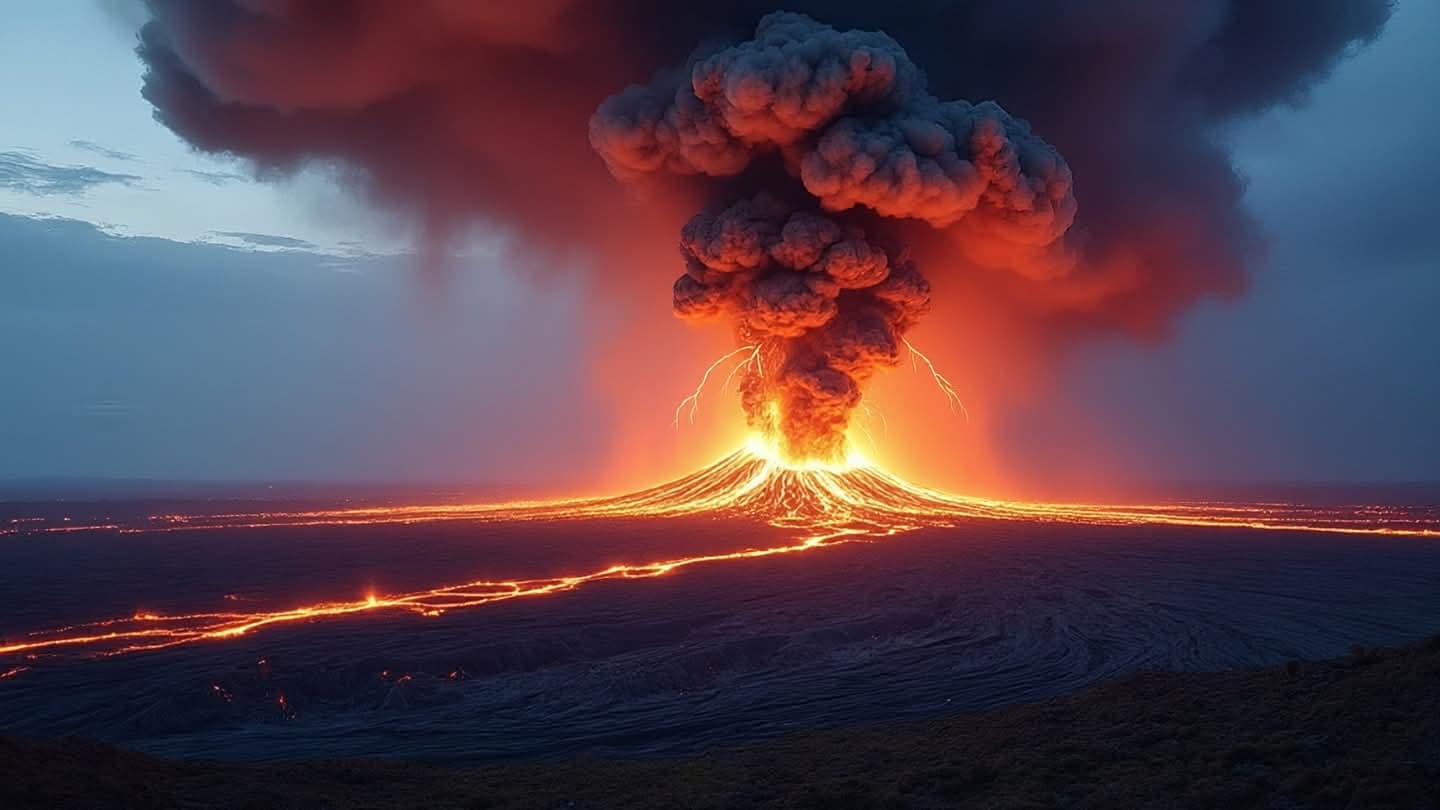
History records moments when the sky turned gray and summer vanished, leaving crops to fail and people to shiver in the cold. One such period followed the eruption of Mount Tambora in 1815, an event so powerful that it dimmed the sun for eighteen months and led to what became known as "The Year Without a Summer." This cataclysm serves as a profound lesson in the interconnectedness of Earth’s systems, reminding us how a single geological event can reshape climate, agriculture, and society across the globe.
Mount Tambora, located in present-day Indonesia, erupted with unprecedented force, ejecting vast amounts of ash and sulfur dioxide into the stratosphere. These particles formed a veil that reflected sunlight back into space, cooling the planet significantly. Temperatures dropped by several degrees in the Northern Hemisphere, leading to frost in July and snow in August. For farmers in Europe and North America, the result was devastating crop failures and widespread famine.
The social consequences were equally severe. Food shortages drove up prices, leading to unrest and migration. In some regions, people resorted to eating grass or bark to survive. The economic impact rippled through societies, affecting trade and industry. Yet, amidst the hardship, there were also moments of innovation and adaptation. Scientists began to study atmospheric phenomena more closely, laying the groundwork for modern climatology.
Today, as we face our own climate challenges, the story of Tambora offers valuable insights. It demonstrates the sensitivity of the global climate to external shocks, whether volcanic or anthropogenic. Understanding how aerosols affect temperature helps researchers model future scenarios and develop strategies for mitigation. The past becomes a laboratory for understanding the potential impacts of geoengineering or large-scale environmental changes.
Volcanic eruptions are not just historical curiosities; they are ongoing threats. Modern monitoring systems allow scientists to predict eruptions and assess their potential climate impact. This knowledge enables governments to prepare for food security issues and other disruptions. By learning from history, we can build resilience against future natural disasters, ensuring that society is better equipped to handle the unexpected.
The cultural legacy of the "Year Without a Summer" is also significant. It inspired literary works, such as Mary Shelley’s "Frankenstein," written during a gloomy summer indoors. Art and literature from the period reflect the mood of uncertainty and introspection that pervaded society. These creative responses highlight the human capacity to find meaning and expression even in times of darkness.
As we look to the future, the lesson of Tambora is clear: nature is powerful and unpredictable. Respect for the environment and investment in scientific understanding are essential for survival. By studying past eruptions, we gain a deeper appreciation for the delicate balance of our planet. It is a reminder that we are part of a larger system, subject to forces beyond our control.
In the end, the darkness that lasted for eighteen months was not just a physical phenomenon but a metaphor for vulnerability. It taught humanity humility and the importance of preparedness. Today, as we face new environmental challenges, we carry that lesson forward, seeking light through knowledge and cooperation. The sun may darken again, but our ability to respond grows stronger with each passing year.
AI Image Disclaimer: Visuals in this article are AI-generated illustrations of volcanic landscapes and abstract representations of atmospheric changes, designed to visualize the theme of historical climate events without depicting real historical figures or graphic destruction.
Sources: Smithsonian Magazine, UCAR Center for Science Education, Britannica, Nature
Published by Banx Network. This article is part of the Banx decentralized media programme, powered by the BXE token on the XRP Ledger.



