Far above Earth's surface, thousands of satellites move quietly through orbit, supporting navigation, communication, weather forecasting, and scientific research. Yet even in the apparent stillness of space, invisible forces continue to shape their journeys.
Scientists are warning that heightened solar activity associated with Solar Cycle 25 may shorten the operational lifespans of satellites orbiting Earth. Recent studies indicate that increased solar activity can alter the upper atmosphere, creating additional challenges for spacecraft operators.
Solar Cycle 25, which began in 2019, has produced stronger activity than many researchers initially anticipated. Sunspots, solar flares, and coronal mass ejections have become increasingly frequent as the cycle approaches its expected peak.
When solar activity intensifies, additional energy from the Sun heats Earth's upper atmosphere, causing it to expand. Although extremely thin, the expanded atmosphere creates greater drag on satellites operating in low Earth orbit.
This increased atmospheric drag gradually slows satellites, causing them to lose altitude more rapidly. Operators may need to perform additional orbital adjustments to maintain desired trajectories, consuming valuable onboard fuel and potentially shortening mission durations.
The issue is particularly significant because the number of satellites in low Earth orbit has grown dramatically in recent years. Commercial communications networks, Earth observation missions, and scientific spacecraft all share increasingly crowded orbital environments.
Researchers also note that stronger solar activity can influence satellite electronics and communication systems. Energetic particles emitted by the Sun may interfere with onboard instruments, requiring enhanced monitoring and protective measures.
Space agencies and private companies routinely track solar conditions using specialized observatories and forecasting systems. Accurate predictions enable satellite operators to adjust operations and minimize potential impacts from space weather events.
As humanity's dependence on orbital infrastructure continues to grow, understanding the relationship between solar activity and satellite performance remains an increasingly important area of scientific research.
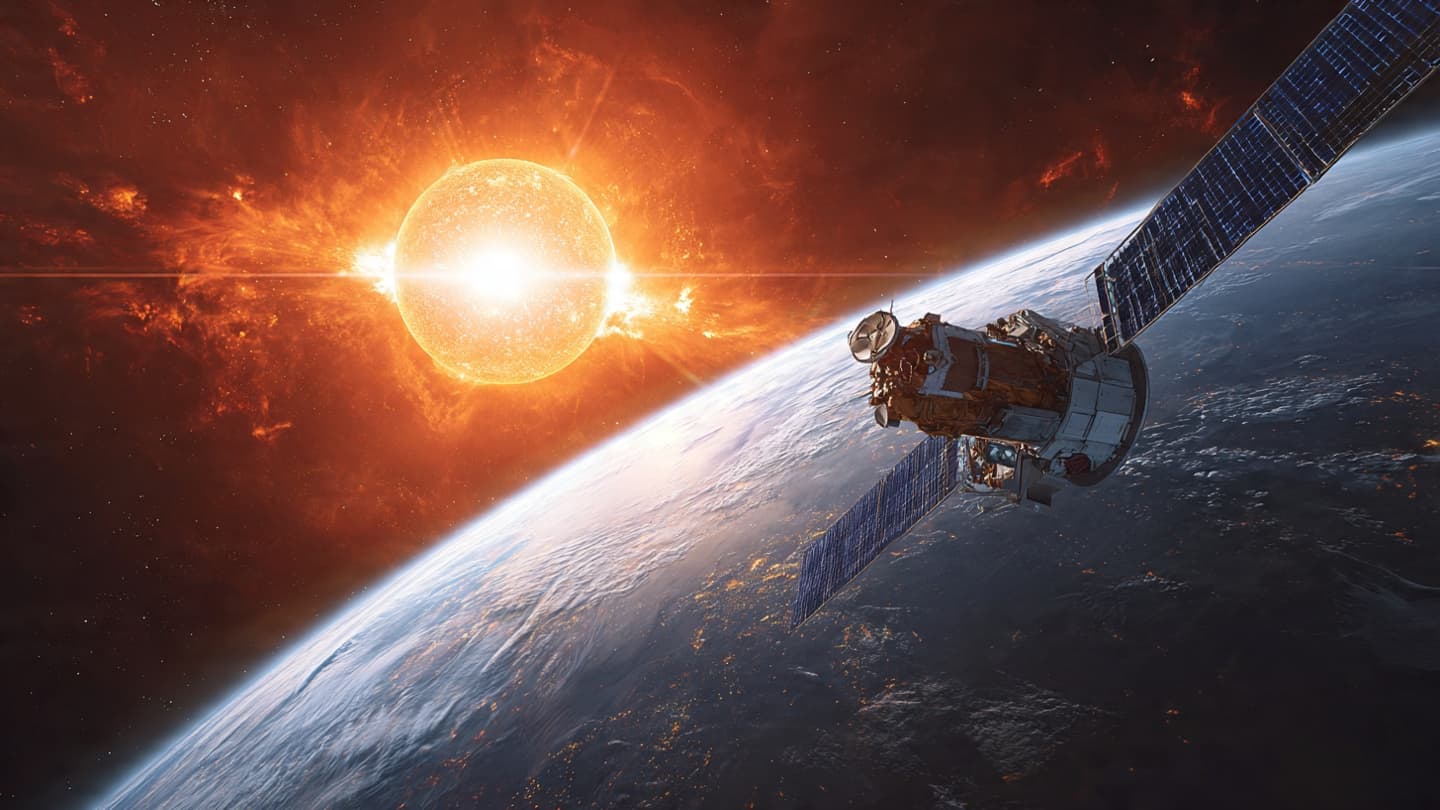
AI Image Disclaimer: Illustrative space imagery associated with this article was generated using artificial intelligence to depict satellite operations and solar activity.
Sources: Reuters, NASA, arXiv, National Oceanic and Atmospheric Administration (NOAA)
Published by Banx Network. This article is part of the Banx decentralized media programme, powered by the BXE token on the XRP Ledger.