The Sun, our nearest star, has been a source of light and life for billions of years. Yet, despite its proximity, it remains a realm of mystery, with dynamic processes that challenge our understanding of physics. Recently, astronomers have achieved a remarkable feat: capturing the highest-resolution image ever of the Sun’s surface. This breakthrough, made possible by the Daniel K. Inouye Solar Telescope in Hawaii, reveals intricate details of solar activity, from swirling plasma currents to magnetic field structures. It is a window into the heart of our star, offering clues to phenomena that affect Earth and beyond.
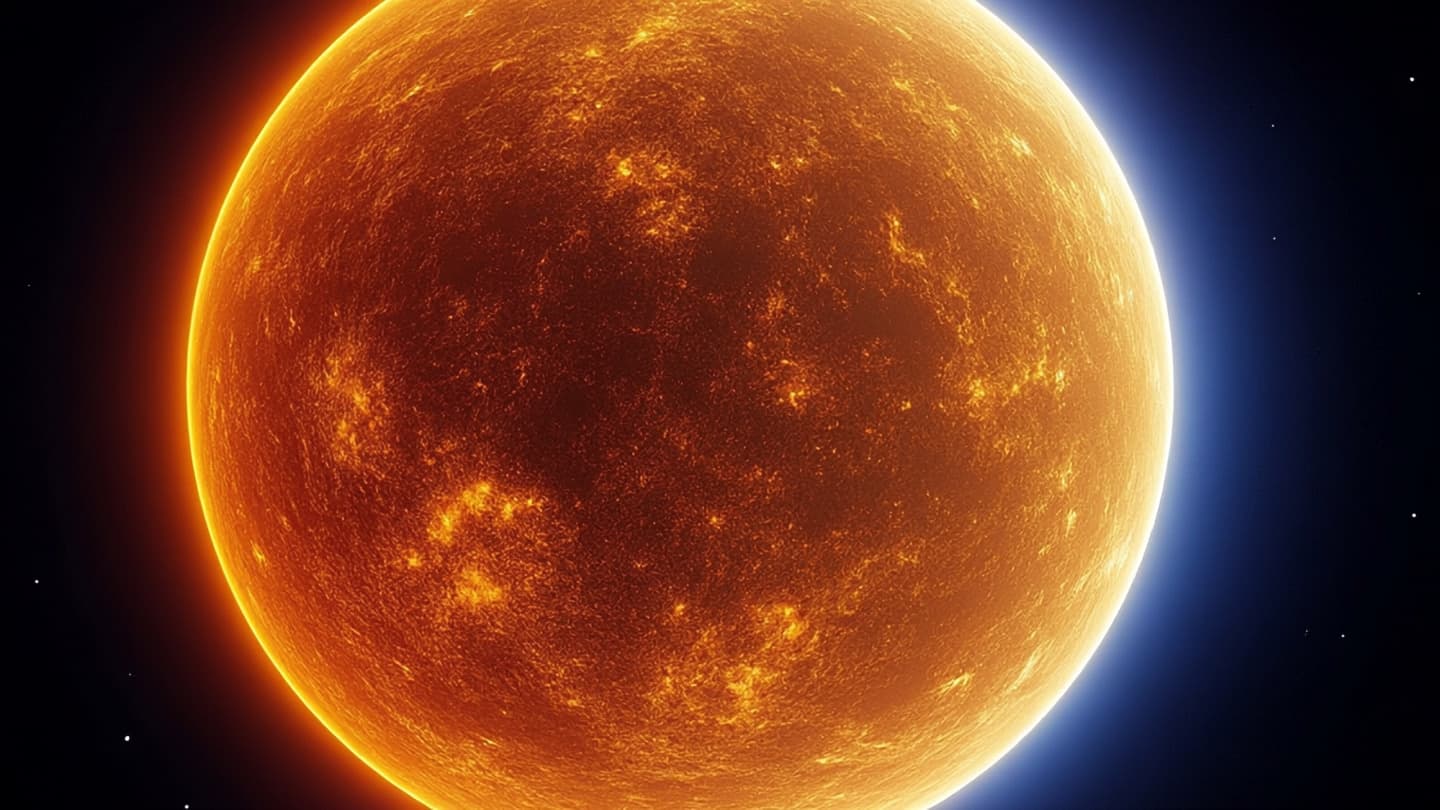
The new images show the Sun’s photosphere in unprecedented detail, highlighting granulation patterns caused by convection. Each granule, roughly the size of Texas, represents a column of hot plasma rising from the interior. The clarity of the images allows scientists to study these structures with precision, improving models of solar dynamics. This level of detail was previously unattainable, limited by atmospheric distortion and technological constraints.
One of the key discoveries is the visualization of small-scale magnetic vortices. These swirling motions may play a crucial role in heating the Sun’s corona, the outer atmosphere that is mysteriously millions of degrees hotter than the surface. By observing these vortices, researchers hope to solve the "coronal heating problem," a longstanding puzzle in solar physics. The data provides evidence that magnetic energy is transferred efficiently through these small-scale structures.
The Inouye telescope, equipped with advanced adaptive optics, corrects for atmospheric turbulence in real-time. This technology enables sharp imaging even during daylight hours, when the Sun’s brightness can overwhelm sensors. The telescope’s large mirror and sophisticated instruments make it the most powerful solar observatory in the world. Its capabilities mark a new era in solar astronomy, allowing for continuous monitoring of solar activity.
These observations have practical implications for space weather forecasting. Solar flares and coronal mass ejections can disrupt satellite communications, power grids, and navigation systems on Earth. By understanding the mechanisms behind these events, scientists can improve prediction models, providing earlier warnings and better protection for infrastructure. The high-resolution data enhances the accuracy of these forecasts significantly.
For the public, the images are a visual delight, showcasing the beauty and complexity of our star. They remind us of the power of scientific inquiry and the tools we build to explore the universe. The Sun, often taken for granted, is revealed as a dynamic and evolving entity, worthy of continued study and admiration.
The highest-resolution images of the Sun’s surface represent a major advancement in solar science. They offer new insights into stellar physics and improve our ability to predict space weather. As the Inouye telescope continues its observations, we can expect further discoveries that deepen our understanding of the star that sustains us.
AI Image Disclaimer: Visuals associated with this article are AI-generated to illustrate the themes of astronomy and solar observation.
Sources: The Guardian AP News CNN National Science Foundation
Published by Banx Network. This article is part of the Banx decentralized media programme, powered by the BXE token on the XRP Ledger.