
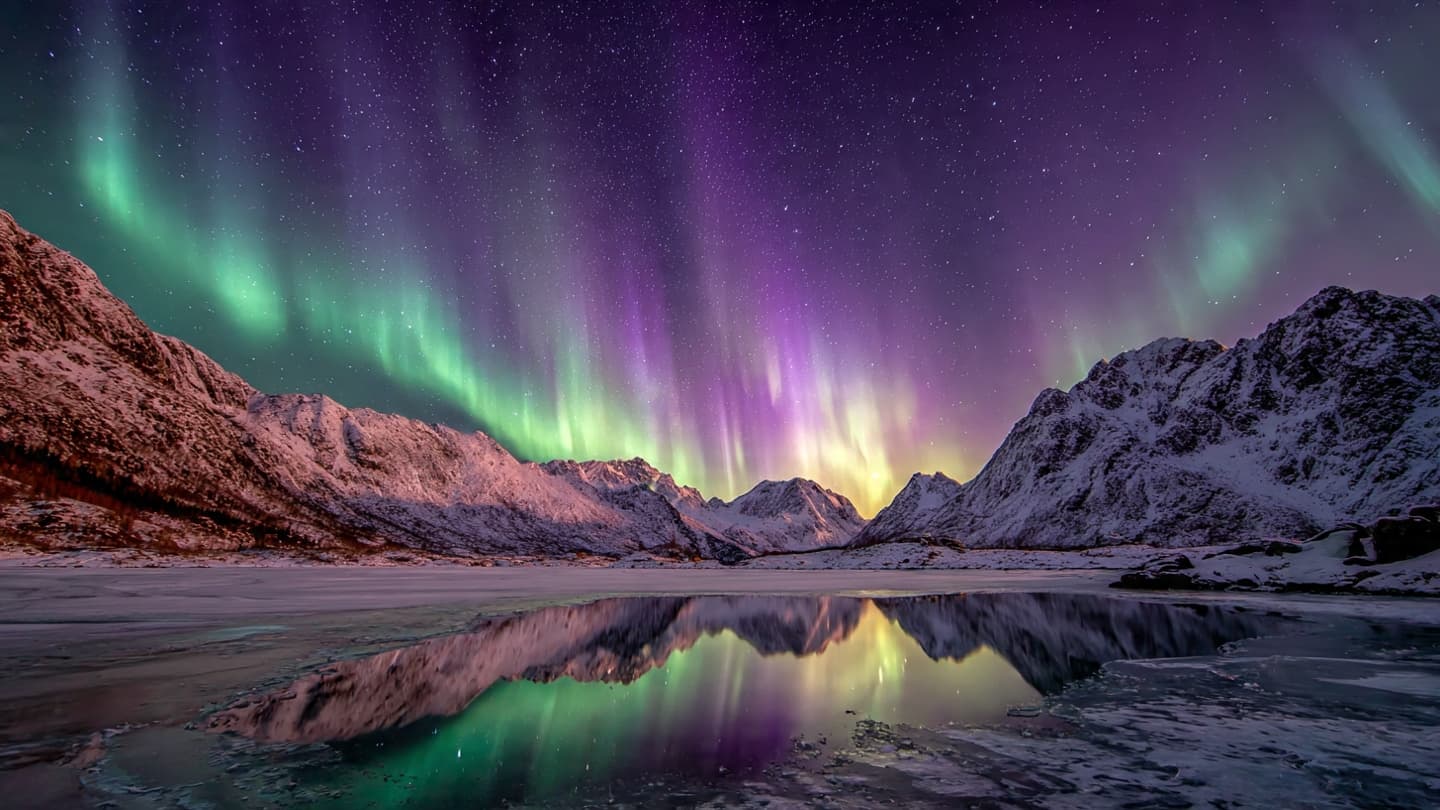
The night sky has always inspired wonder, offering moments when science and beauty appear inseparable. Among its most captivating spectacles are auroras, shimmering curtains of light that occasionally illuminate the darkness. Scientists now say such displays may become more frequent as solar activity intensifies.
Astronomers and space weather experts have reported a rise in solar activity, including powerful solar flares and coronal mass ejections. These events increase the likelihood of geomagnetic storms capable of producing visible auroras across wider geographic regions.
Auroras occur when charged particles emitted by the Sun interact with Earth's magnetic field and atmosphere. The resulting collisions generate luminous displays commonly known as the Northern and Southern Lights.
The current increase in activity is linked to the Sun's approximately 11-year solar cycle. Scientists indicate that the Sun is approaching or has entered a period of heightened activity known as solar maximum, during which solar eruptions become more frequent.
While auroras often attract photographers and skywatchers, intense geomagnetic storms can also affect technological systems. Satellites, radio communications, navigation networks, and electrical infrastructure may experience disruptions during particularly strong events.
Space agencies and observatories continuously monitor solar conditions to provide advance warnings of significant space weather events. These forecasts help governments, infrastructure operators, and aviation sectors prepare for potential impacts.
Researchers emphasize that most solar activity poses no direct danger to people on Earth's surface. Instead, the phenomena provide valuable opportunities to study the complex interactions between the Sun and Earth's magnetic environment.
As solar activity continues to evolve, scientists and sky enthusiasts alike will be watching closely. For many observers, the possibility of witnessing vibrant auroras serves as a reminder of the dynamic relationship between Earth and its nearest star.
AI Image Disclaimer: The accompanying visuals were generated using artificial intelligence to illustrate astronomical phenomena discussed in this report.
Sources: CBS News, NASA, National Oceanic and Atmospheric Administration (NOAA)
Published by Banx Network. This article is part of the Banx decentralized media programme, powered by the BXE token on the XRP Ledger.



