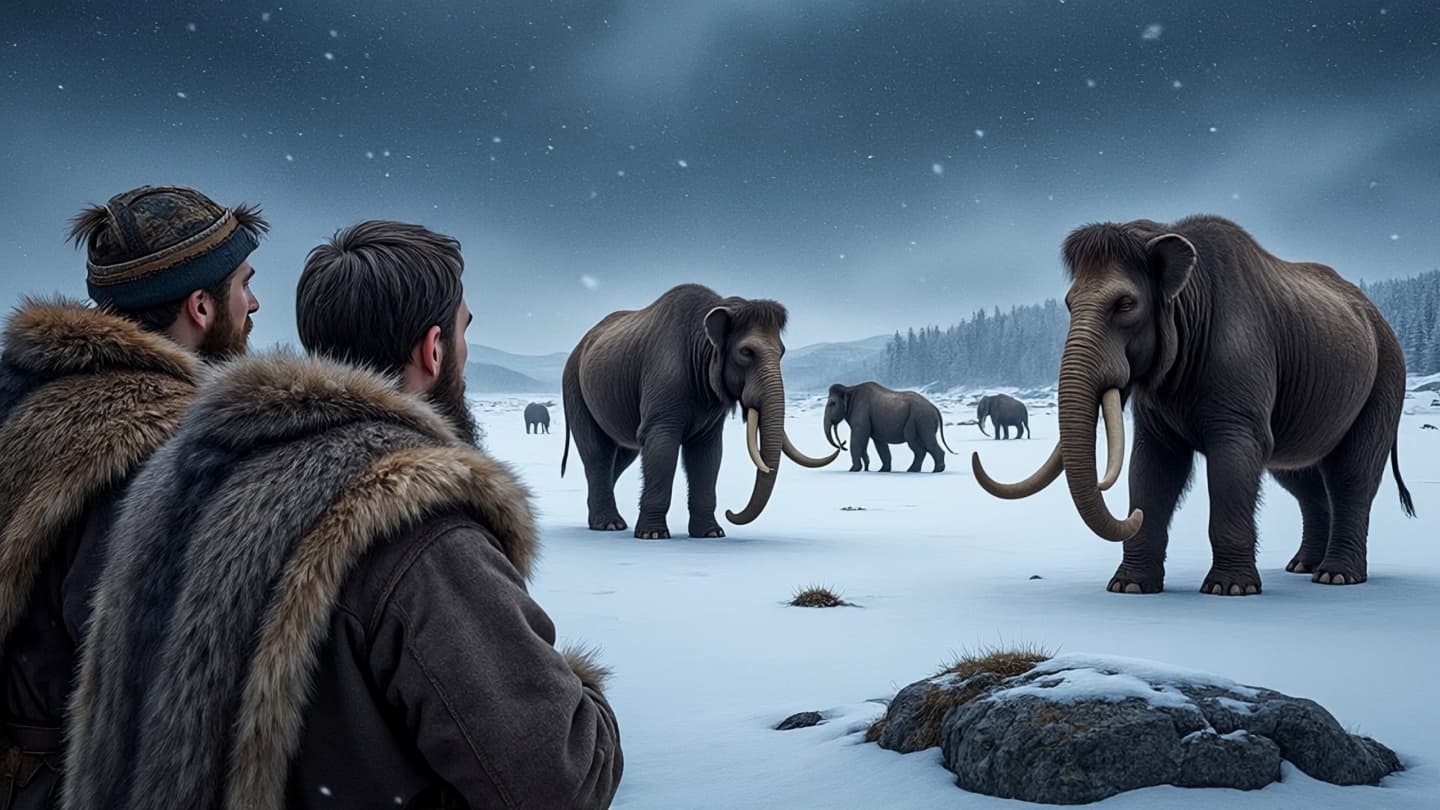
The Ice Age was a time of giants, where the landscape was dominated by creatures of immense size and power. Among them, the woolly mammoth stood as a symbol of resilience, navigating frozen tundras with thick fur and curved tusks. For decades, archaeologists have studied the bones left behind by our ancestors, seeking to understand the dynamics of early human hunting. A new study suggests that these prehistoric hunters were not merely opportunistic but strategic, specifically targeting female mammoths. This revelation offers a nuanced view of ancient survival strategies, highlighting a calculated approach to resource management rather than random predation.
The research, based on DNA analysis of mammoth remains found at various archaeological sites, reveals a surprising gender imbalance in the hunted population. While one might expect a roughly equal distribution of males and females, the data indicates a significant preference for females. This pattern suggests that early humans understood the social structure of mammoth herds. Female mammoths typically lived in matriarchal groups with calves, making them more predictable and potentially easier to approach than solitary, aggressive bulls.
Hunting female mammoths would have provided a dual benefit: meat for immediate consumption and the potential to disrupt herd reproduction. By removing breeding females, hunters could have influenced the long-term viability of local mammoth populations. This level of ecological insight implies that prehistoric people possessed a deep knowledge of animal behavior, passed down through generations. It challenges the notion of early humans as simple scavengers, portraying them instead as sophisticated observers of their environment.
The methodology used in the study involved extracting ancient DNA from bone fragments, allowing researchers to determine the sex of individual animals with high accuracy. This technological advance has opened new windows into the past, providing details that skeletal morphology alone could not reveal. The consistency of the findings across different sites and time periods strengthens the argument that this was a widespread practice, not an isolated incident.
Furthermore, the targeting of females may have been driven by practical considerations. Female mammoths were generally smaller than males, making them less dangerous to hunt with primitive weapons. Their tusks, while still valuable, were often smaller, but the trade-off in safety and predictability may have been worth it for hunting parties. This risk assessment demonstrates a pragmatic approach to survival, balancing reward against potential harm.
The implications extend beyond hunting techniques to broader questions about human impact on megafauna. If early humans systematically targeted breeding females, they may have played a more significant role in the decline of mammoth populations than previously thought. However, it is important to note that climate change and habitat loss were also major factors. The interaction between human hunting pressure and environmental shifts likely created a perfect storm for these giants.
Understanding these ancient practices helps us appreciate the complexity of human-nature relationships in the past. It reminds us that our ancestors were not separate from their ecosystems but deeply integrated within them, influencing and being influenced by the species around them. Their survival depended on this intricate balance, a lesson that remains relevant today.
The discovery that prehistoric people targeted female mammoths adds depth to our understanding of early human ingenuity. It reveals a strategic mind at work, one that observed, learned, and adapted to the challenges of the Ice Age with remarkable precision.
AI Image Disclaimer: The visuals accompanying this article are AI-generated illustrations designed to represent the themes of paleontology and prehistoric hunting.
Sources: Nature Communications, Live Science, Smithsonian Magazine, Phys.org
Published by Banx Network. This article is part of the Banx decentralized media programme, powered by the BXE token on the XRP Ledger.