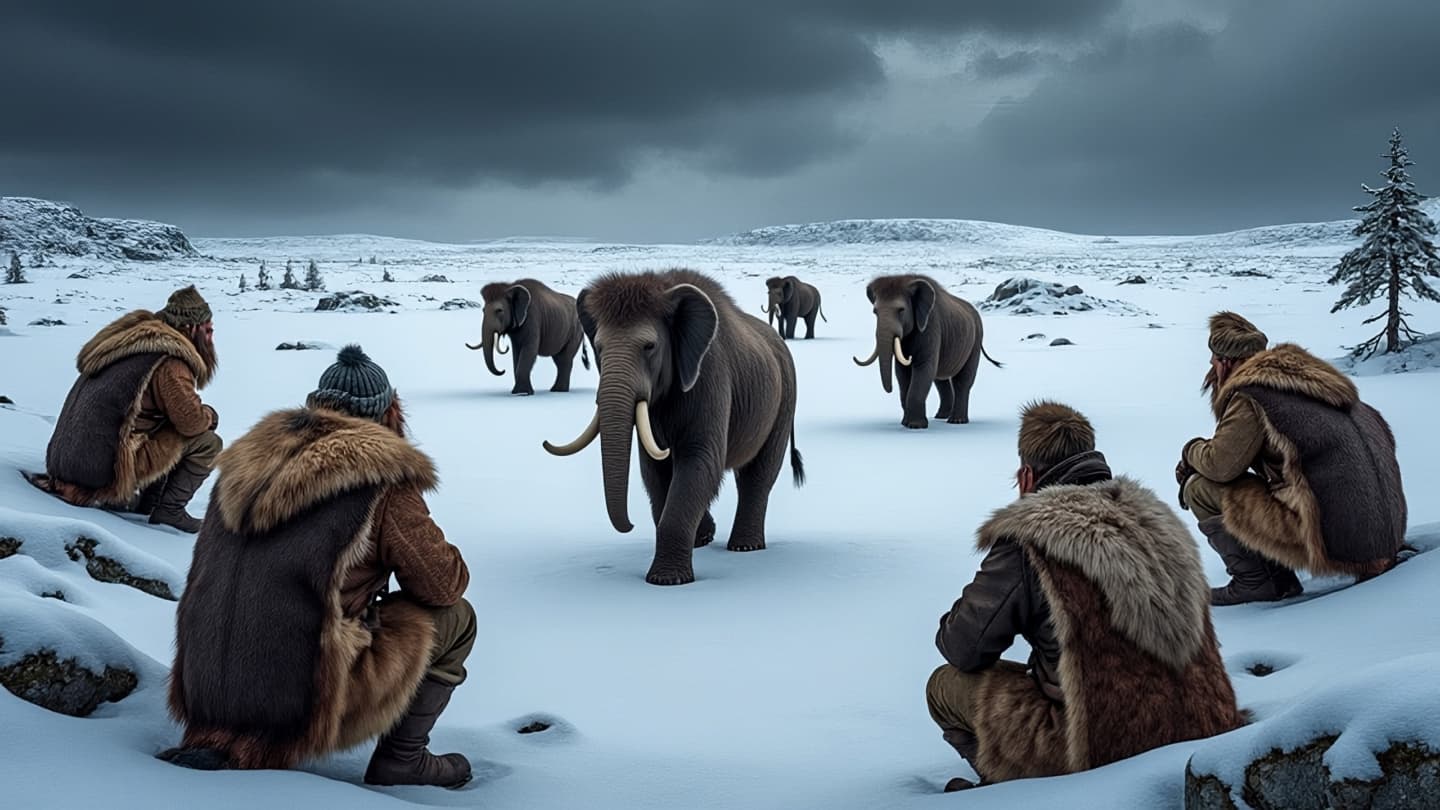
The Ice Age landscape was a vast, frozen theater where survival depended on wit as much as strength. For early humans, the woolly mammoth was not just a source of food and materials but a formidable challenge that required strategy and cooperation. Recent archaeological insights suggest that these ancient hunters did not choose their targets at random. Instead, evidence points to a deliberate preference for female mammoths, revealing a sophisticated understanding of animal behavior and herd dynamics that challenges our view of prehistoric life as merely brutish or opportunistic.
Analysis of bone fragments from various excavation sites across Europe and Asia has revealed a striking pattern: the remains of female mammoths are disproportionately represented in human hunting deposits. This gender bias suggests that early hunters were aware of the social structures of mammoth herds. Females typically lived in matriarchal groups with calves, moving more predictably than the solitary, often aggressive bulls. Targeting these groups would have offered a higher success rate with lower risk of injury.
The decision to hunt females also had practical implications for resource management. While bulls were larger and provided more meat, they were dangerous opponents. Females, though still massive, were generally smaller and less likely to charge when threatened. By focusing on them, hunting parties could secure essential resources—meat, fat, hides, and bones—without exposing themselves to the extreme dangers associated with taking down a mature male. It was a calculation of risk versus reward, honed over generations.
Furthermore, this strategy may have influenced the demographic structure of mammoth populations. By selectively removing breeding females, humans could have inadvertently impacted the reproductive rates of local herds. While climate change and habitat loss were primary drivers of the mammoth’s eventual extinction, human predation likely played a contributing role. This nuanced interaction highlights the complex relationship between early humans and the megafauna they shared the planet with.
Archaeologists use DNA analysis and isotopic studies to determine the sex and age of the animals found at these sites. These scientific tools allow researchers to reconstruct past ecosystems and human behaviors with greater precision. The consistency of the findings across different regions and time periods strengthens the argument that this was a widespread cultural practice rather than an isolated incident. It speaks to a shared knowledge base among disparate groups of early humans.
This discovery also sheds light on the social organization of hunter-gatherer societies. Coordinating a hunt for such large animals required communication, planning, and division of labor. The ability to identify and target specific individuals within a herd implies a deep observational skill and the transmission of knowledge from elders to younger generations. It paints a picture of early humans as keen students of nature, adapting their techniques to the environment.
The narrative of the "caveman" as a mindless brute is increasingly being replaced by one of ingenuity and adaptability. The preference for female mammoths is just one example of how early humans navigated their world with intelligence and care. They were not just surviving; they were thriving through innovation and strategic thinking, leaving behind a legacy that we are only beginning to fully understand.
The preference for female mammoths as prey underscores the strategic sophistication of early humans. It reminds us that our ancestors were not merely passengers in the Ice Age but active participants who shaped their environment through careful observation and calculated action.
AI Image Disclaimer: The visuals accompanying this article are AI-generated illustrations designed to represent the themes of prehistoric hunting and paleontological research.
Sources: Nature Communications, Live Science, Smithsonian Magazine, Phys.org
Published by Banx Network. This article is part of the Banx decentralized media programme, powered by the BXE token on the XRP Ledger.