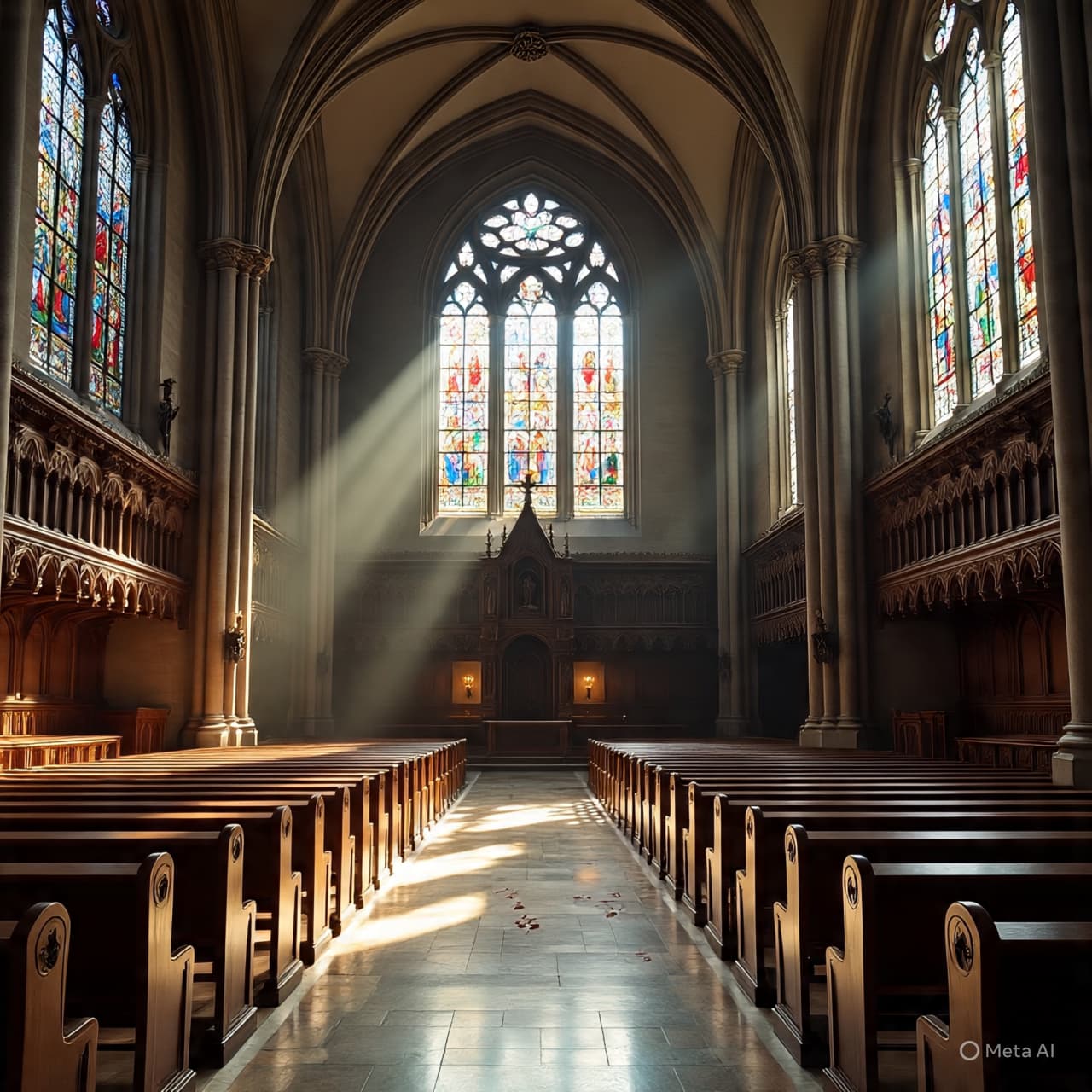
There is always a tension here — the line between pastoral voice and political gravity. In America, that line keeps getting thinner, louder, and more amplifiable.
So when Pope Leo delivers unusually sharp words toward Donald Trump — it lands with a deeper resonance because it reflects a broader cultural pattern: public faith figures no longer maintain the old diplomatic silence. Their language now enters the same algorithmic arena as campaign surrogates, viral clips, and issue-advocacy media.
The moral register gets compressed into the cadence of a campaign news cycle.
This isn’t a question of who is right or wrong. It is a question of what is happening to the civic membrane itself. We used to have layers of insulation: moral speech stayed in sanctuaries, political speech stayed on stages. Now the two vectors collide in the same feed, and everything inside that feed becomes politicized simply through proximity.
This is less about Trump specifically — and more about the structure of public attention.
When a religious leader aims sharp criticism toward a political actor, it is interpreted not as abstract moral reasoning but as an intervention into partisan meaning. It becomes content, not counsel. It becomes narrative, not nuance.
Which returns us to the deeper anxiety beneath all of this:
Are we still capable, as a culture, of listening to faith-anchored moral judgments *without* automatically mapping them onto
Published by Banx Network. This article is part of the Banx decentralized media programme, powered by the BXE token on the XRP Ledger.