
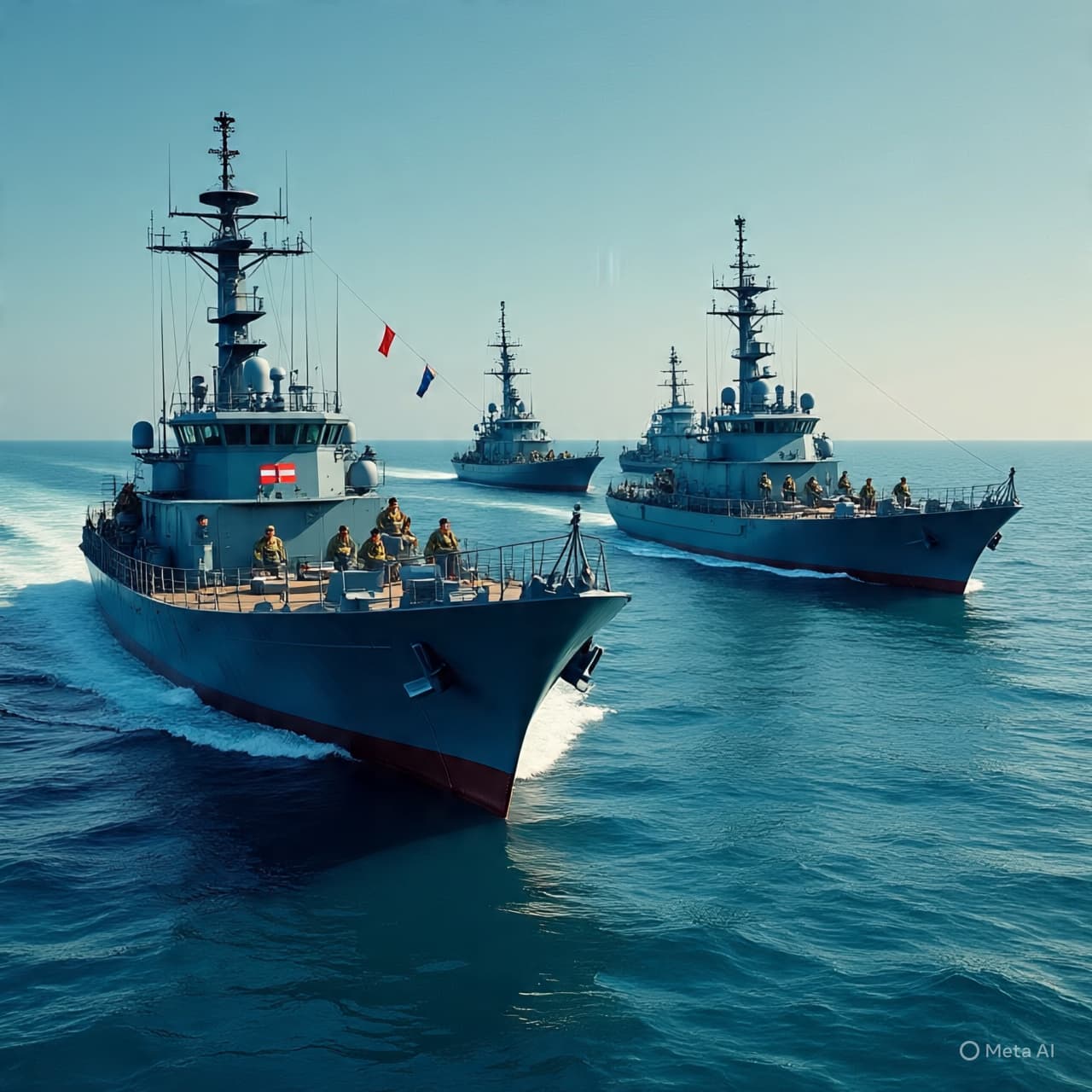
Key Highlights
- Multinational Cooperation:Five European nations and Japan are ready to contribute to securing the Strait of Hormuz.
- Critical Energy Corridor:The strait is a vital passage for global oil shipments, impacting economies worldwide.
- Ongoing Tensions:Recent geopolitical strains have raised concerns about the security of shipping routes in the region.
The Strait of Hormuz, a narrow waterway connecting the Persian Gulf to the open sea, is increasingly becoming a focal point of international attention. This vital corridor is not only significant in terms of geography but also in its implications for global trade and energy security. With a substantial portion of the world's oil shipments passing through these waters, any disruption can have far-reaching consequences for economies around the globe.
In light of escalating tensions in the region, reports have emerged indicating that five European nations, alongside Japan, are prepared to contribute to efforts aimed at securing the strait. The term "contribute" is deliberately vague, encompassing a range of potential actions such as naval deployments, logistical support, intelligence sharing, and coordination within broader international frameworks. This ambiguity, however, underscores a critical shift: the stability of the Strait of Hormuz is increasingly viewed as a shared global interest rather than merely a regional concern.
The importance of the Strait of Hormuz cannot be overstated. It serves as one of the world's most crucial energy corridors, with a significant percentage of global oil shipments traversing its waters daily. Any disruption in this passage can reverberate through international markets, affecting oil prices and economic confidence far beyond the immediate region. Recent incidents at sea and ongoing geopolitical tensions have heightened concerns regarding the security of these shipping routes, leading to a growing sense of fragility in the area.
As discussions of multinational involvement gain traction, they present both opportunities and challenges. On one hand, coordinated efforts can enhance security, deter potential escalations, and ensure the uninterrupted flow of trade. On the other hand, the introduction of multiple actors into a confined and sensitive area necessitates careful navigation to prevent miscalculations that could lead to conflict.
For nations like Japan, which heavily rely on energy imports, the stability of the Strait of Hormuz is not just a theoretical concern; it is a matter of economic necessity. Similarly, European countries view the security of this passage as integral to their energy security and market stability. Thus, the strait transforms from a mere geographical feature into a shared responsibility, shaped by the interplay of geography and international cooperation.
Despite the urgency of the situation, many details regarding the scope, timing, and structure of any contributions remain undefined. Ongoing discussions among the involved nations are expected to yield further clarity as they assess their roles in light of the evolving regional dynamics. As of now, officials have not announced a finalized plan for joint operations in the Strait of Hormuz, but the dialogue continues, reflecting the complexities of international relations in this critical area.
Published by Banx Network. This article is part of the Banx decentralized media programme, powered by the BXE token on the XRP Ledger.



