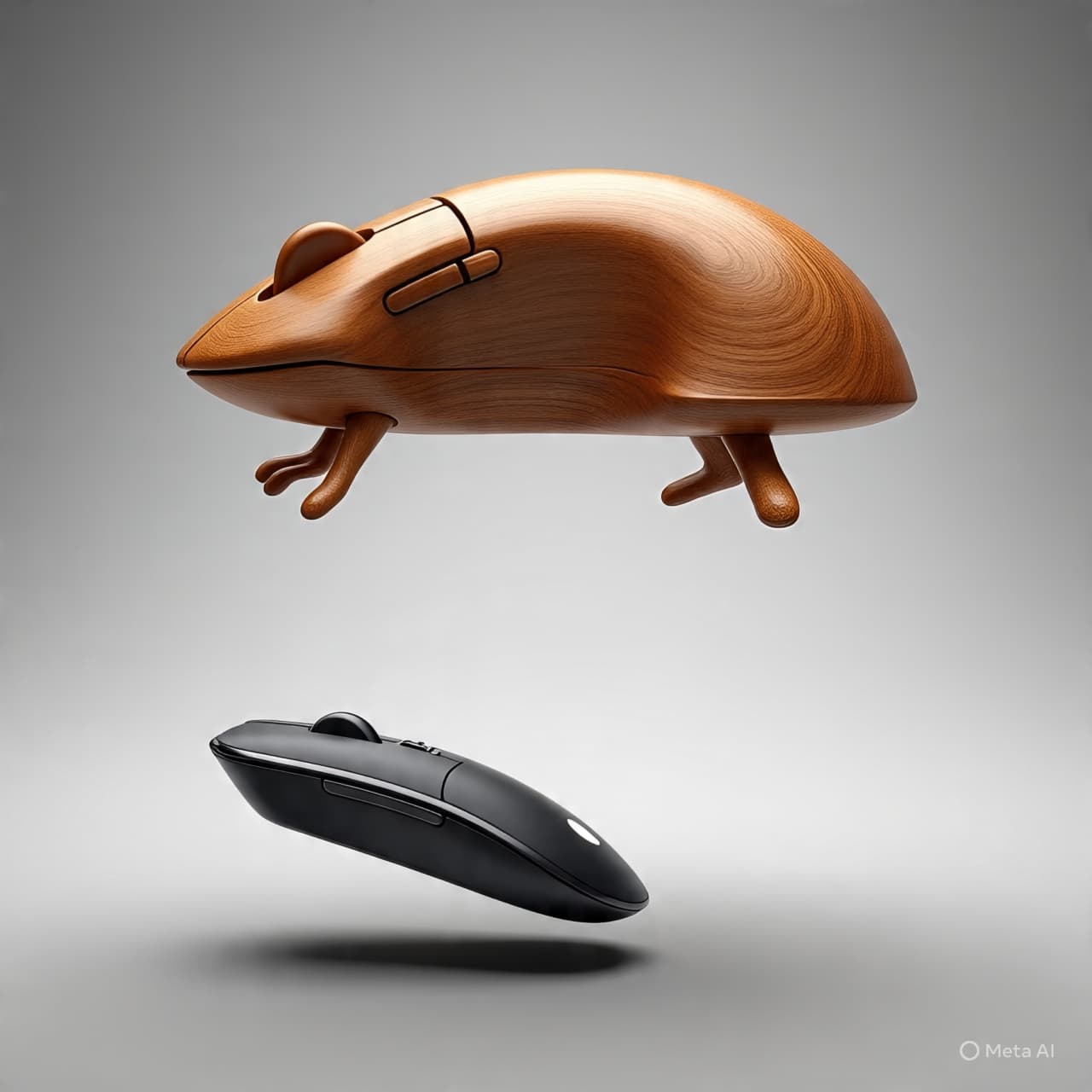
The Story of the Computer Mouse
The computer mouse, now a natural extension of the human hand, began its journey as a simple wooden box with wheels. In 1964, engineer Douglas Engelbart introduced the prototype at the Stanford Research Institute. At the time, the idea seemed futuristic—moving a cursor across a screen with a handheld device—but it would become one of the most enduring inventions of the digital era.
The first mouse had a rough, boxy form and just one button. It rolled on wheels that translated motion into screen movements. By the 1970s, Xerox PARC refined Engelbart’s concept with the ball mouse, allowing smoother and more intuitive control. This design caught the attention of Apple, which famously integrated it into the Macintosh in 1984, marking the mouse’s arrival into the mainstream.
Through the 1990s, as personal computers spread rapidly, the mouse evolved into a familiar companion. Ball mechanisms gave way to optical sensors, eliminating the need for cleaning and providing greater accuracy. Additional buttons, scroll wheels, and ergonomic curves transformed the mouse into a versatile tool for productivity and play alike.
In the 21st century, the mouse has taken on many forms: wireless designs freed it from cords, gaming mice introduced precision sensors and customizable buttons, while minimalist trackpads challenged its dominance in laptops. Even so, the mouse continues to thrive, balancing simplicity with innovation.
The story of the computer mouse is more than technical progress. It reflects the constant dance between human comfort and machine precision, between invention and everyday use. What began as an experiment in usability has become a lasting symbol of human interaction with technology.
*Disclaimer: if featured images are created by Meta AI, they may contain errors and not match the original.*
Published by Banx Network. This article is part of the Banx decentralized media programme, powered by the BXE token on the XRP Ledger.