
Key Highlights
- Reevaluation of the oldest known octopus fossil reveals new insights.
- Advanced imaging techniques challenge previous evolutionary timelines.
- The fossil may belong to a broader group of ancient cephalopods.
In the quiet corridors of paleontology, where time is measured not in years but in epochs, a fossil once believed to whisper the earliest story of octopuses has begun to speak a different truth. What was once accepted as a landmark discovery now stands under a softer, more questioning light, reminding us that science, like the tides, is always in motion.
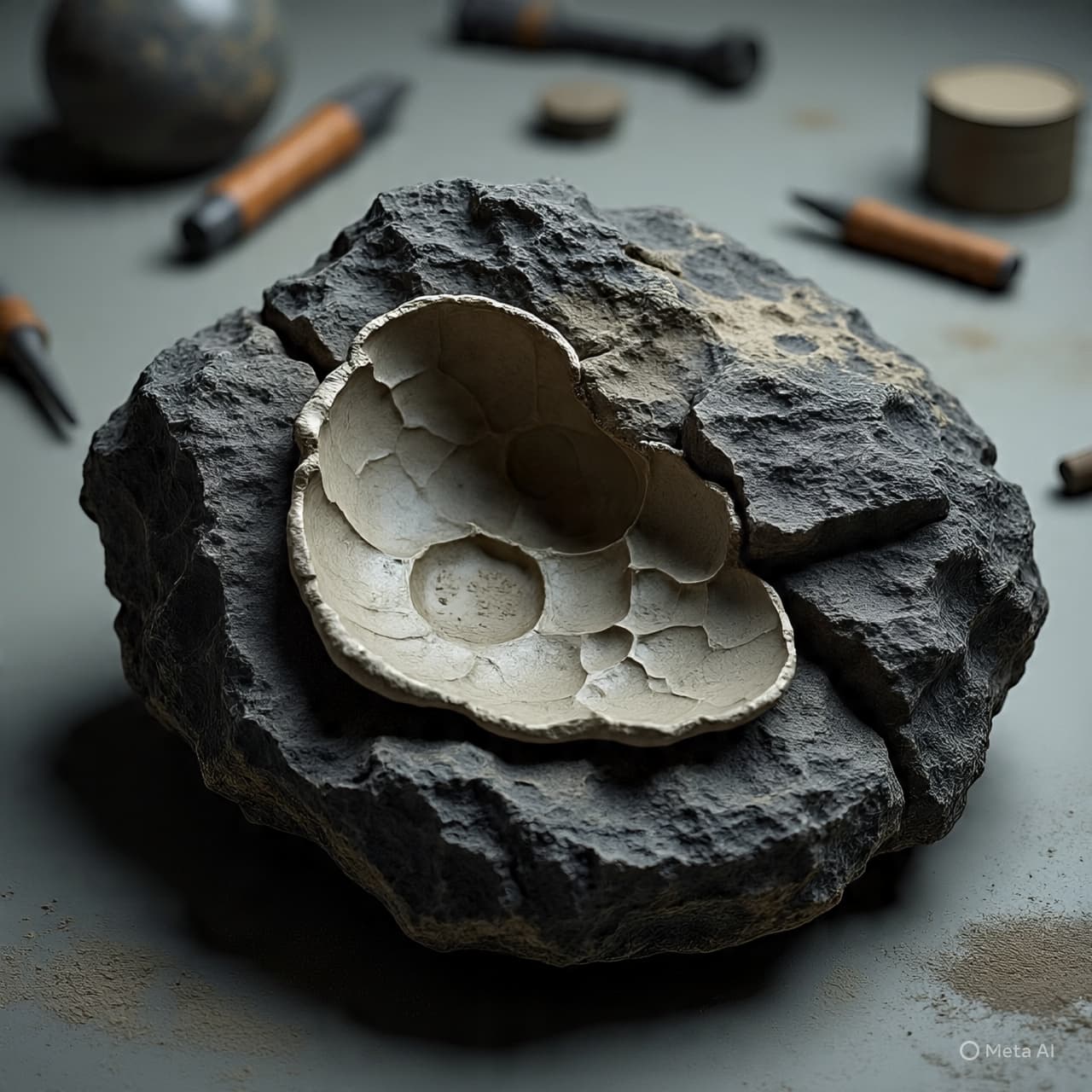
For years, the fossil in question was celebrated as the oldest known octopus, a delicate imprint of soft-bodied life preserved against improbable odds. Its existence suggested that octopuses had emerged far earlier than previously believed, reshaping timelines and evolutionary narratives. Yet, as new analytical tools refine our understanding, the fossil’s identity has been gently but firmly reconsidered.
Researchers revisiting the specimen employed advanced imaging and comparative anatomy techniques, examining features that had long been taken at face value. What they found was subtle yet significant. The structure of the arms, the arrangement of internal features, and the absence of certain defining characteristics began to diverge from what is expected of true octopuses.
Rather than belonging to the lineage of octopuses, the fossil appears to align more closely with a broader group of ancient cephalopods. These relatives, while sharing some similarities, lack the distinct evolutionary markers that define modern octopuses. The realization does not diminish the fossil’s importance, but instead places it within a more accurate evolutionary context.
This shift highlights the challenges inherent in studying soft-bodied organisms. Unlike bones or shells, their tissues rarely fossilize, leaving scientists to interpret faint impressions and incomplete evidence. In such a landscape, even small misinterpretations can ripple outward into larger scientific conclusions.
The correction also reflects the self-correcting nature of science. Initial interpretations, however widely accepted, remain open to revision as new data emerges. This process is not a failure, but rather a testament to the discipline’s commitment to truth over certainty.
Importantly, the timeline of octopus evolution now returns to a more conservative estimate. While octopuses remain ancient and remarkable creatures, their origins may not stretch as far back as previously thought based on this fossil alone.
For researchers, the story is less about loss and more about clarity. Each revision sharpens the broader picture of life’s history, even if it means letting go of earlier assumptions. The fossil still holds value, offering insight into the diversity of early marine life.
As the dust settles, the fossil continues to rest where it has for millions of years—unchanged in form, yet newly understood. In that stillness, it reminds us that discovery is not a destination, but an ongoing conversation between evidence and interpretation.
Published by Banx Network. This article is part of the Banx decentralized media programme, powered by the BXE token on the XRP Ledger.



