

Key Highlights
- Severe storms and tornadoes struck Mississippi, causing extensive damage.
- Approximately 500 homes were reported damaged across several communities.
- Community response efforts are underway to assist affected families.
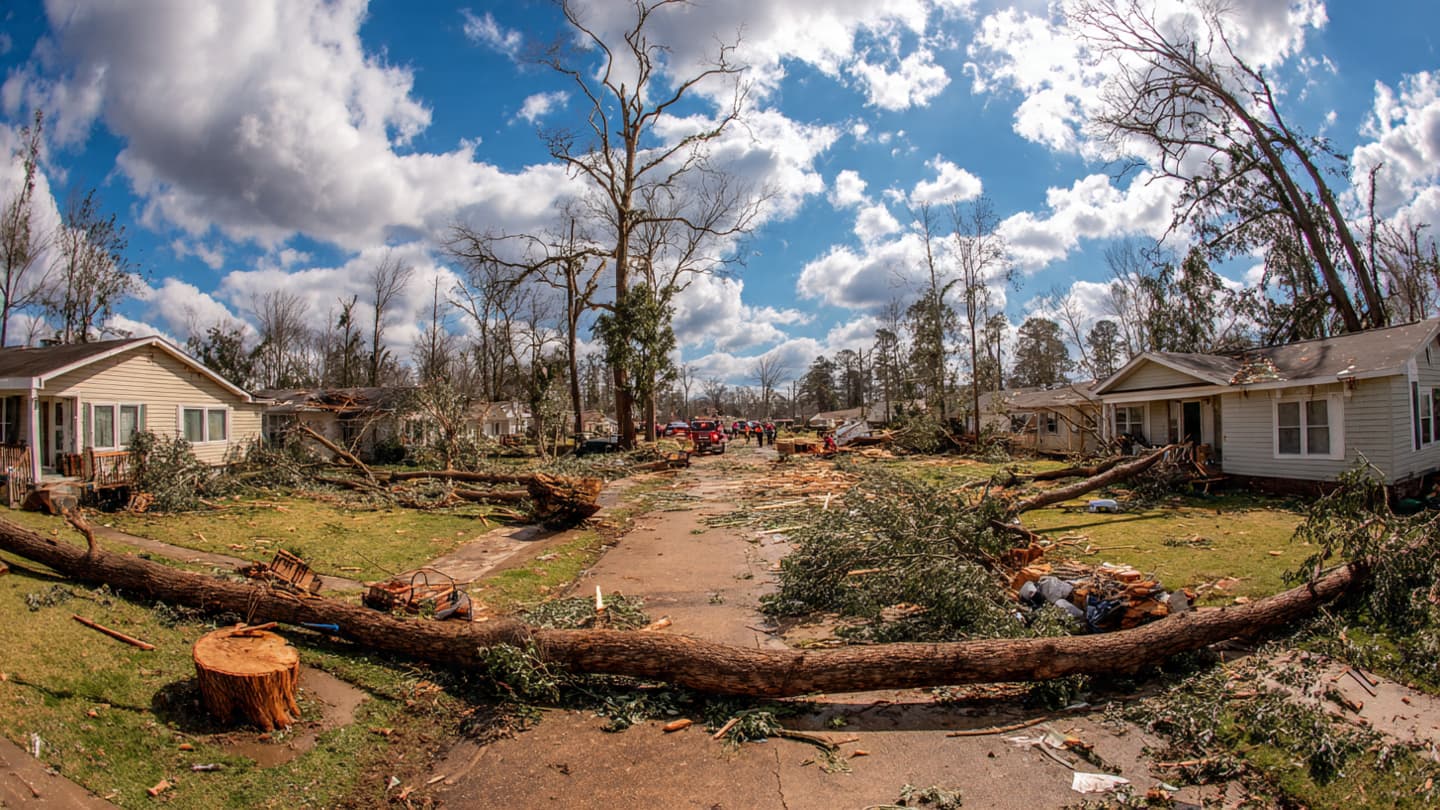
Severe storms and tornadoes swept through Mississippi recently, leaving a trail of destruction that has significantly impacted local communities. Residents awoke to find their neighborhoods transformed, with shattered roofs, uprooted trees, and debris-laden roads. Emergency officials reported that around 500 homes suffered varying degrees of damage, with some structures heavily impacted, prompting a swift response from rescue crews and utility workers.
The storms were part of a broader pattern of severe weather affecting the southern United States. Meteorologists had issued warnings ahead of the system's arrival, alerting residents to the potential for tornadoes, hail, and dangerous wind conditions. Despite these warnings, the speed and intensity of the storms caught many communities off guard, leading to sudden disruptions in daily life.
In the aftermath, streets that had once been bustling with activity were now lined with broken power poles and scattered belongings. Trees had fallen onto homes and vehicles, and emergency shelters were opened for those displaced by the damage. Local authorities urged residents to exercise caution as crews worked tirelessly to restore electricity and assess the safety of structures.
Officials highlighted the importance of weather preparedness during the spring storm season, a time when atmospheric conditions can shift rapidly. Tornadoes are among the most destructive weather phenomena in the United States, particularly in southern states where warm, moist air frequently collides with colder systems. This year’s storms serve as a stark reminder of the unpredictable nature of severe weather.
Community response efforts began almost immediately, with volunteers, churches, and local organizations mobilizing to gather supplies and assist families affected by the storms. In many towns, neighbors came together to help clear fallen branches and salvage personal belongings from damaged homes. These moments of solidarity often reveal the resilience of communities in the face of disaster, showcasing how ordinary acts of kindness can make a significant difference.
As meteorologists continued to monitor the situation, they warned that unstable weather conditions could persist in surrounding regions. Authorities encouraged residents to stay alert to emergency broadcasts and weather alerts as recovery operations progressed. The aftermath of natural disasters often extends beyond physical damage; they disrupt routines, challenge local infrastructure, and highlight the delicate balance between preparedness and unpredictability.
Despite the wreckage, recovery efforts are beginning to take shape, with state and local agencies conducting damage assessments and coordinating support for affected residents. Officials have not ruled out the possibility of additional federal assistance, depending on the extent of the destruction.
In conclusion, while the storms have left a significant mark on Mississippi, the community's response demonstrates resilience and solidarity in the face of adversity. As recovery efforts continue, the focus remains on rebuilding and restoring normalcy for those affected.
Published by Banx Network. This article is part of the Banx decentralized media programme, powered by the BXE token on the XRP Ledger.




