The border between Lebanon and Syria has always been a place of quiet passage. Mountain roads wind through valleys where trucks idle at dawn, where checkpoints blink awake with the day, where history settles into the landscape like dust. On this night, the air was different—thicker, as if holding its breath. The sound came suddenly, splitting the dark, a sharp interruption in the long rhythm of winter along the frontier.
In the hours before dawn, Israeli warplanes struck targets near the Lebanon–Syria border, killing four people. The bombs fell on an area often described in brief military language—a corridor, a route, a crossing—but lived as a geography of farms, warehouses, and narrow roads that stitch two countries together. For those nearby, the explosions arrived without commentary, without context, only the vibration through walls and the echo rolling off the hills.
Israeli officials said the strikes targeted infrastructure used for weapons transfers, part of a campaign they describe as necessary to disrupt the movement of arms to hostile groups. Along this border, such explanations have become familiar, repeated with slight variations over the years. The region has long been framed as a strategic seam, a place where regional conflicts overlap and harden.
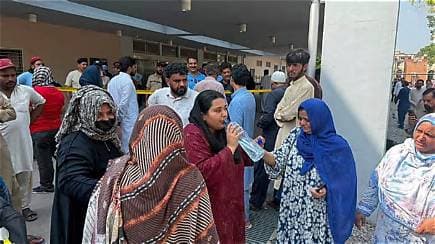
Lebanese security sources confirmed that four people were killed in the attack. Their identities were not immediately made public. Ambulances moved through the night, their lights briefly illuminating roads more accustomed to darkness than urgency. In nearby villages, residents woke to the knowledge that something had happened, even before the details arrived.
The strike comes amid sustained tensions following months of regional escalation. Since the war in Gaza began, the northern front has simmered, with exchanges of fire between Israel and Hezbollah along the Lebanese border becoming part of the background noise of the conflict. Israeli airstrikes inside Lebanon have expanded in range and frequency, while Lebanon’s fragile calm has grown thinner with each incident.
Along the Syria side of the border, the terrain tells another story—one of years of war, shifting control, and blurred lines of authority. The border itself is less a line than a gradient, shaped by alliances and enmities that stretch far beyond the mountains. It is here that Israel has repeatedly said it seeks to prevent Iran-backed forces from entrenching themselves, striking what it describes as logistical nodes rather than positions of the Lebanese state.
In Beirut, official reactions were measured but tense, reflecting a country already under immense economic and political strain. Each strike adds another layer of uncertainty to a nation accustomed to living with unresolved questions. In Damascus, state media reported the attack as a violation of sovereignty, language that has accompanied similar incidents over the years.
The facts, once assembled, remain stark. Four people are dead. Another stretch of border has absorbed the shock of an airstrike. No immediate escalation followed, no instant widening of the conflict. Yet the night did not pass quietly. It left behind a reminder of how easily this landscape, so used to waiting, can be pulled back into motion.
By morning, the roads reopened. Trucks resumed their slow crossings. The mountains stood unchanged. But beneath the ordinary rhythm of the day lingered the knowledge that this border, like so many in the region, remains less a boundary than a fault line—silent until it isn’t.
AI Image Disclaimer Illustrations were created using AI tools and are not real photographs.
Sources Reuters Associated Press Al Jazeera BBC News
Published by Banx Network. This article is part of the Banx decentralized media programme, powered by the BXE token on the XRP Ledger.