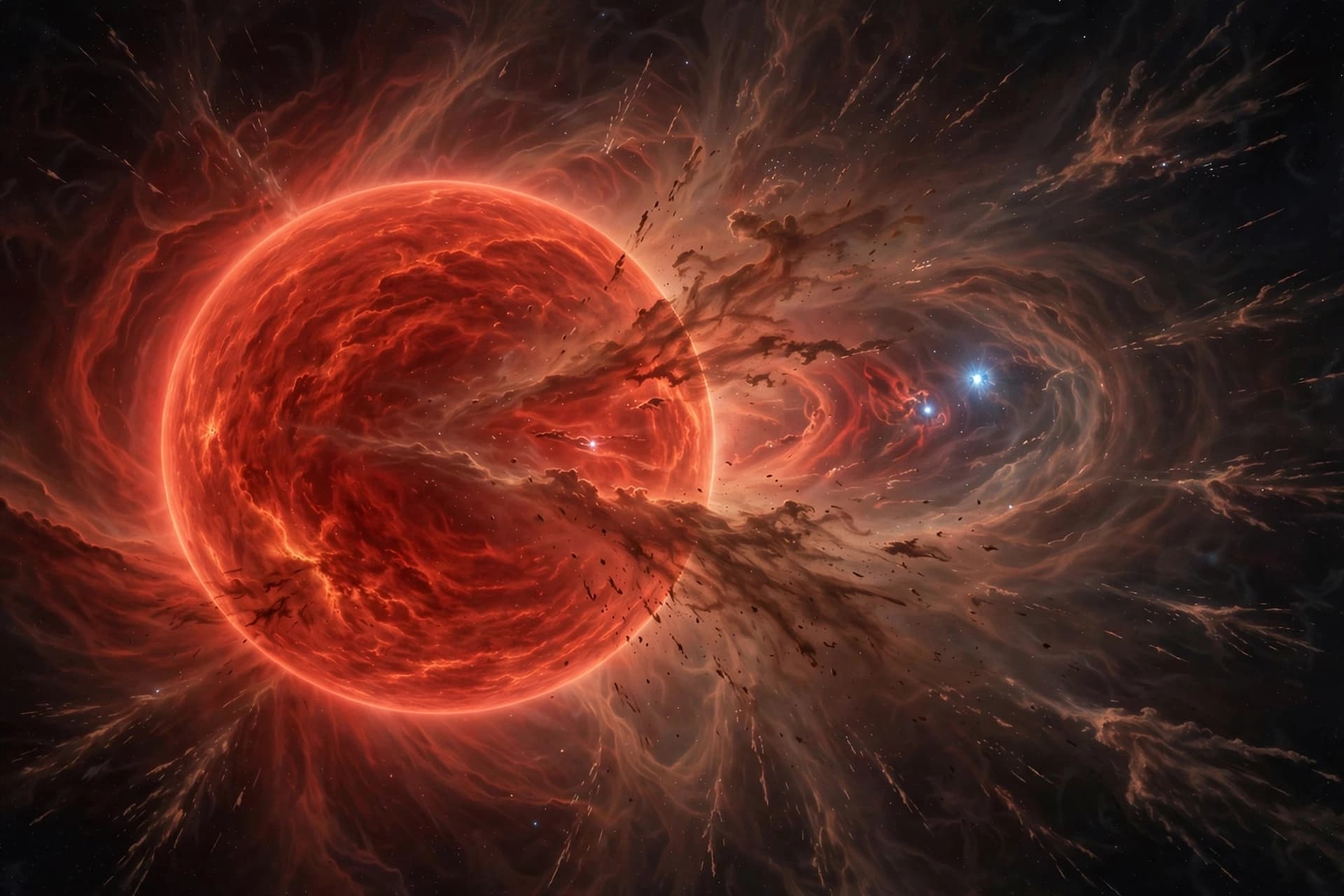
In late 2019, Betelgeuse did something it had not done in more than a century of record-keeping: it dimmed, dramatically and mysteriously, losing more than half its usual brightness. For months, astronomers and the curious public alike watched the red supergiant flicker, wondering whether this was a prelude to something more violent. It was not. The star had ejected a billion tons of material, a vast cloud of dust that partially blocked our view. Now, new radio observations have confirmed what many hoped: the atmosphere has largely recovered, and the star is, in its own slow way, returning to normal.
The observations, spanning 2021 to 2026, used the Karl G. Jansky Very Large Array and the Atacama Large Millimeter/submillimeter Array to probe Betelgeuse’s atmosphere at seven radio frequencies, from 22 to 485 gigahertz . Because different frequencies penetrate different depths, the combined data allowed the team to build a layer-by-layer picture of the star’s extended atmosphere, from just above its visible surface out to several times its radius. The lead author, Dr. Lynn Matthews of MIT Haystack Observatory, noted that the combination of VLA and ALMA data was what made a convincing result possible .
At 22 and 44 gigahertz, the brightness temperature—a measure of how much radio energy the gas is emitting—had climbed back to typical levels after the historic lows observed in 2019, just before the Great Dimming . Near a radius of about 2.7 times the star’s size, the gas now measures around 3,500 Kelvin, comparable to Betelgeuse’s own surface temperature . The atmosphere, in other words, has settled.
But the data also revealed something more subtle. The peak brightness temperature now occurs at a larger radius than in measurements prior to 2016, a shift that may reflect an evolution in the atmospheric density profile following the dimming event . And the highest-frequency ALMA measurements confirmed a long-suspected temperature minimum—a cool layer sandwiched between the star’s visible surface and its chromosphere—where temperatures drop to roughly 2,200 Kelvin, over a thousand degrees cooler than the photosphere itself . This chilly layer coincides with the so-called MOLsphere, a shell of molecular gas long inferred from infrared observations but rarely probed so directly.
Perhaps the most intriguing thread in the new results concerns Betelgeuse’s companion. A small, hot star named Siwarha, whose existence was proposed in 2024 to explain the supergiant’s mysterious 2,100-day brightness cycle, orbits deep within Betelgeuse’s extended atmosphere . The new radio measurements found a correlation between the ellipticity of Betelgeuse—the slight distortion of its shape—and the companion’s orbital phase. The results are consistent with periodic perturbations of the atmosphere by the smaller star, a kind of gravitational stirring that ripples through the outer layers .
What makes this work significant is not any single finding but the accumulation of clarity. The Great Dimming was a spectacle, but it was also a disruption, and understanding how Betelgeuse recovered tells us something about how red supergiants manage their atmospheres and their mass loss. These are stars near the end of their lives, shedding material into space, and the processes that govern that shedding are not fully understood. Radio observations, which can see through the dust that obscures visible light, offer a way to watch the star’s breath.
The recovery does not mean Betelgeuse is finished with its surprises. It remains a variable star, and its atmosphere remains dynamic, stirred by convection and by its companion. But for now, the crisis has passed. The star that dimmed and worried us has cleared its throat and returned, roughly, to itself. There is comfort in that, even at a distance of hundreds of light-years.
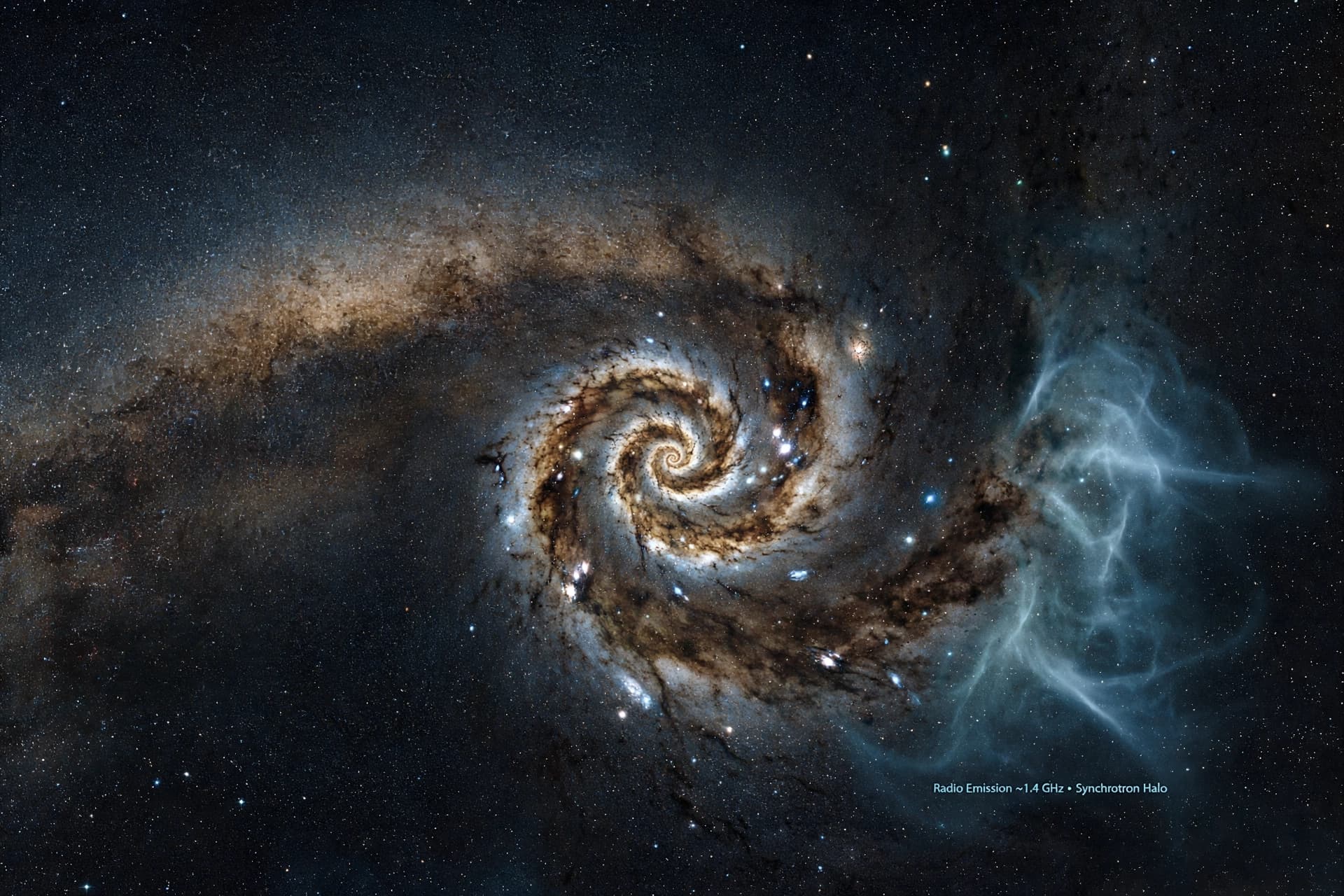
Image note: The visuals in this article were created with artificial intelligence and are not actual radio telescope data.
Sources: MIT Haystack Observatory, National Radio Astronomy Observatory, Nanowerk, arXiv, The Astronomical Journal
Published by Banx Network. This article is part of the Banx decentralized media programme, powered by the BXE token on the XRP Ledger.