
Key Highlights
- Election Day Approaches:Benin prepares for a pivotal presidential vote.
- Romuald Wadagni's Campaign: The front-runner emphasizes economic stability.
- Cotonou's Atmosphere: The city reflects a mix of routine life and electoral anticipation.
In the coastal hush of Cotonou, where Atlantic winds move through streets lined with palm shadows and vibrant market colors, the rhythm of the city begins to shift. This change is subtle, akin to a collective breath held a moment longer than usual. Flags flutter not merely as declarations but as signals of a chapter nearing its conclusion.
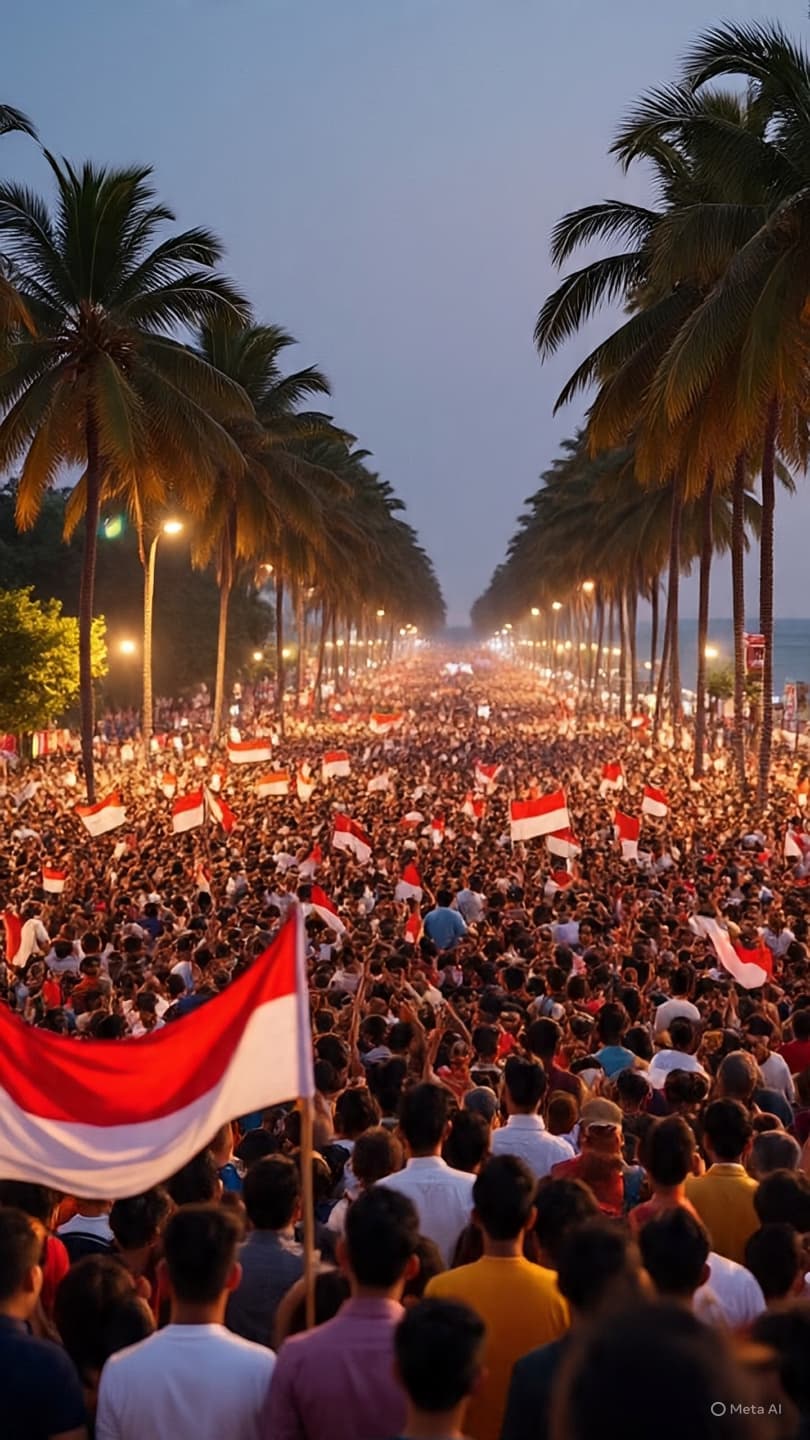
As Benin’s presidential campaign reaches its final stretch, the atmosphere is charged with anticipation. The front-runner, Romuald Wadagni, held a final rally that drew attention across the nation as voters prepare for their decision. This gathering, set against the backdrop of a country known for its orderly transitions, serves as a concluding gesture—an attempt to gather momentum before the silence of election day descends.
The campaign season has unfolded across Benin with a measured cadence, characterized by public meetings, regional visits, and consistent engagement with themes of economic governance. Wadagni, previously the finance minister, has framed his campaign around continuity and economic stewardship, appealing to voters concerned with fiscal direction and development priorities. His message resonates with segments of the electorate who value institutional stability.
As the final rally unfolds, the energy of supporters rises and falls like waves against harbor walls. There is a familiarity to the scene, yet a quiet awareness that such moments are fleeting. Campaign seasons, no matter how carefully constructed, inevitably drift toward closure, where rhetoric gives way to ballots and public expression narrows into private choice.
Meanwhile, everyday life in Cotonou continues in parallel rhythms. Markets buzz with activity, taxis navigate busy intersections, and conversations flow between politics and daily concerns. Yet beneath this normality lies an awareness that the upcoming vote will soon shift the national tempo. In Benin, where democratic processes have been noted for their relative stability, elections carry both procedural certainty and emotional weight.
Political observers note that the contest has been shaped less by abrupt disruptions and more by gradual positioning. Campaign narratives have centered on economic resilience, governance efficiency, and the ongoing development of public infrastructure. Voters are encouraged to consider not just leadership but the trajectory of the nation—how it moves forward within a broader West African context marked by both opportunity and uncertainty.
Thus, the final rally becomes a moment of condensation: weeks of messaging compressed into a single evening of speeches, applause, and collective attention. Yet even as voices fill the air, there is an underlying recognition that the most decisive moment will occur later, in quiet polling stations across towns and cities.
As night approaches, the lights of Cotonou reflect softly on wet pavement, and the city settles into a reflective calm. The sounds of the campaign begin to fade, leaving behind the familiar textures of urban evening life. What remains is anticipation—unspoken but palpable—of the transformation that elections inevitably bring, even when change is measured rather than dramatic.
When ballots are cast, the outcome will clarify not only leadership but the direction of policy continuity in one of West Africa’s steadily evolving democracies. For now, however, the final rally stands as a closing note in a longer composition, one that will soon be read not in speeches or gatherings, but in the quiet tally of votes.
Published by Banx Network. This article is part of the Banx decentralized media programme, powered by the BXE token on the XRP Ledger.



