
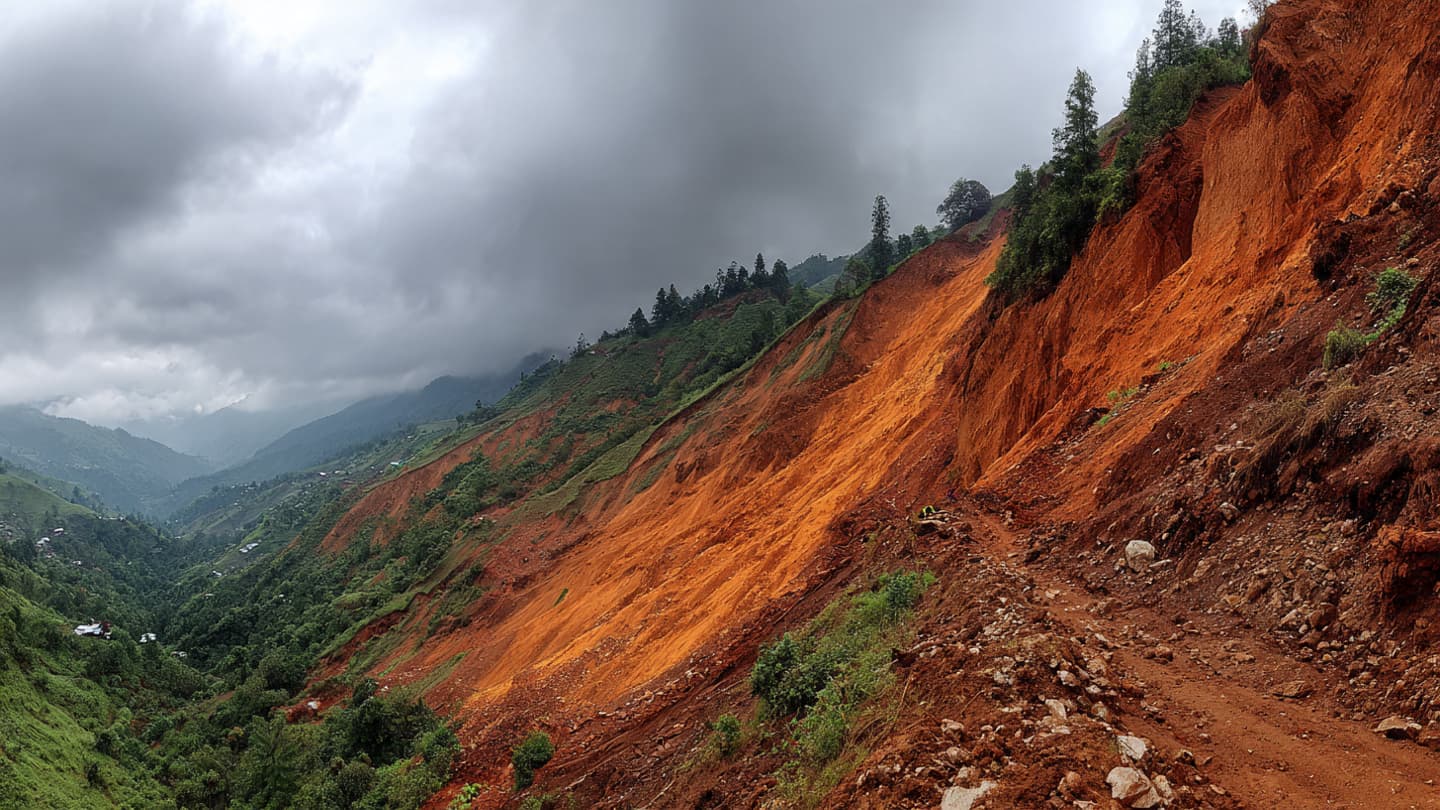
Key Highlights
- A landslide in Antioquia, Colombia, has buried key roads, disrupting local transport.
- Rescue operations are underway, with community members assisting recovery efforts.
- Weather patterns have become increasingly unpredictable, raising concerns about future landslides.
The mountains of Antioquia have long held a silent vigil over the winding roads that thread through their verdant, steep-sided valleys. Yet, there are moments when the earth itself decides to move. In the quiet hours when the mist clings to the canopy, the internal architecture of the soil can shift under the weight of saturation, turning a steadfast slope into a descending river of debris. This phenomenon is a slow gathering of pressure that culminates in a sudden, thunderous release, where the boundary between solid ground and open air vanishes in an instant. Such is the nature of the terrain in rural Colombia, where the majesty of the landscape is often inseparable from its inherent fragility.
As the sun rose over the scarred hillside, the scale of the displacement became visible to those who arrived to help. The road, once a vital artery for the movement of people and goods, now lay buried beneath a chaotic tapestry of fractured rock and uprooted timber. A specific stillness follows a landslide—a heavy, expectant quiet that settles over the site as the dust begins to rest. In this space, the machinery of rescue feels small against the enormity of the mountain’s collapse, reminding observers of the delicate tether by which human infrastructure clings to the wild earth.
The search for those who might have been caught in the path of the falling earth began with a measured urgency, guided by the hope that the mountain had spared more than it claimed. Men in bright vests moved across the shifting mounds, their shadows long against the broken pavement and the red-brown earth that now dominated the scene. Every stone moved and every bucket of silt cleared was a gesture toward reclaiming the lost connection between the villages. The rhythm of the work was steady, a collective effort to undo the work of a single, violent minute of geological adjustment.
Weather patterns in the region have become increasingly unpredictable, casting a shadow of uncertainty over the seasonal rains that feed the lush greenery of the Andes. When the clouds gather with a particular density, residents of these rural corridors look to the heights with a mix of reverence and caution. The saturation of the earth is a silent process, hidden beneath the surface until the very moment the friction gives way. It serves as a reminder that the environment is not a static backdrop but a living, breathing entity that occasionally asserts its dominance over the paths we carve through it.
Within the heart of the operation, stories of missed connections and delayed travelers began to emerge, forming a narrative of near misses and quiet gratitude. A bus that had passed minutes before, a truck that had stopped for a moment of rest—these are the small flickers of timing that define the difference between tragedy and memory. The air remained thick with the scent of damp earth and diesel, a sensory anchor to the reality of the physical labor required to restore the passage.
Communication between the isolated sectors remained fragmented as the day progressed, with teams working to establish a perimeter of safety around the unstable slope. The risk of further movement is a constant companion in these efforts, as the mountain remains restless until a new equilibrium is reached. Geologists and engineers stood among the laborers, their eyes tracing the jagged lines of the crown where the earth had first detached, seeking to understand the geometry of the slide. Their presence added a layer of technical solemnity to the visceral scene of the excavation.
The community surrounding the site responded with quiet resilience, offering what they could to the workers who toiled under the tropical sun. In the absence of a clear road, local knowledge of hidden trails and alternative routes became the new currency of the valley. It is in these moments of disruption that the social fabric of the rural highlands reveals its strength, weaving together a support network that compensates for the sudden loss of physical infrastructure. The road is more than just asphalt; it is the thread that binds the social and economic life of the region.
As the evening approached, the heavy equipment continued to growl against the silence of the surrounding forest, casting artificial light over the work area. The process of clearing such a massive volume of material is an exercise in patience and persistence, reflecting the community's determination to restore their vital connections.
Published by Banx Network. This article is part of the Banx decentralized media programme, powered by the BXE token on the XRP Ledger.



