
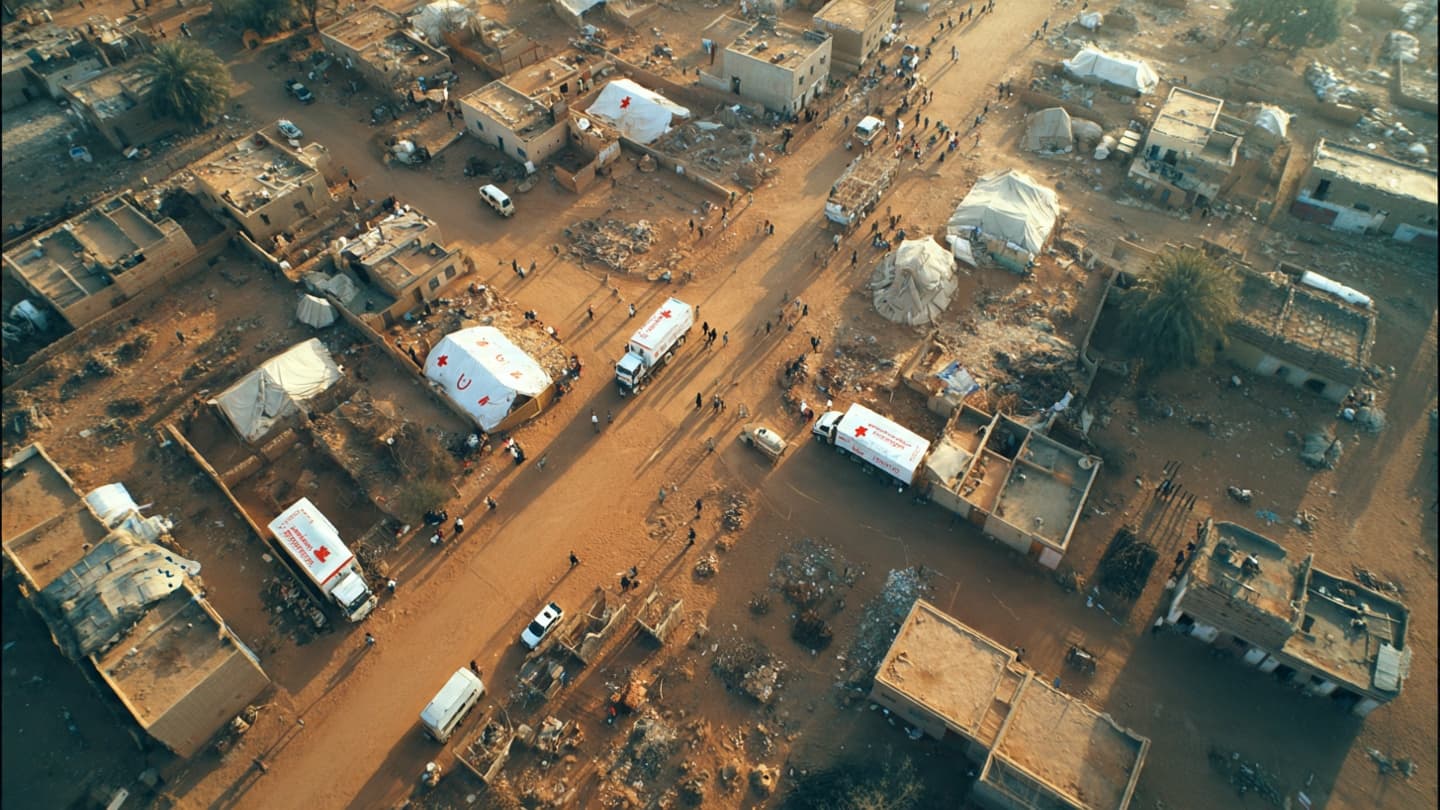
Key Highlights
- Over 1,000 civilians killed by drone strikes in Sudan from January to May 2026.
- The conflict began in April 2023, escalating from a power struggle to a humanitarian crisis.
- International agencies describe Sudan as one of the world's most severe humanitarian emergencies.
The ongoing conflict in Sudan has taken a devastating turn as drone warfare increasingly becomes a hallmark of the violence. Reports from the United Nations indicate that between January and May 2026, more than 1,000 civilians lost their lives due to drone strikes. This alarming statistic underscores a significant escalation in the use of unmanned aerial vehicles in the conflict, which began in April 2023 amid a power struggle between the Sudanese Armed Forces and the paramilitary Rapid Support Forces.
Initially a political and military confrontation, the conflict has spiraled into a nationwide humanitarian crisis, affecting millions. The reliance on drone strikes has transformed the nature of warfare in Sudan, allowing for attacks over broader areas and under conditions that previously limited military operations. Human rights officials have reported that armed drones are now responsible for the majority of civilian deaths linked to direct attacks, raising serious concerns about the protection of noncombatants.
The humanitarian impact of this conflict extends far beyond immediate casualties. Communities already grappling with displacement, food insecurity, and inadequate healthcare are now facing intensified violence that threatens their very survival. International agencies have described Sudan as one of the most severe humanitarian emergencies globally, with millions in need of assistance.
In addition to the physical dangers posed by drone strikes, human rights organizations have documented alarming reports of sexual violence, forced displacement, and attacks on vulnerable populations. These issues have prompted renewed calls for stronger international engagement and greater protection for civilians caught in the crossfire of competing forces.
Diplomatic efforts to mitigate violence have encountered persistent obstacles. While international bodies continue to advocate for restraint and accountability, the evolving dynamics of the conflict complicate efforts to achieve a lasting resolution. The growing role of drone warfare illustrates how modern conflicts can rapidly evolve, often outpacing existing humanitarian safeguards and increasing risks for noncombatants.
The United Nations has reiterated its call for all parties to adhere to international humanitarian law as monitoring and documentation efforts continue across the country. The situation remains dire, with the international community urged to take decisive action to protect civilians and address the escalating humanitarian crisis in Sudan.
Published by Banx Network. This article is part of the Banx decentralized media programme, powered by the BXE token on the XRP Ledger.



