
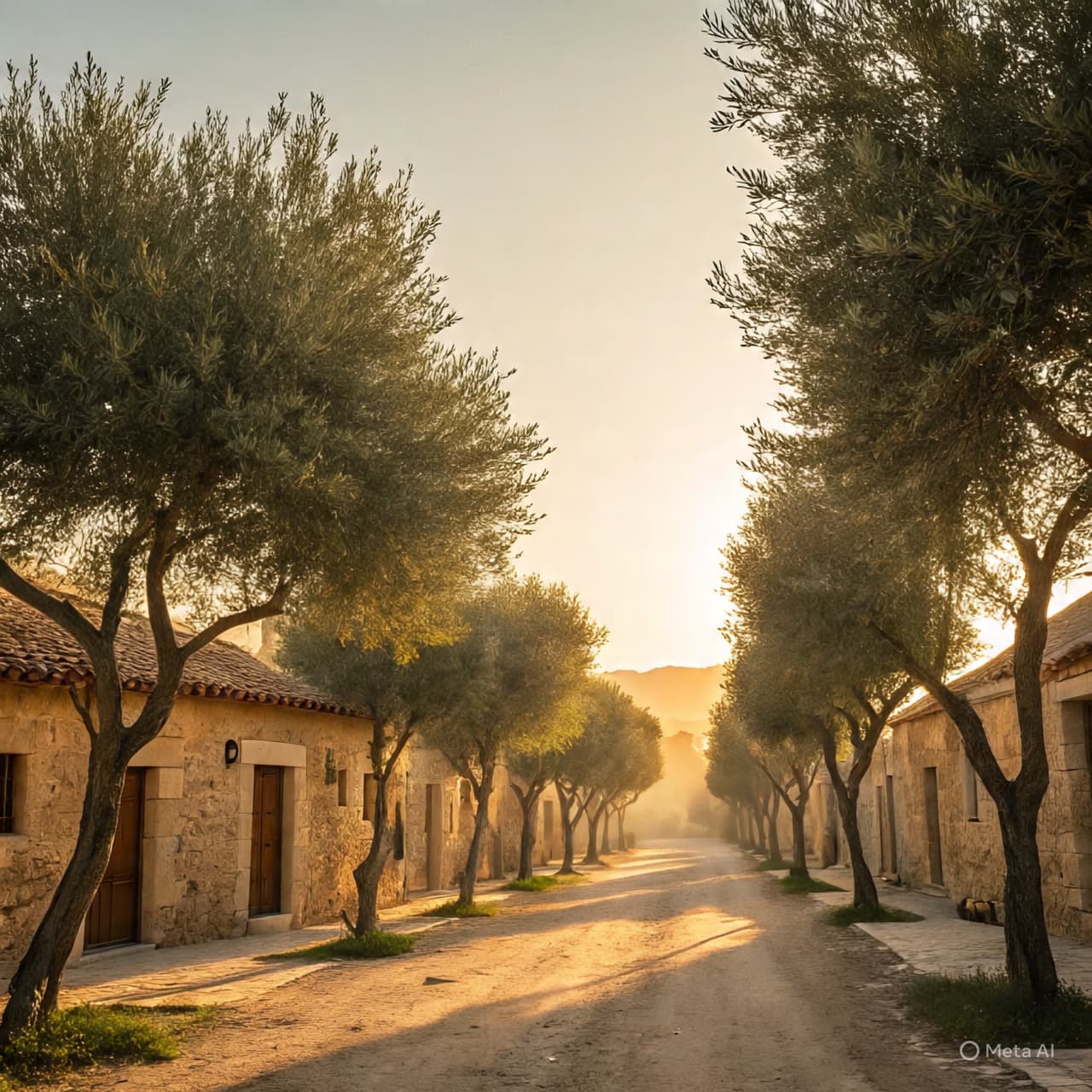
The first light in the West Bank often comes wrapped in a soft haze that drifts across olive groves and stone houses, a quiet hour when shadows seem longer than footsteps and the land holds its breath between night and day. In those dawn moments, life often moves in gentle rhythms — the bleat of a goat, the slow unfolding of market stalls, children’s laughter echoing through alleyways. Yet in the village of Tayasir, this fragile calm recently gave way to something harsher: a confrontation that reverberated through the wider landscape of the Israeli‑Palestinian tension and left its imprint on both people and place.
The morning after a group of Israeli settlers established an outpost on lands claimed by Palestinians, what unfolded was less a scene of dialogue than a tableau of conflict. Local residents say settlers entered the village in the early hours, firing shots into the air and beating several Palestinians as dawn broke over fields and homes. By the time the army arrived, a new outpost had taken shape near the edge of the village — its very presence a reminder of the protracted dispute over land and livelihoods. [turn0news1]
It was into this uneasy setting that a team from an international news organization came to bear witness. Rather than focusing on the settlers who initiated the clash, the soldiers who intervened that day detained Palestinian residents and members of the press. One photojournalist was reportedly grabbed from behind, knocked to the ground, and his camera damaged in the process — a tool meant to shine light on events now caught in the crosscurrents of disorder. [turn0news3]
Amid the fragments of stone and the rumble of early traffic, remarks attributed to some of the soldiers on the ground lingered in the air long after the detentions were lifted: phrases about land belonging to one people, labels of fear and threat applied to entire communities, and even talk of “revenge” for the death of an Israeli settler at the scene. These sentiments — whether born of personal loss, political conviction, or something subtler — echoed a discourse that has shaped the West Bank for years, where words and walls alike can delineate belonging and exclusion. [turn0news3]
This is a landscape marked by overlapping histories: olive trees rooted where generations have tended them, narrow paths that wind between homes and fields, and the invisible lines of identity and aspiration that crisscross daily life. In recent days and weeks, similar scenes have unfolded elsewhere across the occupied territory, with groups of settlers carrying out raids on villages, burning homes and vehicles, and injuring residents while Israeli security forces often stand by without making arrests. Human rights groups have described these episodes as part of a pattern of violence that affects communities’ sense of security and the possibility of coexistence. [turn0news22]
For many Palestinian families, the drive to document these moments — through video, voice, and camera lens — has become a kind of refuge, a way to preserve truth amid the swirl of allegation and counter‑claim. “The camera is my only weapon,” a resident of Tayasir once said, “it’s the one thing that can prove my innocence,” underscoring how bearing witness becomes itself an act of resilience in uncertain times. [turn0news3]
And yet, in the softening light of dusk, there are reminders of life’s continuity beyond the headlines: goats grazing in distant terraces, the gentle cadence of prayers from a nearby mosque, and children walking home through fields that have known both tranquility and turmoil. In this land where memories are etched into every stone and story, the day’s events will become part of the ongoing narrative — a quiet layer in the broader tapestry of human experience, where gestures of tension and everyday rhythms intertwine in the long arc of life here.
AI Image Disclaimer Visuals are AI‑generated and serve as conceptual representations.
Sources AOL News / CNN reporting Mezha news summary The Guardian reporting Wikipedia (Israeli settler violence) Reuters background on incursions
Published by Banx Network. This article is part of the Banx decentralized media programme, powered by the BXE token on the XRP Ledger.


