
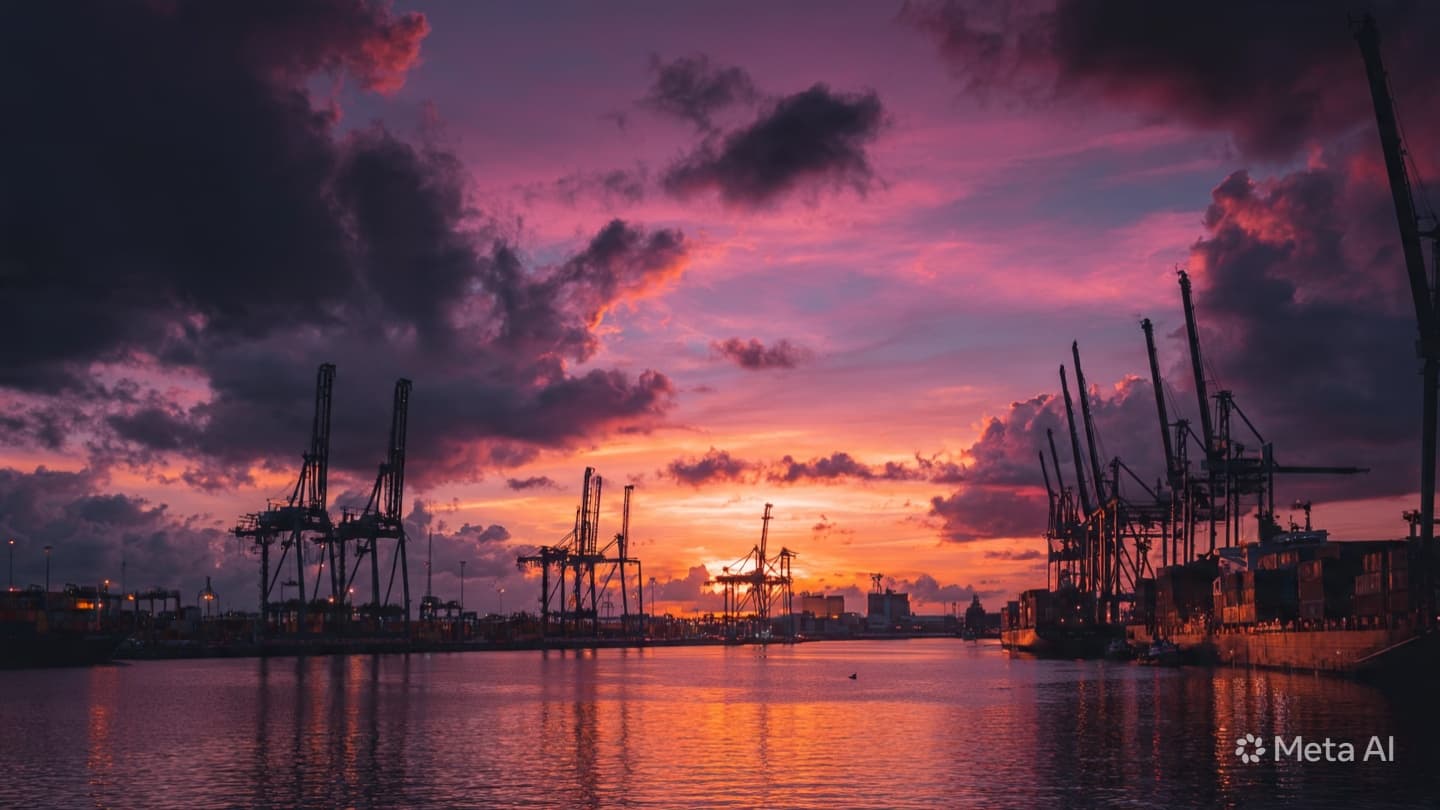
The harbor has a way of absorbing secrets, its dark water moving in a continuous, heavy swell that seems to promise absolute forgetting. Along the piers, the wood is thick with the scent of creosote and salt, a combination that speaks of long journeys and the slow, inevitable decay brought by the sea. In the late afternoon, the gulls circle low over the industrial cranes, their cries sounding thin and distant against the low rumble of regional traffic. It is a landscape defined by utility, where beauty is entirely accidental, found only in the way the setting sun turns the oil-slicked surface of the water into a brief, brilliant tapestry of metallic hues.
Movement here is usually predictable, governed by the strict schedules of container ships and the steady rotation of security shifts. When an irregularity occurs within this industrial ballet, it is noticed first by those who spend their lives working the docks—the crane operators, the line handlers, the customs clerks. A vessel riding too low in the water or an unmapped truck idling near a restricted warehouse can cause a subtle shift in the local atmosphere. It is an intuitive recognition that the established order has been tinkered with, a quiet ripple of awareness that precedes any official declaration or flashing siren.
The cargo that moves through these terminals is vast and anonymous, sealed inside steel boxes that look identical from the outside. This anonymity is both the strength and the vulnerability of the modern port, a system built on speed and volume where individual human agency can sometimes become obscured. When contraband or illicit goods are discovered hidden within these metallic bellies, it reveals the hidden friction between global commerce and local enforcement. The discovery disrupts the smooth flow of logistics, forcing a temporary halt to the cranes and bringing a sudden, quiet intensity to the concrete loading bays.
Forensic teams working in maritime environments face unique challenges, their efforts complicated by the constant movement of the tides and the corrosive nature of the air. They move through the narrow corridors of intercepted vessels with a precise focus, their flashlights cutting through the damp darkness of holds that have spent weeks at sea. Every object found must be catalogued within a narrative of origin and intent, transforming random physical items into pieces of a legal puzzle. The process is quiet, methodical, and entirely removed from the external drama of the city that waits just beyond the port gates.
As news of a major seizure filters out into the surrounding coastal communities, it brings a sober reminder of the unseen networks that trace their way across the oceans. The sea is often romanticized as a space of pure freedom, but it is also a highway used by those who operate outside the boundaries of international law. For the residents who watch the ships pass from their coastal windows, the vast waters take on a slightly different character, seeming less like an open horizon and more like a complex border requiring constant vigilance.
The legal proceedings that follow these maritime interventions are often lengthy and opaque, taking place in specialized courts far removed from the smell of salt water. Attorneys and judges debate the fine points of jurisdiction and maritime law, translating the physical reality of a ship’s hold into volumes of legal briefs. It is a slow distillation of a chaotic event, an effort to bring a sense of order and consequence to actions that occurred in the unregulated spaces of the open sea. Meanwhile, the vessel itself often sits impounded at a quiet berth, a rusting monument to an interrupted journey.
On the docks, the rhythm quickly reestablishes itself, because the demands of global supply chains do not allow for prolonged pauses. The cranes begin to move again, lifting the next line of containers, and the workers return to their tasks with the quiet stoicism characteristic of maritime laborers. The event becomes a topic of conversation during coffee breaks, a story to be told and retold until it is replaced by the next anomaly in the shipping manifest. The water continues to lap against the pilings, washing away any physical trace of the disruption within hours.
In the grander scale of coastal history, these incidents are common chapters, reflecting the eternal struggle between those who seek to utilize the sea for illicit gain and those tasked with maintaining its security. The port remains a place of dynamic tension, a vital gateway where the world arrives in boxes and where the local authorities must constantly decipher the true contents of the cargo.
The Maritime Security Division announced this morning the successful interception of a commercial freighter carrying a substantial shipment of unmanifested cargo. Three crew members have been detained for questioning as investigators work alongside federal customs agents to determine the exact origin of the prohibited materials.
Note: This article was published on BanxChange.com and is powered by the BXE Token on the XRP Ledger. For the latest articles and news, please visit BanxChange.com