Indigenous leaders from the Wiyagar tribe in Indonesia’s South Papua province are opposing a government-backed fishing settlement, the proposed Red and White Fishers’ Village (KNMP), in Sumuraman, located in the Mappi district. They claim that the project is moving forward without proper dialogue with traditional landowners, which highlights growing tensions between national development initiatives and Indigenous land rights.
Critics of the initiative warn that such top-down planning could lead to “blue injustice,” where local communities are overlooked, potentially undermining their livelihoods and rights. Alowisius Boi, a coordinator for the coalition Solidarity for the Environment and People in South Papua, articulated the community's stance: "We oppose the designation of Sumuraman as a Red and White Fishers’ Village because the people of the Wiyagar tribe do not work as fishers there."
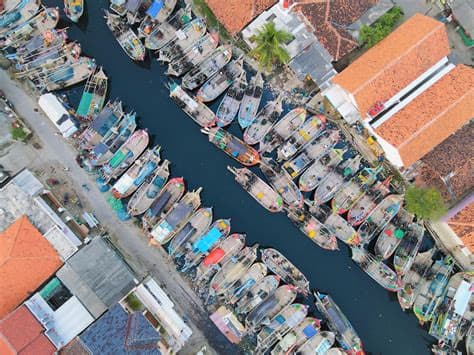
The fishing village project is part of a nationwide effort to create modern fishing settlements aimed at enhancing marine productivity and boosting coastal economies. Government officials claim that these facilities, which include essential resources like cold storage and fuel depots, are designed to benefit small-scale fishers and improve their access to regional markets. However, local Indigenous organizations argue that the government has treated the area as unoccupied, despite its long-standing connection to the Wiyagar families.
Community representatives report that they were not sufficiently consulted during government surveys conducted in early March. Instead, they allege that authorities met with individuals unrecognized as legitimate landowners. The historical context is complicated by decades of migration and overlapping land claims, making it difficult for the state to navigate development without causing deeper tensions.
Despite optimism from the government about potential income increases from similar projects in other regions, Indigenous leaders express skepticism. President Prabowo Subianto aims to expand the fishing village program significantly, targeting over 1,000 new settlements by 2026, and envisions thousands by the end of the decade. Yet, as the government expedites funding and resources for these projects, concerns about the neglect of Indigenous rights become increasingly pronounced.
The ongoing conflict underscores the critical challenge Indonesia faces in balancing ambitious development goals with protecting Indigenous land rights, particularly in resource-rich areas like Papua. As the state prioritizes expansion initiatives, observers warn that disputes similar to that in Sumuraman will become more frequent, putting Indigenous consent and land governance to the test. Given the government’s designation of these projects as strategically important, the risk of further marginalization and environmental degradation looms large over these communities.
Published by Banx Network. This article is part of the Banx decentralized media programme, powered by the BXE token on the XRP Ledger.