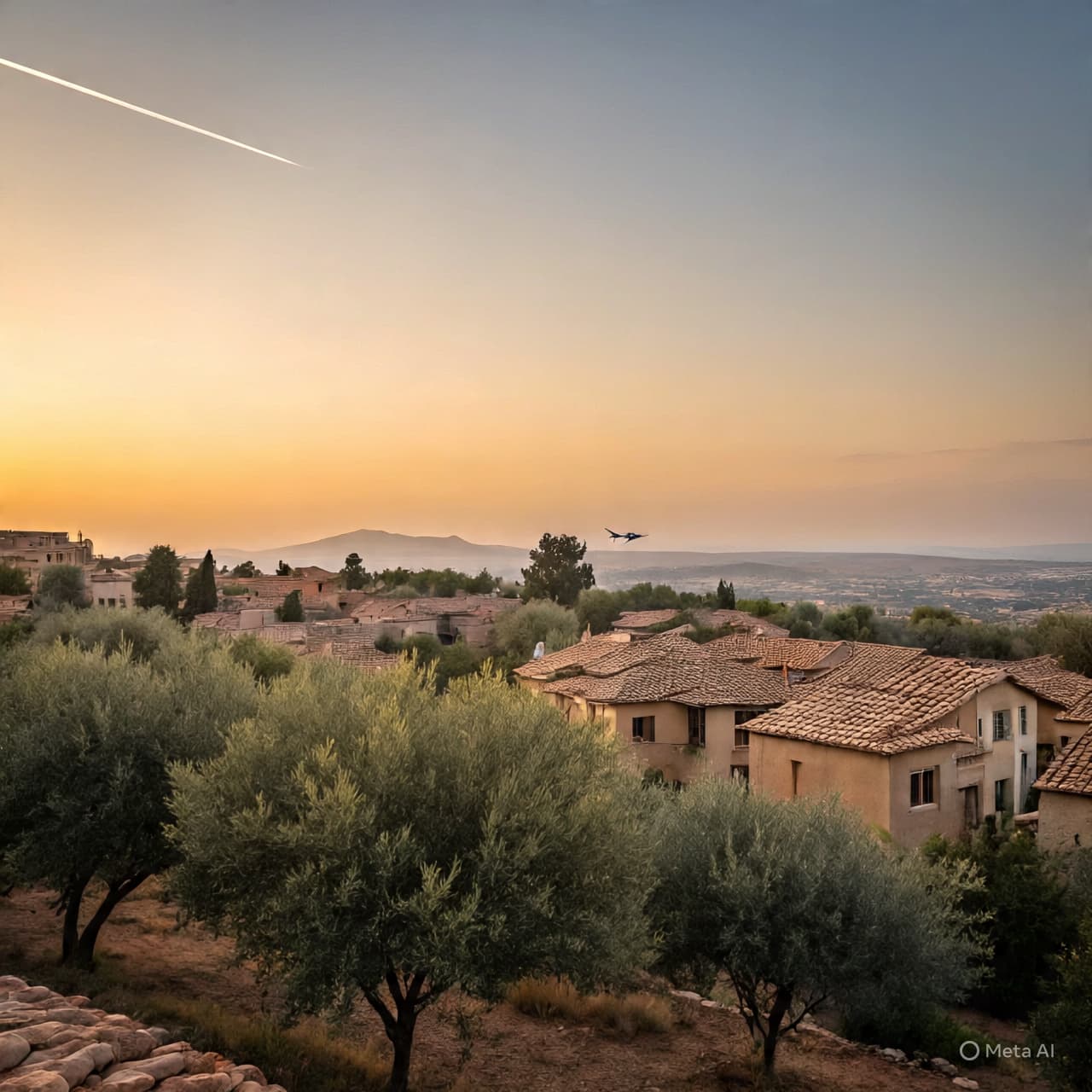
A thin silver ribbon of dawn light caught the contours of the hills in southern Lebanon — silent, serene, as if the region hoped for another quiet morning. Yet overhead, the roar of jets echoed like a warning, cutting through the calm. In that moment, the promise of peace found itself challenged by the mechanics of war: the machines, the maps, the orders that ask civilians to leave their homes as if safety were a matter of metres and minutes.
In recent days, the Israel Defense Forces (IDF) carried out air-strikes on towns such as Aita al‑Jabal, Tayba and Tayr Debba in southern Lebanon, declaring these areas as containing infrastructure linked to Hezbollah and notifying residents to evacuate at least 500 metres from targeted buildings. The evacuation warnings came with maps and broadcast messages in Arabic — a reminder that in modern conflict the civilian population often becomes the geography of war.
What strikes one not only is the intensity of the strikes — described as a near-daily occurrence — but also the atmosphere of a ceasefire that seems increasingly fragile. A deal brokered nearly a year ago between Israel and Lebanon was meant to calm the border region, yet these operations suggest the calm remains tentative at best.
On one hand, Israel says it faces a rebuilding Hezbollah and cannot allow a renewed threat along its northern border. The military statements describe weapons storage and command centres located in or near civilian buildings, leading to the warnings issued to residents. On the other hand, Lebanon’s government and officials say that while Hezbollah remains armed, the strikes often affect civilians and infrastructure beyond militant targets — and that the pattern erodes trust in any long-term resolution.
In everyday life, the narrative is more subtle yet no less powerful. Families in villages like Aita al-Jabal may wake to another morning of uncertainty: Will the warning come again? Should we leave? And where to? The hills and olive groves that have stood for decades now share space with maps broadcast over loudspeakers, emergency flights of preparation, and the hush of a town asked to move, just in case.
The environment of caution molds itself into the landscape: children may walk to school less freely, neighbours may speak in hushed tones of what they heard overnight, and the local health ministry counts another tally of wounded or displaced. According to reports, the Lebanese health ministry recorded one person injured in the most recent air-strikes, while acknowledging many more over the past year since the ceasefire.
At the same time, diplomatic winds shift gently but persistently. Lebanon’s president, Joseph Aoun, criticised the strikes as undermining peace talks, while the Israeli government reaffirmed its right to strike when it deems threats to exist. The result is a border region that finds itself caught between words of negotiation and the physical crack of ordnance in the air.
Yet in all of this, the human dimension remains quietly vivid. An elderly villager wiping dust from his window. A mother gathering children near a radio broadcast warning to move. A teacher preparing to walk through olive-trees and checkpoints, hoping for another calm year. These are the small moments in the shadow of a larger strategic game. The war-plane may thunder overhead, but the ground welcomes the everyday life: the water jug, the school bag, the neighbor’s wave.
The metaphor of a fragile glass house comes to mind. On the surface, peace holds — the ceasefire — but underneath the cracks run deeper than radar. Each strike is a drop of water on the glass’s roof, each warning a tremor. The more the warnings accumulate, the more one wonders: how long until the glass cracks?
In this collision of strategy and soil, of jets and olive groves, one hopes not for immediate silence, but for durable calm. The kind where children can dream without listening to the sky, where villagers can wake without counting sirens, where negotiations and trust reshape the landscape rather than ordnance.
AI Image Disclaimer “Visuals are created with AI tools and are not real photographs.”
Sources Associated Press The Guardian Reuters Military.com PBS NewsHour
Published by Banx Network. This article is part of the Banx decentralized media programme, powered by the BXE token on the XRP Ledger.