

Key Highlights
- Global Collaboration:International agencies work together to monitor asteroids.
- Advanced Technology:New telescopes and missions enhance detection capabilities.
- Emergency Preparedness:Plans are in place for potential asteroid impacts.
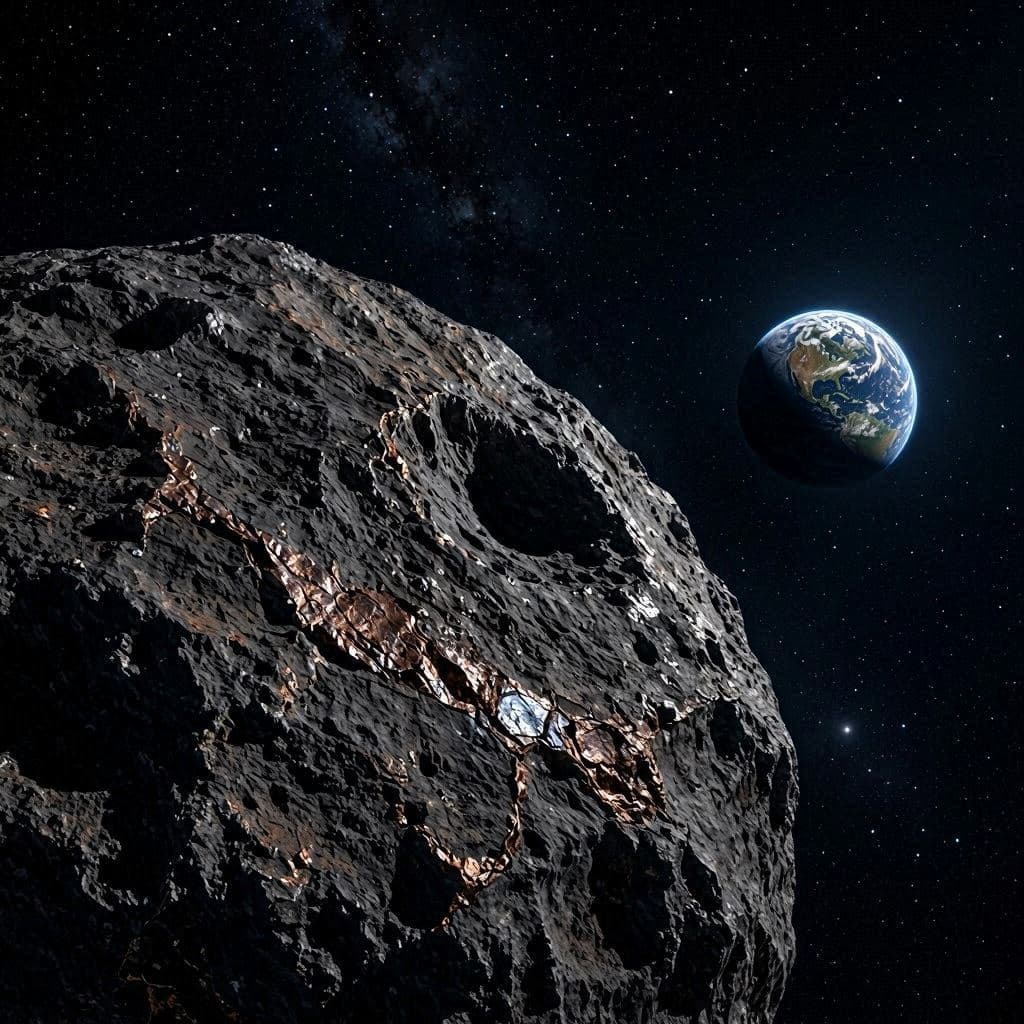
The night sky often appears timeless, a vast canvas where distant stars quietly remind humanity of its place in a much larger universe. Yet among those countless points of light, small rocky worlds continue their journeys around the Sun. Most pass unnoticed, while a few invite scientists to watch more closely, not out of fear, but out of careful preparation rooted in decades of observation and international cooperation.
If astronomers were to detect a massive asteroid on a confirmed collision course with Earth, the first response would not be panic but verification. Observatories around the world would immediately collect additional observations to refine the object's orbit. NASA, the European Space Agency, and other international partners would compare data to determine whether the impact probability was genuine or the result of early uncertainty, which often decreases as more observations become available.
Once an impact risk was confirmed, the International Asteroid Warning Network would coordinate the sharing of scientific information with governments and emergency management agencies. At the same time, the Space Mission Planning Advisory Group would evaluate whether any space mission could safely alter the asteroid's trajectory, depending on its size, composition, speed, and the amount of warning time available.
Scientists emphasize that years of advance notice would offer the greatest opportunity for action. A kinetic impact mission, similar in principle to NASA's successful DART demonstration in 2022, could potentially nudge some asteroids onto a slightly different path. Even a very small change made years before a predicted impact could cause the asteroid to miss Earth entirely.
If there were insufficient time to deflect the object, governments would shift their focus toward civil protection. Emergency agencies would identify potential impact regions, prepare evacuation plans where feasible, strengthen communication systems, and coordinate humanitarian resources. The exact consequences would depend on numerous factors, including the asteroid's size, speed, angle of entry, and whether it struck land or ocean.
The effects of an impact would vary dramatically. Smaller asteroids might explode high in the atmosphere, producing shock waves similar to the 2013 Chelyabinsk event in Russia. Larger objects could create regional devastation, while extremely large asteroids—measuring several kilometers across—could have global environmental consequences. Fortunately, surveys conducted by NASA and international partners have not identified any known large asteroid posing a significant impact threat to Earth in the foreseeable future.
Planetary defense has become an increasingly collaborative scientific effort. New telescopes, improved orbital calculations, and space-based observation missions continue expanding humanity's ability to detect potentially hazardous near-Earth objects years or even decades before they could become dangerous. This growing capability reflects decades of international investment in science rather than reaction to any immediate threat.
Today, experts continue to monitor thousands of near-Earth asteroids every year, updating risk assessments as new observations become available. While the possibility of a future impact can never be reduced to absolute zero, current evidence indicates that no known massive asteroid is on a collision course with Earth. Ongoing observation, international cooperation, and continued advances in planetary defense remain the strongest safeguards for the future.
Published by Banx Network. This article is part of the Banx decentralized media programme, powered by the BXE token on the XRP Ledger.




