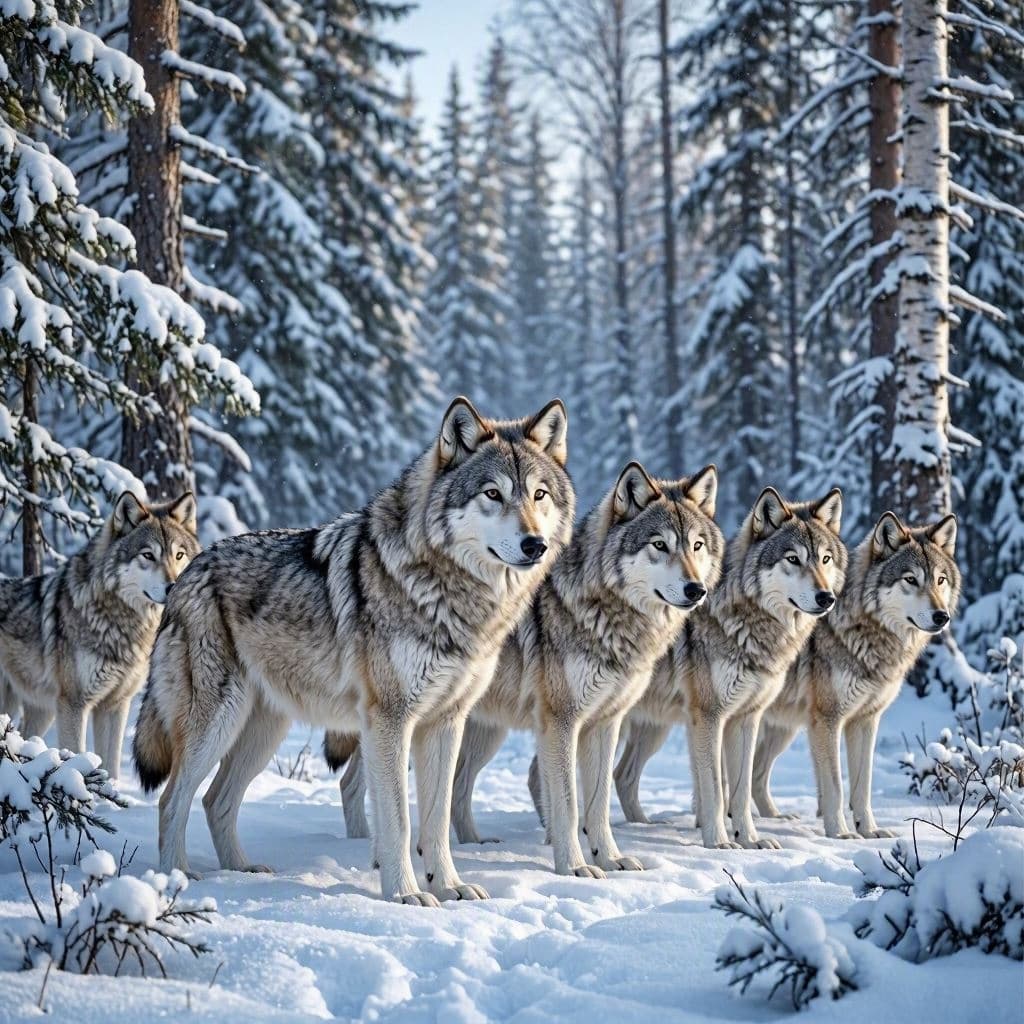
In the rugged wilderness of North America, where grizzly bears roam with unchecked power and mountain lions stalk with silent precision, there exists a hierarchy that is often misunderstood. We tend to view these apex predators as the undisputed masters of their domains, untouchable and fearless. Yet, ecological studies reveal a more nuanced reality: even the mightiest beasts know fear. And in the wild, there is one force that commands respect from both the bear and the cougar, not through brute strength alone, but through sheer numerical dominance and relentless coordination. That force is the wolf pack.
Wolves, particularly the gray wolves of Yellowstone and the Northern Rockies, operate on a level of social complexity that few other predators can match. While a single wolf may be no match for a mature grizzly or a large male cougar, a coordinated pack changes the dynamic entirely. Research has shown that bears and mountain lions actively avoid areas with high wolf density, altering their hunting patterns and resting spots to minimize confrontation. This avoidance is not merely caution; it is a survival strategy born from the understanding that wolves are persistent, strategic, and unyielding.
The tension between these species is most visible at kill sites. Wolves are known to usurp kills from solitary cougars, using their numbers to drive the cat away from its hard-earned meal. Similarly, while grizzlies often dominate wolves at carcasses, the presence of a large pack can deter even the largest bear, forcing it to retreat or share the resource. This constant competition shapes the behavior of all three species, creating a delicate balance of power that defines the ecosystem.
For mountain lions, the threat is particularly acute. As solitary hunters, they lack the backup that wolves enjoy. Studies indicate that cougar populations decline in areas where wolf packs are reestablished, not necessarily because wolves kill them frequently, but because the stress of competition reduces their hunting success and reproductive rates. The psychological weight of sharing territory with a coordinated group is enough to reshape their range.
Bears, too, feel the pressure. Although they are omnivores and less dependent on large prey than cats, the energy expenditure required to defend a kill from a pack of wolves is significant. In times of scarcity, this competition can mean the difference between thriving and merely surviving. The wolf’s ability to mobilize quickly and act as a unit gives them an advantage that individual strength cannot overcome.
This dynamic serves as a reminder that nature is not just about size or strength, but about strategy and cooperation. The wolf’s role as a keystone species extends beyond controlling elk populations; it influences the behavior of other top predators, creating a ripple effect that stabilizes the entire food web. Their presence encourages movement, diversity, and resilience in the landscape.
The wolf remains a symbol of wildness and cooperation, commanding respect from even the most formidable neighbors. As conservation efforts continue to restore wolf populations, we see not just a return of a species, but a restoration of natural balance. In the eyes of the bear and the lion, the wolf is not just a competitor, but a force of nature to be reckoned with.
AI Image Disclaimer: The visual elements accompanying this report are AI-generated interpretations designed to reflect the wild and ecological context of the story.
Sources: National Geographic Yellowstone National Park Service Science Daily
Published by Banx Network. This article is part of the Banx decentralized media programme, powered by the BXE token on the XRP Ledger.