
Key Highlights
- Project Scope:Over 4,000 villages connected to high-speed internet.
- Economic Impact:Reduction in rural-to-urban migration and creation of local digital jobs.
- Government Support:Ministry of Communications reports completion of the first phase in April 2026.
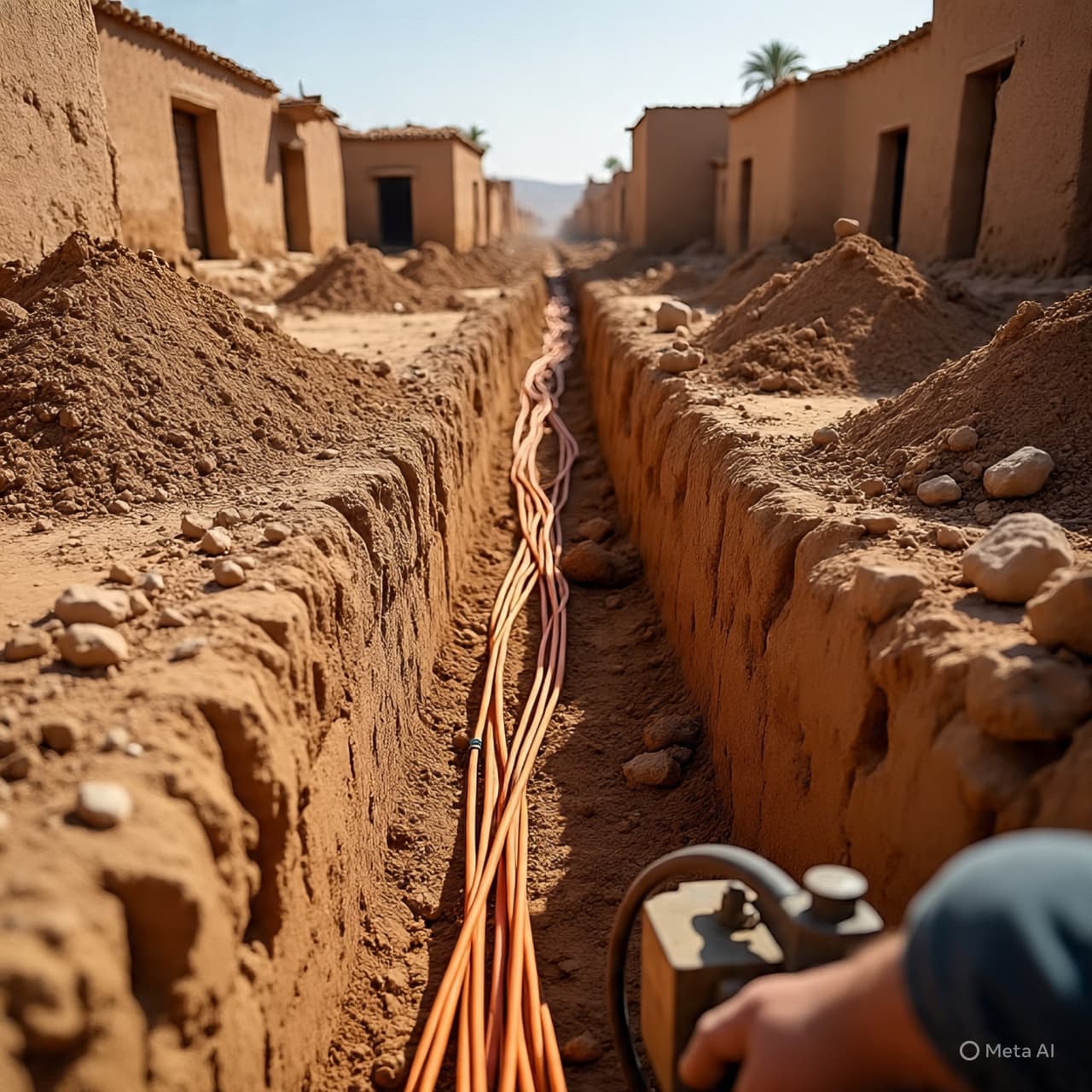
Egypt is undergoing a digital transformation that is reshaping its rural landscape. In the narrow, sun-drenched alleys of the Delta villages and the quiet hamlets of Upper Egypt, a new kind of irrigation is flowing—one that carries data instead of water. The digital infrastructure phase of the 'Decent Life' (Haya Karima) initiative has reached a transformative scale, with high-speed fiber-optic cables being buried alongside the ancient canals. This initiative aims to bring broadband to the furthest reaches of the countryside, asserting Egypt's belief that the internet is a basic human right and turning the digital divide into a bridge for rural development.
Witnessing the installation of fiber in a remote village is to see the physical manifestation of national integration. The project has already connected over 4,000 villages, representing a strategic investment in the intellectual capital of the nation. This is not merely a technical upgrade; it is a gesture of profound social justice. For students in rural schools and entrepreneurs in village workshops, high-speed access provides a window to the global market and the world’s knowledge. It is a story of how a nation is ensuring that the 'New Republic' includes every citizen, regardless of their geography.
The atmosphere within rural community centers is one of disciplined digital curiosity. There is no roar of heavy machinery, only the soft click of keyboards as youth learn coding and elders access government services via 'Digital Egypt' portals. The focus remains on the strategic utilization of connectivity to improve healthcare through telemedicine and enhance agriculture through IoT sensors. This narrative of synergy illustrates how the traditional resilience of the Egyptian village meets the boundless potential of the gigabit age. The Haya Karima network symbolizes a country finding a way to modernize its heartland without losing its soul.
The social and economic implications of this initiative are significant. There has been a noticeable reduction in rural-to-urban migration, alongside the creation of digital jobs within the villages themselves. Local technicians express a sense of quiet pride, believing they are laying the groundwork for a more equitable future. This is a story of national transformation, where the ability to access high-speed data becomes a marker of a nation’s broader social and technological maturity.
Ultimately, the greening of the rural internet is a promise of continuity. It is a commitment to ensure that the Egyptian village remains a vibrant and competitive part of the national economy. As the sun sets over the fiber-connected fields, the vision of a 'Connected Egypt' moves closer to reality. It is a quiet, steady march toward progress, a commitment to building a future that is as fast as it is fair. The signal is strong, and the village is online.
The Ministry of Communications and Information Technology reported in April 2026 that the first phase of the rural fiber-to-the-home (FTTH) project has been completed, covering millions of households in rural Egypt. Part of the Haya Karima initiative, the project aims to bridge the digital gap by providing minimum speeds of 100 Mbps to village schools, health units, and government buildings. Officials noted that this infrastructure is a prerequisite for the full rollout of the Universal Health Insurance system and the digitization of agricultural services across the country.
Published by Banx Network. This article is part of the Banx decentralized media programme, powered by the BXE token on the XRP Ledger.



