
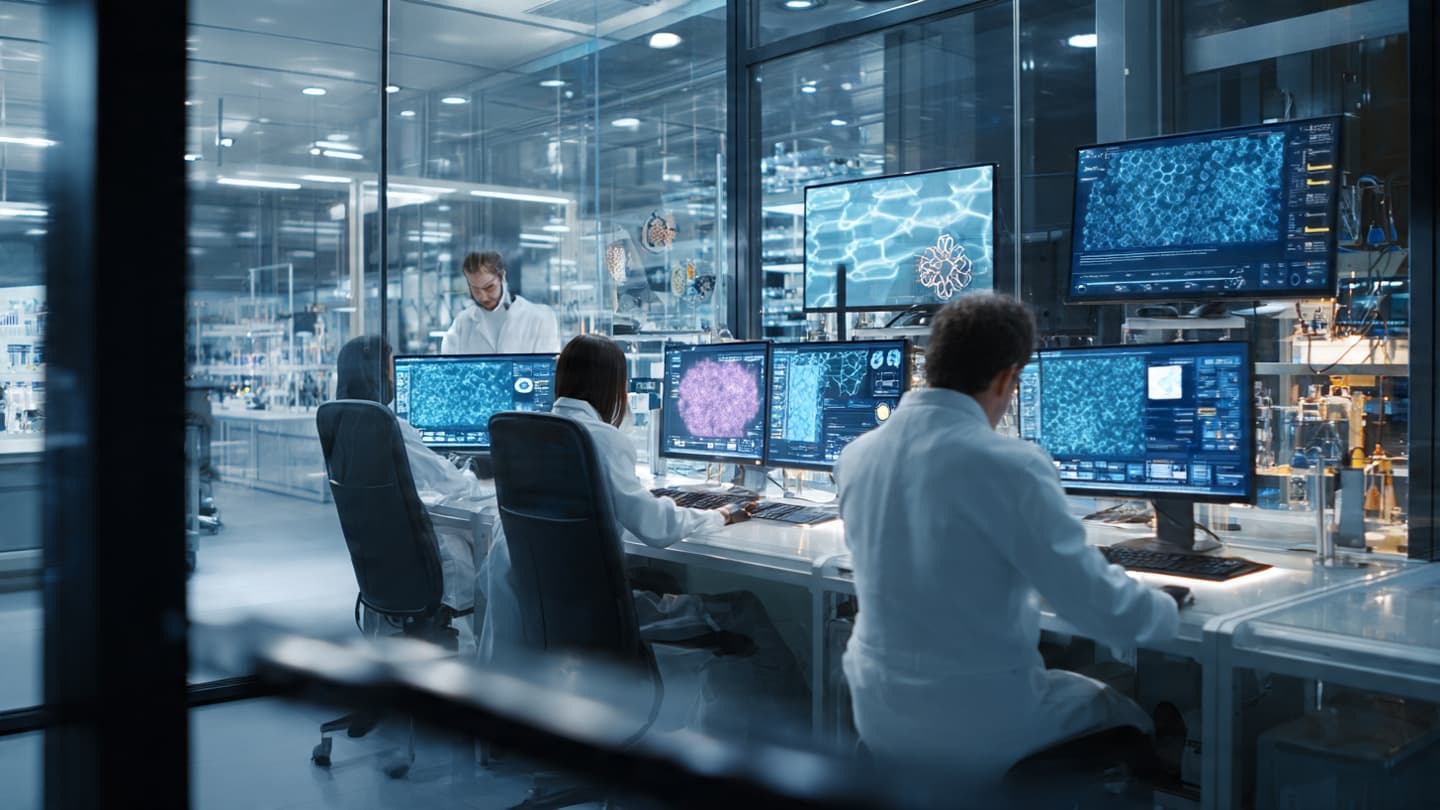
Key Highlights
- AI and HPC are revolutionizing data analysis in science.
- Biomedical research is a key application area for these technologies.
- France is investing in digital infrastructure to support research.
The landscape of scientific research is undergoing a significant transformation, driven by the exponential growth of biological data. Researchers today are confronted with an unprecedented volume of information, ranging from genetic sequences to complex medical imaging. The challenge of processing this data requires advanced computing capabilities that far exceed traditional methods.
High-performance computing (HPC) has emerged as a crucial tool for scientists, enabling them to analyze massive datasets and conduct intricate simulations in a fraction of the time previously required. Tasks that once took weeks or months can now be completed in days or even hours, significantly accelerating the pace of discovery and innovation in various scientific fields.
Artificial intelligence (AI) complements these advancements by enhancing the capabilities of HPC. Machine learning algorithms can sift through complex datasets to identify patterns, detect anomalies, and generate valuable insights that may not be immediately apparent through conventional analysis. This synergy between AI and HPC is particularly evident in the realm of biomedical research, where scientists are leveraging these technologies to study diseases, model biological systems, and improve diagnostic accuracy.
In France, research institutions are increasingly investing in infrastructure designed to support the integration of AI and HPC into scientific endeavors. Collaborative networks connecting universities, laboratories, hospitals, and technology organizations are being established to ensure that researchers have access to the computational resources necessary for advanced scientific work. This collaborative approach not only enhances research capabilities but also fosters innovation across disciplines.
Proponents of this initiative emphasize that technological tools should be viewed as partners rather than replacements for human expertise. While computers can process data at remarkable speeds, the essential elements of scientific discovery—such as creativity, judgment, and interpretation—remain firmly in the hands of researchers. This partnership between human intellect and machine efficiency is crucial for navigating the complexities of modern science.
The integration of AI and HPC also reflects a broader trend within global research communities. Countries around the world are investing heavily in digital infrastructure to remain competitive in rapidly evolving scientific and technological landscapes. As nations recognize the importance of these advancements, they are positioning themselves to lead in areas such as healthcare and life sciences.
As France continues to strengthen its capabilities in artificial intelligence and advanced computing, researchers are optimistic that these investments will pave the way for future breakthroughs. The journey of scientific discovery is ongoing, and with increasingly powerful tools at their disposal, researchers are better equipped to illuminate paths that were once difficult to explore.
AI Image Disclaimer Illustrations were produced with AI and serve as conceptual depictions.
Published by Banx Network. This article is part of the Banx decentralized media programme, powered by the BXE token on the XRP Ledger.



