
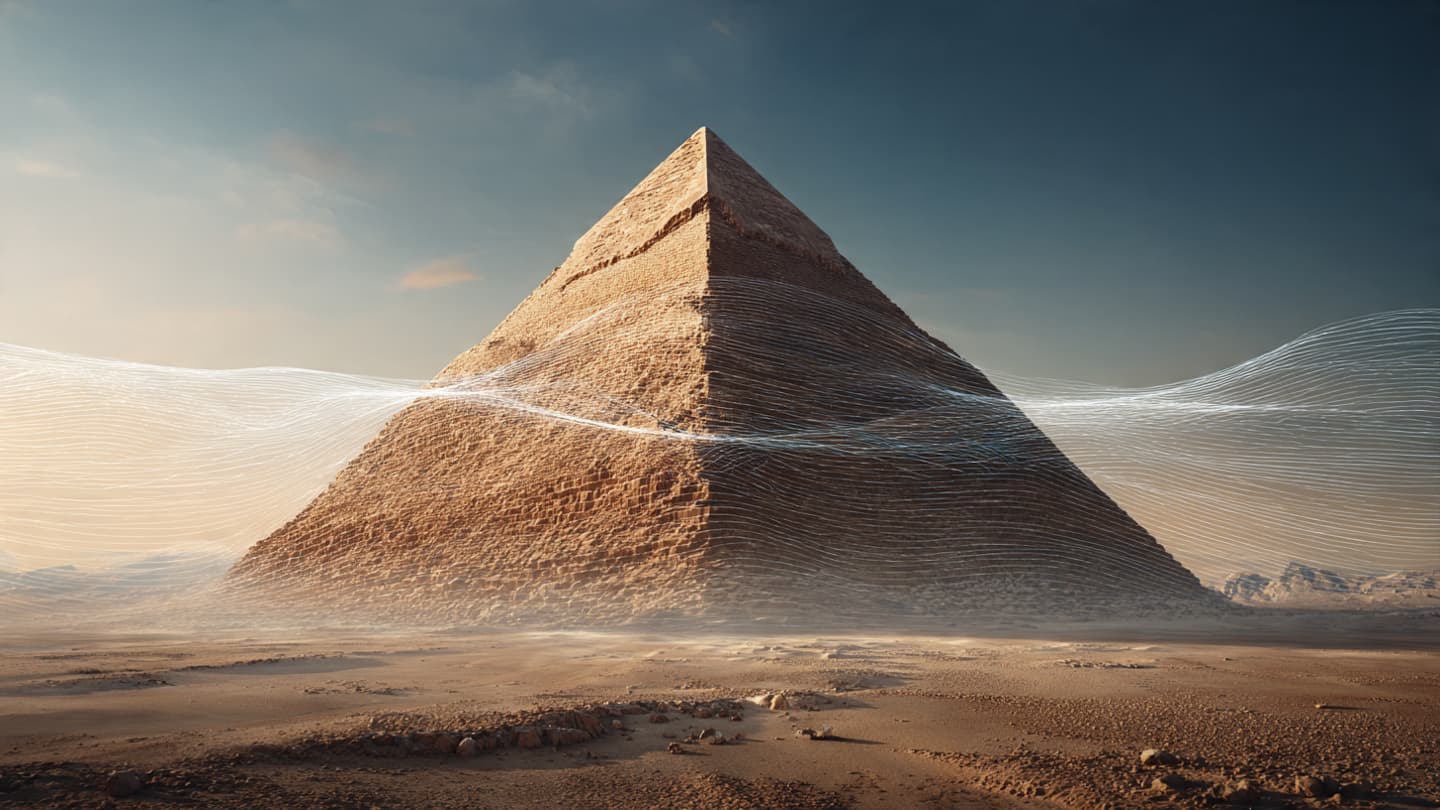
Standing beneath the desert sun, the Great Pyramid of Giza appears less like a structure and more like a dialogue between human ambition and geological time. Its endurance has long inspired curiosity, but new studies suggest that its resilience may extend even to the unpredictable forces of seismic activity.
The pyramids of Egypt have survived thousands of years of wind, sand, and human history. Yet modern analysis has begun to explore another dimension of their durability: their response to earthquakes.
Researchers examining the structural composition of the Great Pyramid suggest that its internal design distributes stress in ways that reduce the impact of ground movement. The layered stone arrangement may act as a natural stabilizer.
This discovery does not imply that the builders of ancient Egypt understood modern seismic engineering in scientific terms. Instead, it highlights how empirical observation and generational craftsmanship can produce remarkably stable architecture.
The pyramid’s massive base and gradually narrowing structure contribute to its balance. Each stone block, carefully placed, forms part of a system that appears to absorb rather than amplify movement.
Geologists and archaeologists alike have noted that the pyramid’s survival through minor seismic events in the region is a testament to both material choice and structural intuition.
Such findings invite a broader reflection on ancient engineering practices across civilizations, where functionality and symbolism often merged into a single architectural language.
While research continues, the Great Pyramid remains not only a cultural monument but also a quiet reminder that ancient builders shaped structures capable of enduring forces they could not yet fully define.
AI Image Disclaimer: Images in this article are AI-generated artistic reconstructions intended for educational visualization.
Sources (source verification check): National Geographic, Smithsonian Magazine, Live Science, BBC Earth
Published by Banx Network. This article is part of the Banx decentralized media programme, powered by the BXE token on the XRP Ledger.



