
Key Highlights
- A landslide near Kolašin halted train services on the Belgrade-Bar railway.
- Emergency crews evacuated hundreds of passengers stranded by the incident.
- The event raises concerns about the resilience of aging transport infrastructure.
The Belgrade-Bar railway line, a marvel of mid-century engineering, traverses the rugged Balkans, connecting Montenegro's capital to its coast. Near the alpine town of Kolašin, the tracks cling precariously to steep, forested slopes, where the geography demands constant vigilance from maintenance crews. For decades, heavy electric locomotives have transported passengers and freight along this vital route, their rhythmic clatter echoing through the valleys. However, the permanence of these iron rails is an illusion, constantly tested by the slow erosion of the towering peaks that loom over the transit corridor.
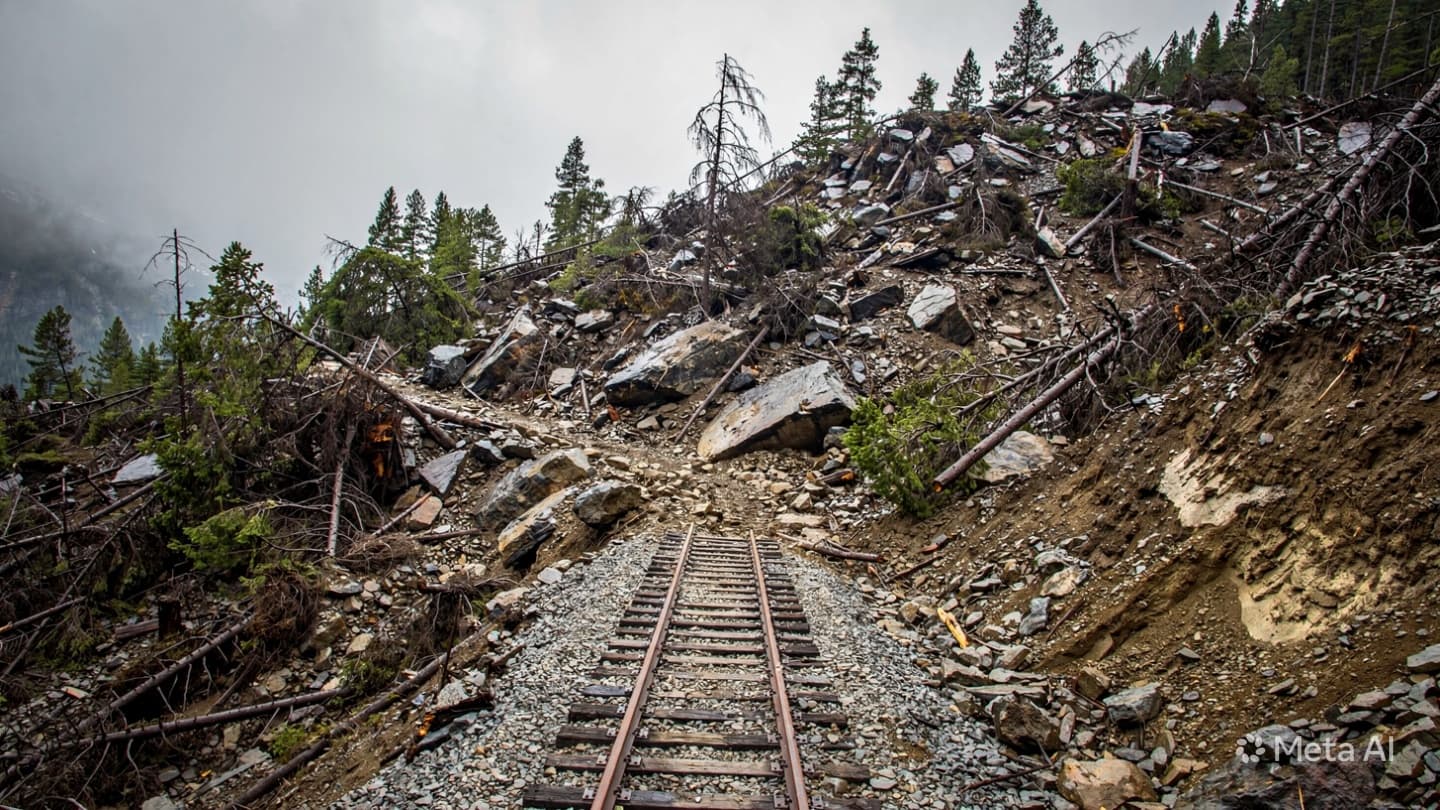
Following a week of relentless, unseasonal rains, the soil saturation along the high ridges reached a critical threshold, softening the ancient clay and loosening the grip of the pine roots. In the early hours just after dawn, a massive section of the hillside detached from its bedrock foundation, cascading down the steep gradient toward the valley floor. The landslide brought tons of heavy mud, shattered timber, and sharp limestone boulders, burying a critical curve of the railway under deep, impenetrable debris. The collapse occurred with a deafening roar, a sudden violent reshuffling of the earth that severed the primary artery connecting the north to the south.
Fortunately, disaster was narrowly averted by automated warning sensors embedded along the precarious cliff faces, which triggered a red signal just miles ahead of an approaching southbound passenger express. The engineer initiated emergency braking protocols, bringing the heavy train to a screeching halt just around the bend from the massive wall of displaced earth. A profound silence followed the near-miss, the hum of the idling locomotive contrasting with the raw, fresh scar of the collapsed mountain. Passengers, abruptly shaken from their morning routines, looked out to witness the violent intersection of natural force and human infrastructure.
The immediate aftermath required a rapid logistical pivot, as the stranded train could neither proceed nor easily reverse back up the steep gradient without authorization. Railway authorities dispatched emergency buses to a nearby parallel highway, coordinating the slow, methodical evacuation of passengers across the damp, uneven terrain. The priority was the safe extraction of hundreds of travelers, many left standing on the foggy mountain shoulder, watching their abandoned train sit quietly beneath the imposing cliffs. This incident starkly illustrates the vulnerability of regional transit, where a single localized weather event can paralyze a national network.
By midday, heavy engineering crews and geological surveyors arrived at the site, evaluating the stability of the remaining slope before authorizing the deployment of excavation machinery. Clearing the tracks is not merely about moving dirt; it requires careful extraction of entangled trees and stabilization of overhead electrical catenary wires, which were snapped under the weight of the falling debris. The structural integrity of the steel rails must also be thoroughly assessed, as the sheer force of the impact often warps the precise alignment required for high-speed transit. The mountain environment dictates the pace of recovery, frustrating attempts at a rapid resolution.
The economic implications of the severed railway line are immediately felt at coastal ports, where cargo containers destined for the northern interior sit idle on the docks. This route serves as a critical commercial lifeline, and any prolonged closure forces logistics companies to reroute freight through slower, more expensive mountainous highways. Regional politicians have renewed calls for increased funding toward infrastructural reinforcement, emphasizing the need for extensive concrete retaining walls and advanced geological monitoring along the Kolašin corridor. The incident underscores a growing anxiety over the resilience of aging transport networks in the face of shifting climate patterns.
As evening shadows stretched across the valley, the glaring floodlights of the repair crews illuminated the muddy scar on the mountainside, the deep roar of excavators echoing against the stone. Authorities have estimated that the recovery process will take several days, with ongoing assessments to ensure the safety of the railway before reopening.
Published by Banx Network. This article is part of the Banx decentralized media programme, powered by the BXE token on the XRP Ledger.



