
Key Highlights
- Significant increase in grain production reported for 2025-2026.
- New credit lines for small-scale farmers boost local agriculture.
- International agro-industrial partnerships aim to reduce food imports.
In the fertile valleys of Kuanza Sul, Angola, a quiet transformation is underway, reminiscent of the steady growth of crops in the fields. This region, once a breadbasket, is experiencing a resurgence in agricultural practices that blend traditional methods with modern technology. The harmonious coexistence of the rhythmic swing of the scythe and the hum of tractors symbolizes a collective effort to reclaim the land and foster a sense of national pride through self-sufficiency.
The push for agricultural self-sufficiency is not merely about survival; it reflects a deeper narrative of independence and resilience. As the Angolan government emphasizes the importance of local production, the expansion of large-scale grain farming serves as a testament to a society determined to reduce its reliance on volatile imports. This shift towards domestic agriculture is seen as a crucial step in ensuring food security and economic stability for the nation.
At the heart of this agricultural revival lies the communal farm, where the seed is viewed as a symbol of hope and renewal. Each hectare of land cultivated represents the hard work and determination of a people who have long understood the value of their natural resources. The flow of irrigation water and the movement of harvested crops into silos illustrate the dynamic process of revitalizing a once-dormant landscape, showcasing the resilience of the community.
Sustainability is a key theme in this agrarian narrative, emphasizing that today's prosperity must be built on a foundation that supports future generations. The Angolan government is investing in modern storage and processing facilities, creating a robust framework for growth that mirrors the resilience of the crops themselves. This commitment to sustainable practices underscores the belief that a nation's true wealth is rooted in the health of its soil and the abundance of its harvests.
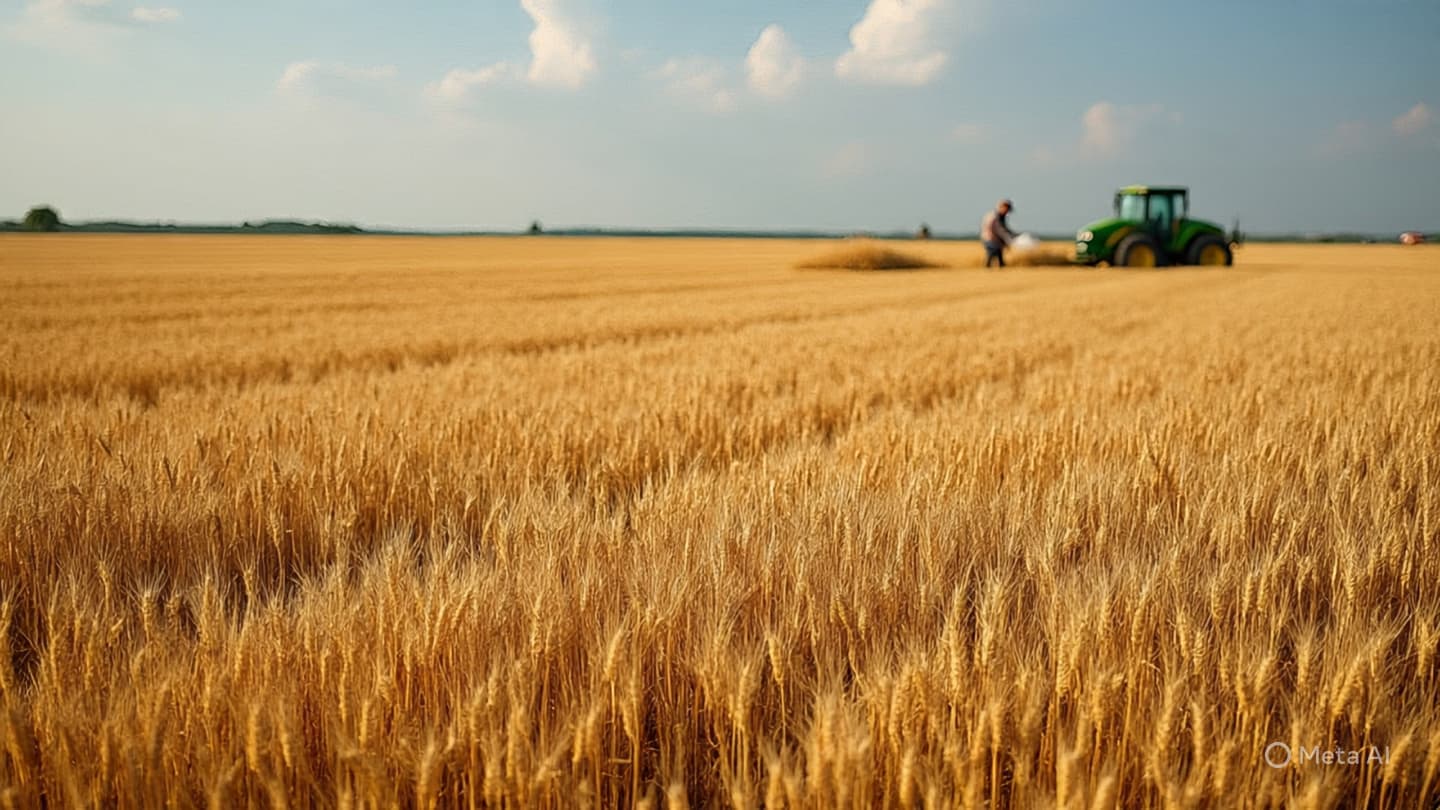
The visual beauty of the harvest—golden waves of grain, the rhythmic motion of workers, and the clean lines of new silos against the sky—serves as a powerful reminder of the potential that lies within the land. The act of grain falling into trucks symbolizes a nation reclaiming its dignity through self-sufficiency, feeding its people with pride.
As the sun casts a warm glow over the fields, the quiet expansion of agricultural diversification emerges as a blueprint for a more secure future. This evolution reflects the enduring spirit of rural communities, which have always been the backbone of the nation. The path to a brighter tomorrow is paved with the courage to cultivate the land and the wisdom to safeguard water resources.
The Angolan Ministry of Agriculture has reported a significant increase in domestic grain production for the 2025-2026 season, particularly in the Kuanza Sul and Huambo provinces. This growth is attributed to new credit lines for small-scale farmers and the entry of international agro-industrial partners, aimed at reducing the nation's reliance on imported food staples. The collective efforts of these stakeholders highlight a commitment to fostering a sustainable agricultural landscape that promises to nourish future generations.
Published by Banx Network. This article is part of the Banx decentralized media programme, powered by the BXE token on the XRP Ledger.



