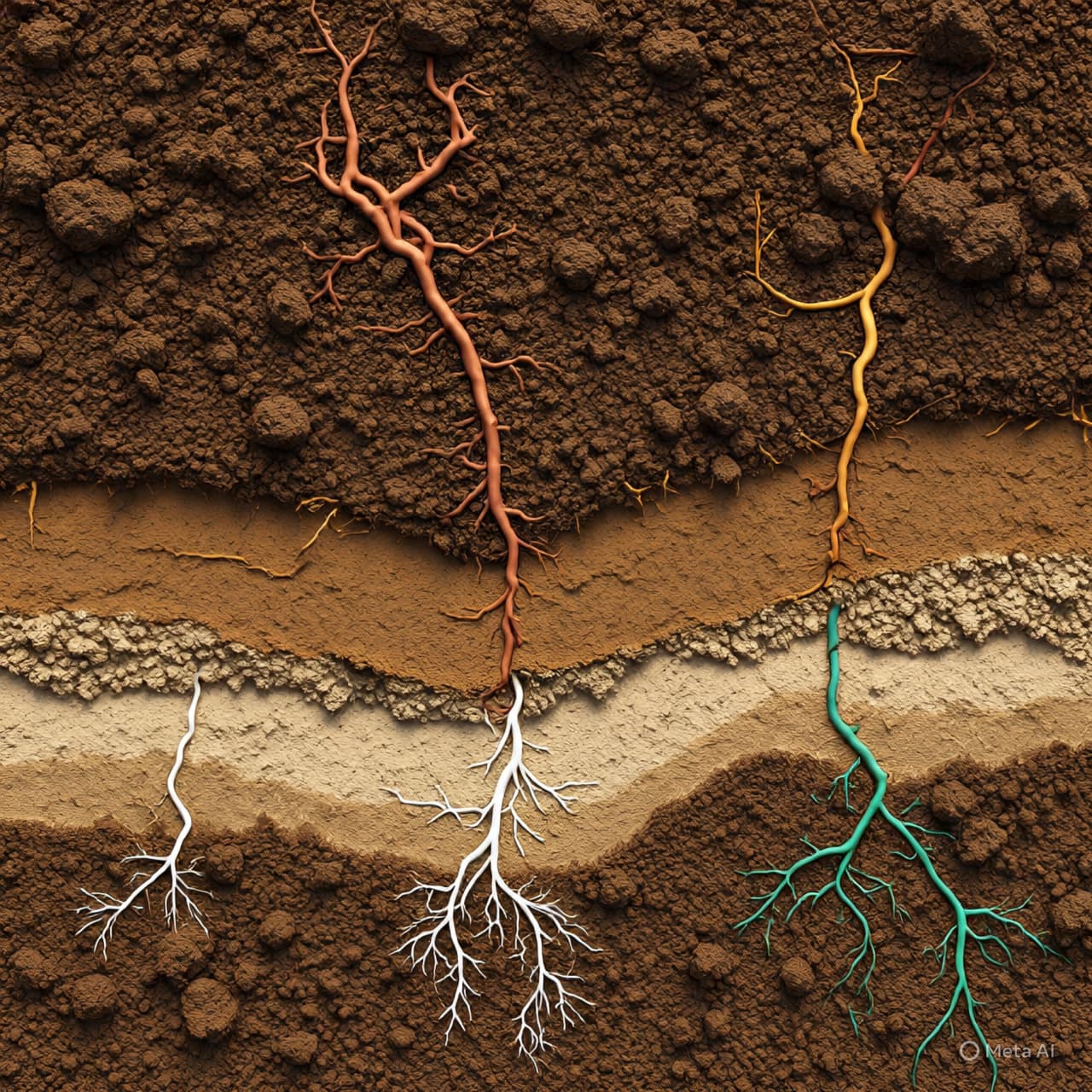
Beneath every field lies a quiet chemistry that rarely draws attention. Crops rise toward the sun, leaves unfold, and harvests appear in their familiar seasonal rhythm. Yet the true foundation of this cycle is hidden underground, in the delicate balance of minerals and nutrients that shape how plants grow, defend themselves, and endure the pressures of their environment.
For decades, scientists have known that soil nutrients influence plant growth. But a long-term study now suggests the story runs deeper than simple fertility. Subtle imbalances in soil chemistry, researchers say, may quietly weaken a plant’s natural defenses against pests and disease.
The research draws on years of agricultural observation, examining how varying combinations of nutrients—particularly nitrogen, phosphorus, and potassium—affect plant health over time. These elements are widely used in fertilizers and are essential for crop growth. Yet the study suggests that when their proportions drift out of balance, plants may become more vulnerable to external threats.
Plants rely on a complex internal system to defend themselves. Much like immune responses in animals, plants produce chemical compounds that deter insects, resist pathogens, and repair damage caused by environmental stress. These protective responses require energy and specific nutrients drawn from the soil.
When nutrient levels become skewed—too much nitrogen, for example, or too little phosphorus—plants may channel their energy primarily into rapid growth rather than defensive chemistry. The result can be crops that grow quickly but lack the full capacity to resist pests or disease.
Researchers observed that plants grown in imbalanced soil conditions often showed weaker production of defensive compounds. In some cases, this made them more appealing to herbivorous insects or less capable of resisting fungal infections.
The findings help illuminate a longstanding puzzle in agriculture. Farmers sometimes observe that crops receiving heavy fertilizer treatments can appear vigorous at first yet still suffer significant pest damage later in the growing season. The new research suggests that excessive focus on growth nutrients may inadvertently compromise plant resilience.
Over the course of the study, scientists tracked plant performance across multiple seasons, allowing them to observe gradual changes that short-term experiments might miss. These long-term patterns revealed that nutrient imbalances can accumulate slowly in agricultural soils, especially when fertilizer applications are repeated year after year without careful monitoring.
Such imbalances do not always produce immediate warning signs. Plants may continue to grow normally, and yields may remain stable for some time. But beneath the surface, the chemical conditions shaping plant metabolism may be shifting in ways that affect resilience.
For agricultural scientists, the findings underscore the importance of soil management that goes beyond simply increasing nutrient levels. Balanced fertilization, soil testing, and diversified cropping systems may help maintain the chemical harmony that plants depend on.
This perspective reflects a broader shift in modern agriculture. Increasingly, researchers are exploring how ecological balance—within soil microbes, nutrients, and plant systems—can support long-term productivity without relying solely on higher fertilizer inputs.
Healthy soil, in this sense, is not just a reservoir of nutrients but a carefully tuned environment where chemistry, biology, and plant physiology interact.
As global agriculture faces growing challenges—from climate change to increasing food demand—understanding these subtle relationships may become even more important. Fields that appear healthy today must also remain resilient tomorrow.
For now, the study offers a simple reminder: the strength of crops may depend not only on how much fertilizer is applied, but on how well the soil beneath them maintains its quiet balance.
Researchers say the work will continue as scientists examine how different crops respond to soil nutrient ratios and how farming practices can maintain healthier soil systems over the long term.
The harvest, after all, begins long before seeds break the surface—deep within the living chemistry of the ground itself.
AI Image Disclaimer Visuals are created with AI tools and are not real photographs.
Source Check Credible mainstream / niche media covering this issue:
Nature ScienceDaily Phys.org The Conversation Scientific American
Published by Banx Network. This article is part of the Banx decentralized media programme, powered by the BXE token on the XRP Ledger.