

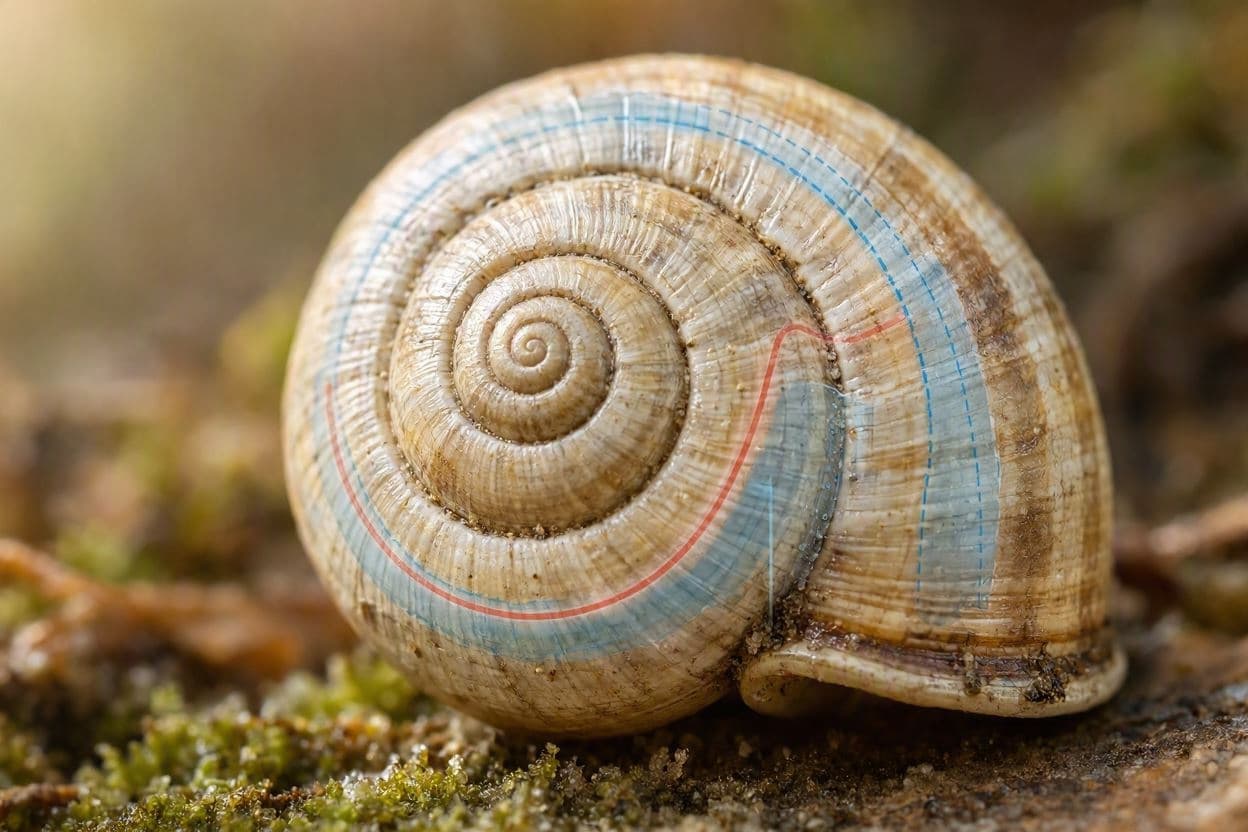
In the quiet corners of gardens and forests, where moisture clings to leaves and shadows stretch long, the humble snail moves with deliberate grace. Often overlooked as mere garden pests or slow-moving curiosities, these small mollusks are now revealing themselves to be unexpected archivists of our changing climate, carrying within their shells a detailed history of the weather they have endured.
Recent research has uncovered that the chemical composition of snail shells acts as a natural recorder of environmental conditions. As snails grow, they incorporate isotopes from the water and food they consume into their calcium carbonate structures. These isotopic signatures vary depending on temperature, humidity, and rainfall patterns, creating a layered record that scientists can decode much like tree rings or ice cores.
The study focuses on land snails, which are particularly sensitive to changes in precipitation and heat. During periods of extreme drought or intense rainfall, the ratio of oxygen isotopes in their shells shifts noticeably. By analyzing these variations, researchers can reconstruct past weather events with remarkable precision, offering insights into local climate dynamics that broader global models might miss.
This discovery is significant because it provides a high-resolution view of historical weather at a micro-scale. While meteorological records often span only a few decades, snail shells can preserve data for years or even generations, depending on the species’ lifespan. This allows scientists to extend the timeline of climate observation back into periods before modern instrumentation existed.
Furthermore, snails are ubiquitous, found in diverse ecosystems across the globe. Their widespread presence means that this method can be applied in various regions, from tropical rainforests to temperate woodlands. This geographic versatility offers a unique opportunity to compare climate impacts across different latitudes and ecosystems, enhancing our understanding of global weather patterns.
The implications for climate science are profound. By integrating snail shell data with other proxy records, such as sediment layers and pollen counts, researchers can build more robust models of past climate variability. This holistic approach helps distinguish between natural fluctuations and human-induced changes, providing a clearer picture of the current climate crisis.
Conservationists are also taking note. Understanding how extreme weather affects snail populations can inform strategies for protecting biodiversity. As climate change intensifies, knowing which species are most vulnerable to specific weather patterns allows for targeted conservation efforts, ensuring that these small but vital components of the ecosystem survive.
As we look to the future, the snail reminds us that nature keeps its own records, written in silence and stone. By learning to read these subtle messages, we gain a deeper appreciation for the intricate connections between life and the environment, and the urgent need to protect them.
AI Image Disclaimer: The visual elements accompanying this article are AI-generated interpretations designed to reflect the themes of natural history and scientific discovery.
Published by Banx Network. This article is part of the Banx decentralized media programme, powered by the BXE token on the XRP Ledger.



