An airport is not usually a political institution. It is a choreography of scheduled motion — a space where people assume tomorrow is administratively guaranteed. But the United States is now living inside a shutdown that is stretching long enough to rewrite those expectations.
And so the problem has leaked into the sky.
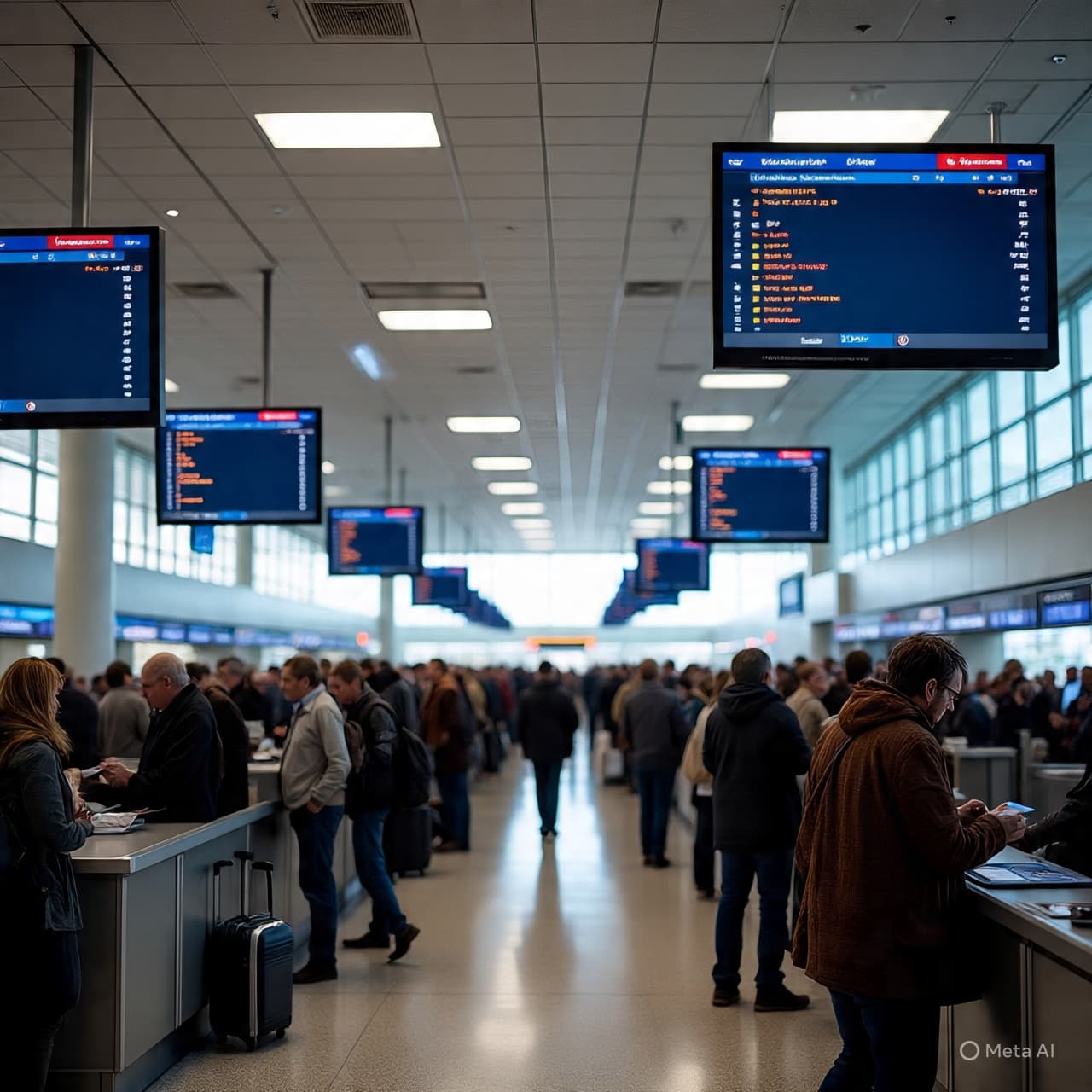
Thousands of flights have been cancelled or delayed as parts of the aviation system slow under the government freeze. Staffing gaps, regulatory bottlenecks, slower approvals, exhausted controllers working without pay — the vulnerabilities are not theoretical anymore.
This is not the kind of disruption that feels ideological; this is the kind that feels mechanical. Like a wrench jammed inside a turbine.
Air travel is the closest thing America has to a secular pilgrimage — business trips, family reunions, medical appointments, military homecomings, college move-ins. When the flight network goes into turbulence because the political system is gridlocked, people feel personally indicted by a fight they did not choose to enter.
Economists have long argued that the U.S. built a mobility-based economy; what is happening now shows how fragile that mobility is when payrolls are politicized. Delays in Washington now mean literal delays in Denver, Dallas, Atlanta, Seattle.
Every airport departure board displays the same quiet thesis: governance is infrastructure. It is not abstract. It either works or it does not.
Published by Banx Network. This article is part of the Banx decentralized media programme, powered by the BXE token on the XRP Ledger.