
Key Highlights
- Thousands of flights have been canceled or delayed due to the government shutdown.
- Staffing shortages and regulatory bottlenecks are affecting the aviation system.
- The shutdown highlights the fragility of the U.S. mobility-based economy.
The United States is currently grappling with a government shutdown that is significantly impacting air travel across the nation. As the political stalemate continues, thousands of flights have been canceled or delayed, leaving travelers stranded and frustrated. The Federal Aviation Administration (FAA) has reported that staffing gaps and regulatory bottlenecks are contributing to the chaos, with air traffic controllers working without pay and facing increased workloads.
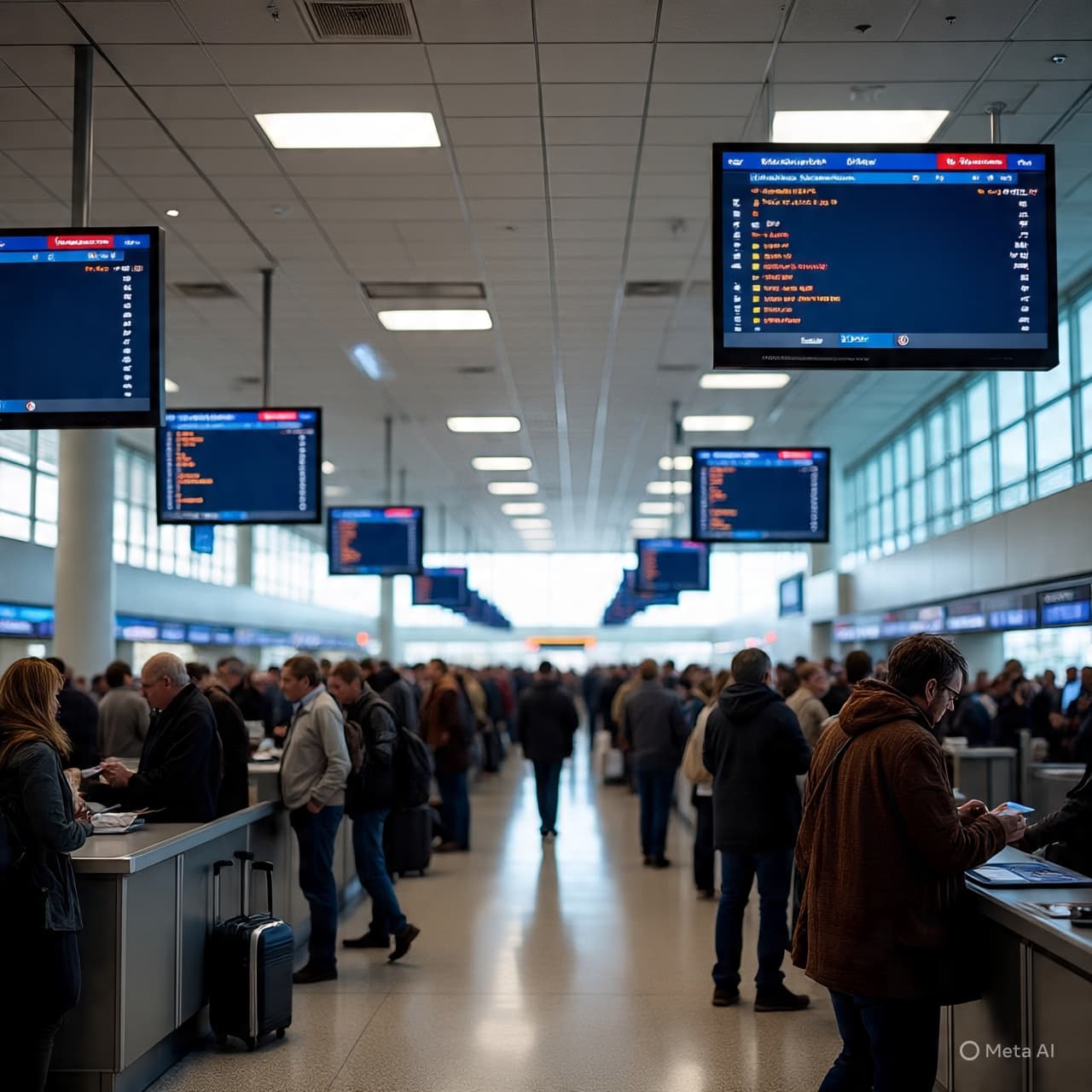
Airports, typically bustling hubs of activity, are now marked by uncertainty and frustration. Travelers who once assumed their flights would operate as scheduled are now met with delays and cancellations. The ripple effects of the shutdown extend far beyond the airport, affecting business trips, family reunions, and essential medical appointments. The aviation system, which many Americans rely on for mobility, is now under strain, revealing the vulnerabilities that arise when government operations are politicized.
Economists have long emphasized the importance of mobility in the U.S. economy, arguing that it is a cornerstone of economic growth and personal freedom. However, the current situation underscores how fragile this mobility can be when political disputes interfere with essential services. Delays in Washington translate to delays in cities like Denver, Dallas, Atlanta, and Seattle, affecting countless individuals and families.
The departure boards at airports across the country tell a stark story: governance is infrastructure. When the government functions smoothly, air travel operates seamlessly. Conversely, when political gridlock occurs, the consequences are felt in real-time by travelers. This situation serves as a reminder that the systems we often take for granted are deeply intertwined with effective governance.
As the shutdown continues, the aviation industry and its stakeholders are left to navigate the fallout. Airlines are working to accommodate affected passengers, but the uncertainty surrounding the duration of the shutdown complicates their efforts. Travelers are urged to stay informed about their flight statuses and to prepare for potential disruptions as the situation evolves.
In conclusion, the ongoing government shutdown is not just a political issue; it is a personal one for millions of Americans who rely on air travel. The impact of this shutdown highlights the critical link between governance and infrastructure, reminding us that effective government is essential for the smooth operation of vital services like air travel.
Published by Banx Network. This article is part of the Banx decentralized media programme, powered by the BXE token on the XRP Ledger.



