There is a particular kind of investigation that begins not with a weapon but with a screen, not with a manifesto but with a search warrant sent to a platform where teenagers talk and plan and sometimes disappear into spaces their parents never see. In Bend, Oregon, the inquiry into the sixteen-year-old who killed three children and a teacher at Silver Rail Elementary has widened beyond the question of how he obtained the shotgun. Federal and state law enforcement are now examining whether he was connected to violent online extremist networks, and whether anyone encouraged or helped him .
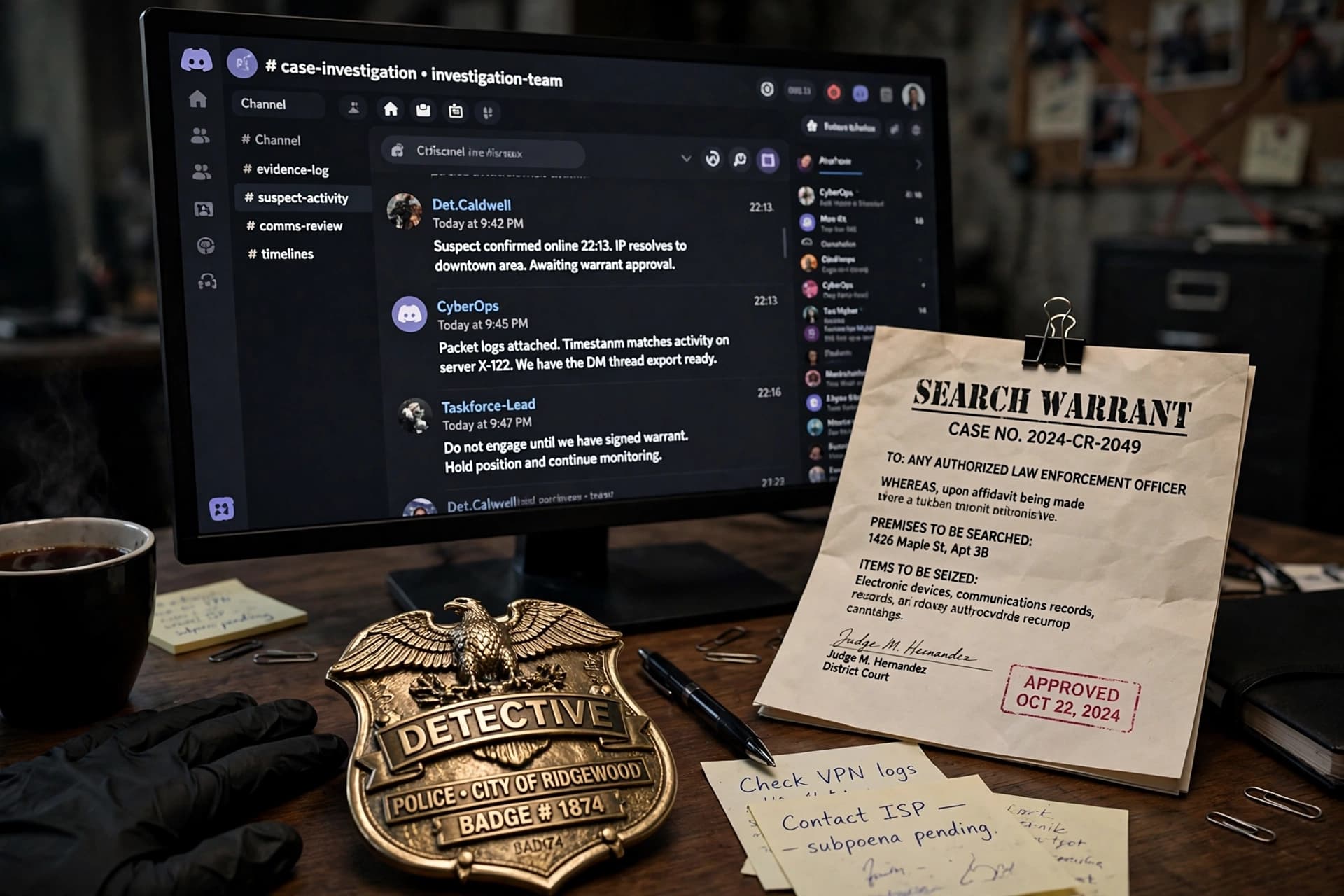
Four sources with knowledge of the investigation told Oregon Public Broadcasting that authorities are looking into the shooter's ties to what the FBI classifies as "nihilist violent extremist" groups—an umbrella term for networks with no clear ideology that seek to sow chaos and glorify violence, mass killers, and self-harm. One group under scrutiny is "764," a decentralized online network that operates on platforms including Discord. Investigators have issued search warrants to Discord and other platforms in the case .
The profile that has emerged is of a highly online and socially disaffected teen . That profile fits a pattern researchers have observed with increasing frequency: young perpetrators whose violence is not tied to a political cause but to a subculture that idolizes destruction. James Densley, a professor of criminology at Metro State University, described a spectrum of participation. Some are consuming content. Others are actively contributing, participating in a culture that can escalate from fascination to action. Some of these communities, he said, are coercive, with adults exploiting young people .
There is a detail in the investigation that adds a layer of urgency. It is the second time in a month that law enforcement has surfaced "764" in connection with an attack at an Oregon school. In Multnomah County, the group was linked to an investigation of a Benson High School student who released toxic chemicals in a school cafeteria . The Oregon Department of Justice is separately investigating Discord for failing to protect minors on its platform, and on Monday sent the company a civil demand letter requesting information about teen accounts dating back to 2021 .
For the families of the victims—three children aged five, eight, and eleven, and a teacher—the investigation into online networks does not change the fact of the loss. But it may answer a question that has haunted the community: whether the shooter acted alone, or whether he was part of something larger that the adults around him could not see. Bend Police have served search warrants on the suspect's home, electronic devices, and social media accounts, and have declined to confirm the details of the federal inquiry .
There is a broader conversation that this case has joined, one that schools and parents and platforms have been having for years without reaching consensus. The internet has given young people access to communities that did not exist before, some of which are supportive and some of which are predatory. The question of how to identify the ones that are dangerous, and how to intervene before a teenager crosses from consuming to acting, is one that no search warrant can fully answer. The investigation in Bend will produce a record of what happened. It will not produce a solution.
AI Image Disclaimer: The visuals in this article are generated by artificial intelligence and are intended for illustrative purposes only.
Published by Banx Network. This article is part of the Banx decentralized media programme, powered by the BXE token on the XRP Ledger.