Key Highlights
- US inflation rises to 3.3%, impacting global markets.
- Indian stock markets experience significant downturn.
- Analysts emphasize resilience amid economic uncertainty.
The global market operates as a vast organism, intricately connected, where economic shifts in one region can send tremors across the world. Recently, the financial landscape in Mumbai has taken on a cautious tone, reflecting the economic changes occurring thousands of miles away in Washington, D.C. This interconnectedness serves as a reminder that the prosperity of local markets is often tied to the economic health of their global partners.
The recent spike in US inflation to 3.3% has acted like a cold wind sweeping across the Pacific, causing ripples in the Indian stock markets. This development has raised concerns about the potential for prolonged high interest rates from the US Federal Reserve, leading to increased volatility across emerging markets. Investors are now recalibrating their expectations, shifting from aggressive growth strategies to a more cautious approach focused on risk management.
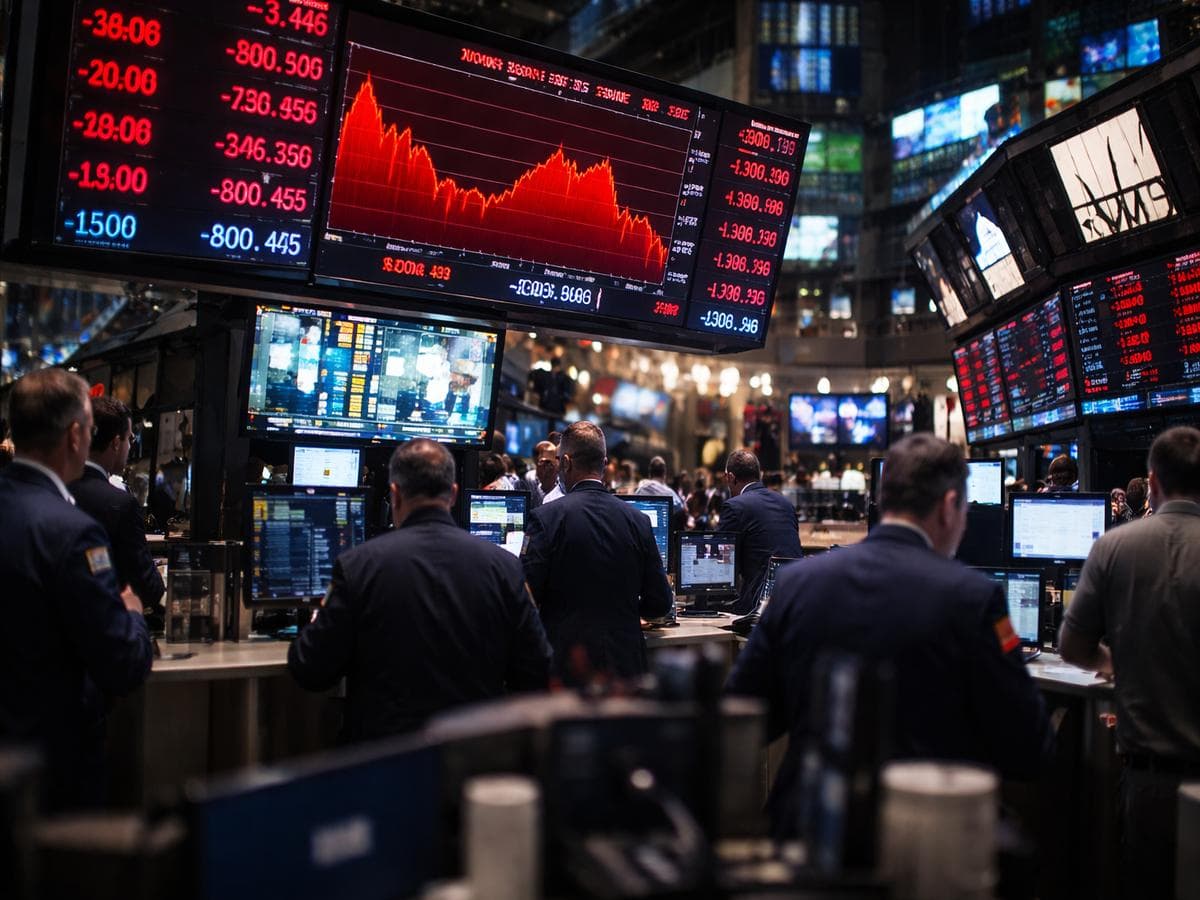
Observing the reactions of traders in Mumbai reveals the reality of economic interdependence in today's world. The market is not merely a venue for commerce; it embodies collective psychology, where the fear of uncertainty can exert a powerful influence. As traders monitor the fluctuating screens, their expressions reflect a mix of vigilance and resolve, underscoring the delicate balance between local and global economic forces.
In the quiet offices of analysts and fund managers, discussions have turned toward resilience. Despite the external pressures, there is a strong belief that the fundamentals of the Indian economy remain robust. The recent market fluctuations are viewed not as a collapse but as a necessary adjustment, a moment to reassess strategies and tighten controls before moving forward.
Historically, Indian markets have demonstrated a remarkable ability to absorb external shocks. This maturity is evident as stakeholders focus on long-term growth, recognizing that the path to progress is rarely linear. The current tremors in the market serve as a reminder to remain grounded, even as global conditions become increasingly volatile.
As we navigate this period of uncertainty, there is hope that global trade dynamics will stabilize. Until then, the emphasis remains on maintaining a steady course and safeguarding the progress achieved thus far. While the markets will continue to experience fluctuations, the resilience of the Indian economy and its stakeholders remains steadfast in the face of distant storms.
In summary, the Indian stock markets faced a notable downturn following the announcement of rising US inflation, which exceeded analyst expectations. This situation has sparked concerns regarding the potential for sustained high interest rates from the US Federal Reserve, leading to increased volatility in emerging markets and a cautious outlook for foreign institutional investment.
Published by Banx Network. This article is part of the Banx decentralized media programme, powered by the BXE token on the XRP Ledger.