A quiet hum, almost imperceptible at first, often precedes a storm. In the digital corridors of finance, that hum has grown into a persistent thrum, especially after the latest pronouncements from the U.S. Securities and Exchange Commission. What strikes me about this moment isn't just the regulatory noise, but the profound uncertainty it casts over an entire asset class, a legal fog that obscures the path forward for innovators and investors alike. It’s a familiar dance, this push and pull between innovation and regulation, but the stakes here feel different, more foundational.
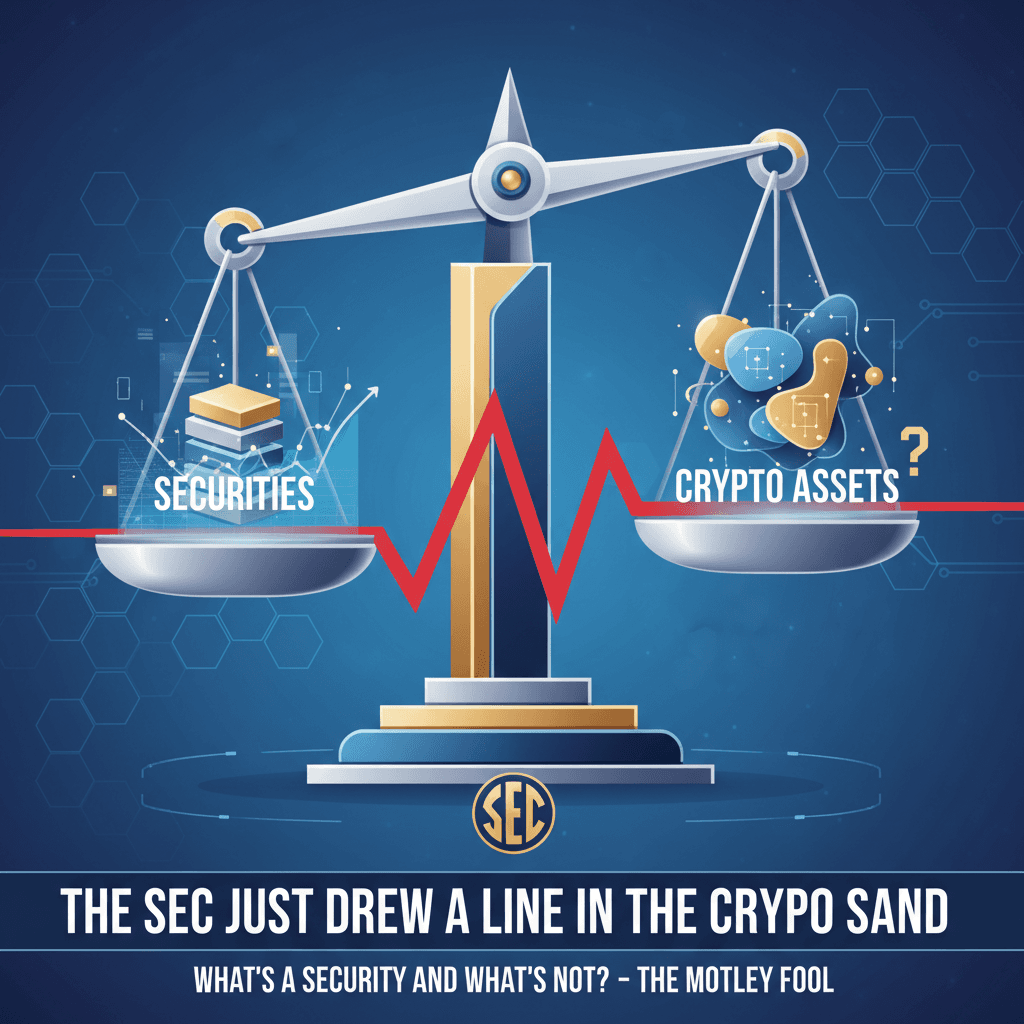
For years, the crypto world has grappled with the ghost of the Howey Test, a decades-old Supreme Court precedent designed for orange groves, not decentralized ledgers. Yet, it remains the SEC's primary lens for classifying digital assets. According to a recent analysis by The Motley Fool, the SEC continues to assert that a significant number of crypto tokens, particularly those launched via initial coin offerings (ICOs) or with strong developmental teams, fall under the purview of securities law. This perspective, often articulated by SEC Chair Gary Gensler, posits that if an asset involves an investment of money in a common enterprise with the expectation of profits to be derived from the efforts of others, it's a security. Look, the numbers don't lie: the SEC has brought enforcement actions against dozens of projects, signaling a clear, if sometimes opaque, line in the sand.
I've watched these cycles unfold for nearly two decades, and the regulatory playbook often begins with broad strokes before refining the details. Gensler, in an interview with Bloomberg in late 2023, reiterated his view that most crypto tokens are securities, emphasizing investor protection as the agency's core mandate. This isn't just about compliance; it's about shaping the very architecture of future finance. The agency’s consistent application of the Howey test, even to assets that have achieved significant decentralization, suggests a deeply entrenched legal philosophy that views many digital assets as inherently investment contracts, regardless of their technological underpinnings. This stance, some argue, stifles the very innovation it purports to protect, forcing projects to navigate a regulatory maze designed for a different era.
But here's what nobody's talking about: the view from outside Washington looks quite different. European regulators, for instance, have adopted more bespoke frameworks like MiCA (Markets in Crypto-Assets), which attempts to categorize digital assets based on their actual function and utility, rather than shoehorning them into existing securities laws. As any Tokyo trader will tell you, a token used for governance in a decentralized autonomous organization (DAO) or as gas for network transactions might function more like a commodity or a utility, not a share in a company. The SEC's approach, some argue, creates a competitive disadvantage for American innovation, pushing talent and capital towards jurisdictions with clearer, more tailored regulations. It's like trying to fit a square peg into a round hole, only the hole is moving and the peg is evolving at warp speed.
Moreover, the sheer volume of digital assets now circulating — CoinDesk reported over 13,000 unique tokens in early 2024 — makes a blanket application of the Howey Test increasingly impractical. How does one apply the 'efforts of others' clause to a fully decentralized protocol where development is community-driven and open-source? The market has a fever, yes, but it's also maturing, with billions in value locked in DeFi protocols that operate without a central issuer. This isn't just a legal debate; it's an existential one for the crypto industry. The lack of a clear legislative mandate from Congress, coupled with the SEC's enforcement-first strategy, leaves many projects in a perpetual state of legal limbo, unable to plan for the future with any certainty. Call me skeptical, but this isn't exactly a recipe for fostering a vibrant digital economy.
Perhaps the real question isn't whether the SEC's current framework is legally sound, but whether it is fit for purpose in an era of rapid technological evolution. Are we asking the right questions about how to foster innovation while protecting investors, or are we simply trying to force new wine into old wineskins? The tension between the SEC's traditional mandate and the decentralized ethos of crypto will continue to define this space. The silence from Congress, the agency’s persistent stance, and the industry's clamor for clarity form a complex tableau. What emerges from this legal fog — a clear path, or a labyrinth of litigation — remains to be seen.
AI Image Disclaimer
Visuals are created with AI tools and are not real photographs.
Source Check Credible sources exist for this article:
Bloomberg Reuters CoinDesk TheMotleyFool Messari
Published by Banx Network. This article is part of the Banx decentralized media programme, powered by the BXE token on the XRP Ledger.