
Key Highlights
- Seals possess unique ear adaptations for pressure regulation during deep dives.
- Recent research reveals insights into evolutionary biology and human health.
- Understanding seals' auditory capabilities can inform conservation efforts.
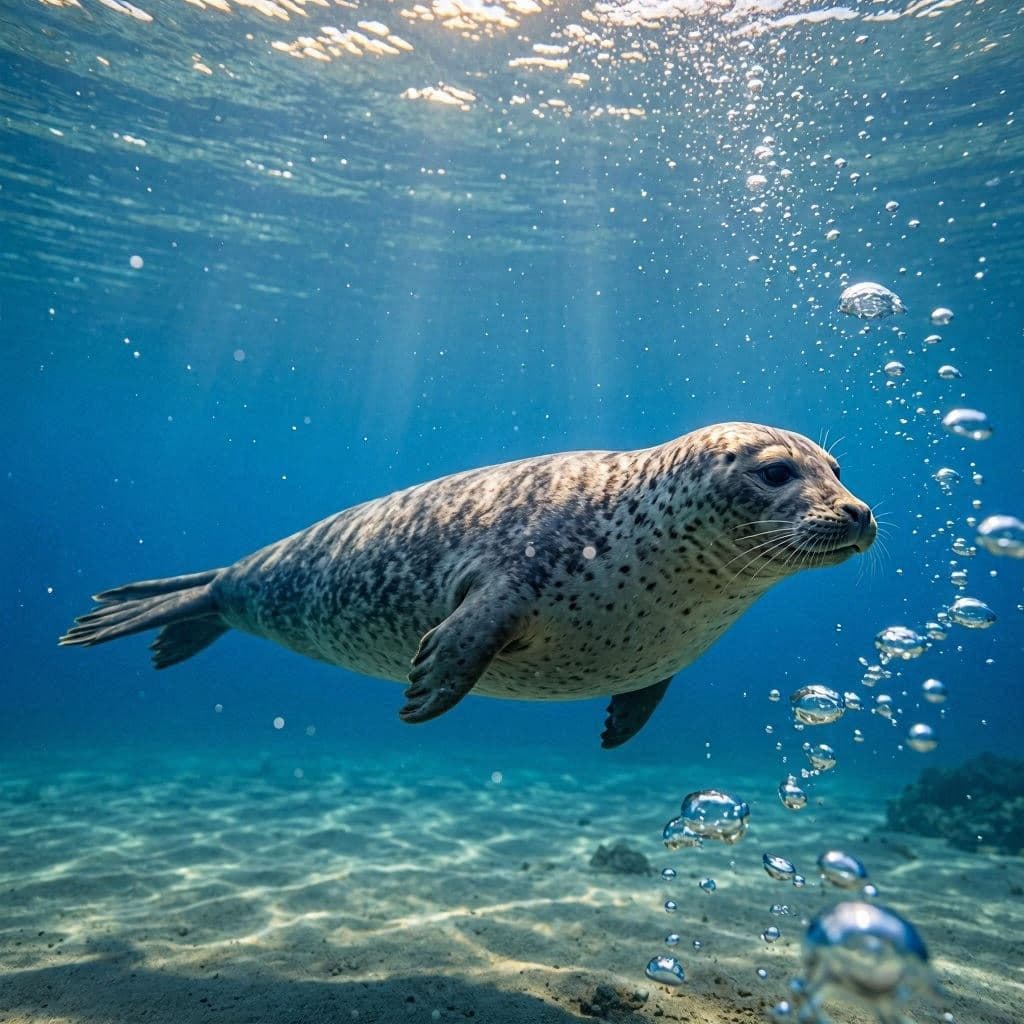
Seals are remarkable marine mammals that have adapted to thrive in the ocean's depths. Recent research has shed light on their unique auditory adaptations, particularly how their ears manage pressure during deep dives. This evolutionary breakthrough is not merely a biological curiosity; it underscores the ingenuity of natural selection and invites us to reflect on the intricate connections between form and function in the animal kingdom.
As master divers, seals can reach depths where the pressure is immense and temperatures are frigid. To survive these extreme conditions, they have developed a range of physiological adaptations, including the ability to slow their heart rates and redirect blood flow. However, their ears play a crucial role in managing the physical stresses associated with diving. The latest findings reveal that seals possess a specialized vascular structure in their middle ear, enabling them to equalize pressure rapidly and protect sensitive tissues from damage.
This adaptation likely evolved millions of years ago as ancestral seals transitioned from land to sea. Fossil evidence and comparative anatomy suggest that changes in ear structure were pivotal during this transition. Rather than creating entirely new structures, evolution modified existing ones, demonstrating its efficiency. This process, known as exaptation, highlights the resourcefulness of life and how traits can serve new functions over time.
For researchers, understanding the mechanisms behind seals' auditory adaptations offers valuable insights into human health. Pressure-related ear injuries are common among divers and aviators, and studying seal physiology could lead to new treatments or preventive measures for conditions like barotrauma. This connection between wildlife biology and human medicine emphasizes that nature often holds solutions to medical challenges, waiting to be uncovered through careful observation.
The social implications of seals' hearing capabilities are also significant. Seals rely on vocalizations to maintain contact with their pups and mates in murky waters. Protecting their hearing is vital for ensuring these communications remain clear. However, disruptions to their acoustic environment, such as noise pollution from shipping, pose threats to their well-being. Understanding their auditory capabilities can help advocate for quieter oceans and promote environmental stewardship.
Evolutionary biology frequently reveals convergent solutions, where unrelated species develop similar traits to address similar challenges. While whales and dolphins have their own adaptations for deep diving, seals provide a unique perspective due to their amphibious lifestyle. Comparing these species enriches our understanding of mammalian evolution and illustrates the diverse paths life can take to achieve success.
The study utilized advanced imaging techniques and detailed anatomical analysis to examine the soft tissues of seal ears. By mapping the blood vessels and muscles involved in pressure regulation, scientists achieved a level of detail previously unattainable, highlighting the importance of technological advancements in scientific discovery. This research opens new avenues for exploring other marine mammals and their adaptations.
Public interest in marine life continues to grow, fueled by documentaries and conservation efforts. Stories like this one help connect people to the wonders of the natural world, fostering a sense of awe and responsibility that encourages support for ocean protection. Education remains a powerful tool for change, inspiring individuals to take action for the preservation of marine ecosystems.
In conclusion, the secret of the seal's ear is a celebration of evolutionary innovation. It serves as a reminder of the complex adaptations that enable life to flourish in challenging environments. As we learn more about these fascinating creatures, we hope to deepen our respect for the ocean and its inhabitants, ensuring their survival for generations to come.
Published by Banx Network. This article is part of the Banx decentralized media programme, powered by the BXE token on the XRP Ledger.



