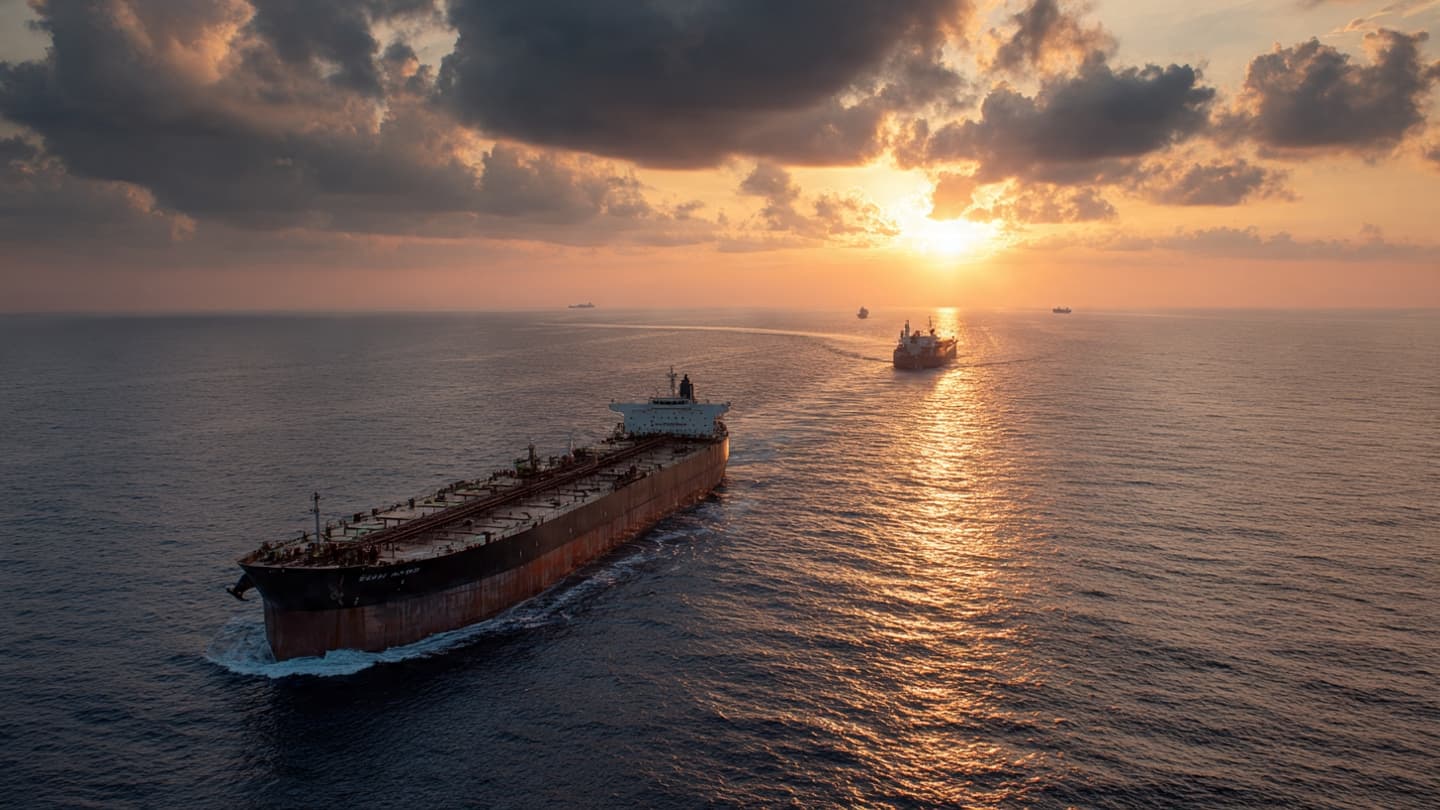
The sea often carries a quiet confidence. Tankers move across familiar shipping lanes, guided by navigation lights that shimmer against the evening tide, while distant ports wait with the expectation that another voyage will arrive as countless others have before. Yet there are moments when the water seems to pause, reflecting not only the sky above but also the uncertainty carried by events unfolding beyond the horizon.
That sense of uncertainty has deepened after Iranian authorities reported explosions involving oil tankers in regional waters, adding another chapter to a period of heightened military tension across the Gulf. At nearly the same time, American officials indicated that air defense resources supporting operations in the region are being consumed at a significant pace, raising questions about the sustainability of defensive capabilities should the confrontation continue.
The developments arrive against the backdrop of an already fragile security environment shaped by missile launches, drone attacks, and increased military deployments. Commercial shipping routes, energy infrastructure, and naval patrols have become closely linked to the broader strategic contest unfolding across the region. Even isolated incidents at sea can quickly attract global attention because they affect both regional stability and international trade.
Iranian officials described the reported tanker explosions as evidence of escalating risks in nearby waters, though details surrounding the incidents remained limited as investigations continued. Independent verification has been difficult amid the complexity of ongoing military activity. Maritime authorities and commercial operators have therefore relied on precautionary measures while assessing navigational safety and potential operational impacts.
Meanwhile, U.S. defense officials have acknowledged that intercepting incoming missiles and drones has placed increasing demands on advanced air defense systems. Modern missile defense relies upon sophisticated interceptors that are costly, technically complex, and produced in limited quantities. Sustained periods of high operational use inevitably place pressure on inventories, logistics, and manufacturing capacity.
Beyond military calculations, commercial shipping companies continue monitoring the Gulf with heightened caution. Insurance premiums, voyage planning, and risk assessments often shift alongside changes in the regional security picture. For global energy markets, confidence in safe maritime transportation remains nearly as important as oil production itself, since uninterrupted shipping allows supply chains to function with greater predictability.
For those living along the Gulf's coastlines, these developments unfold alongside ordinary life. Fishing boats still leave harbors before sunrise, container ships continue approaching major ports, and families gather as evening settles over waterfront cities. Daily routines persist even while distant military decisions influence the atmosphere surrounding one of the world's busiest maritime corridors.
Analysts observe that prolonged periods of confrontation carry consequences extending well beyond immediate military operations. Each incident prompts governments, shipping companies, and international organizations to reassess contingency plans, reinforce defensive measures, and prepare for the possibility that isolated events could develop into broader disruptions affecting regional commerce and global energy markets.
As another night spreads across the Gulf, navigation lights once again trace quiet paths across dark water. They serve as reminders that maritime routes have long connected continents through commerce, cooperation, and exchange. Today those same waters also reflect the delicate balance between security and uncertainty. Whether calm or unsettled, the sea continues carrying both the hopes of peaceful passage and the enduring responsibility of safeguarding one of the world's most vital crossroads.
AI Image Disclaimer
Illustrations for this article were generated using AI to visually represent the topic and should not be interpreted as authentic photographs of the reported events.
Sources
• Reuters
• Associated Press
• U.S. Department of Defense
• Lloyd's List
• International Energy Agency
Published by Banx Network. This article is part of the Banx decentralized media programme, powered by the BXE token on the XRP Ledger.