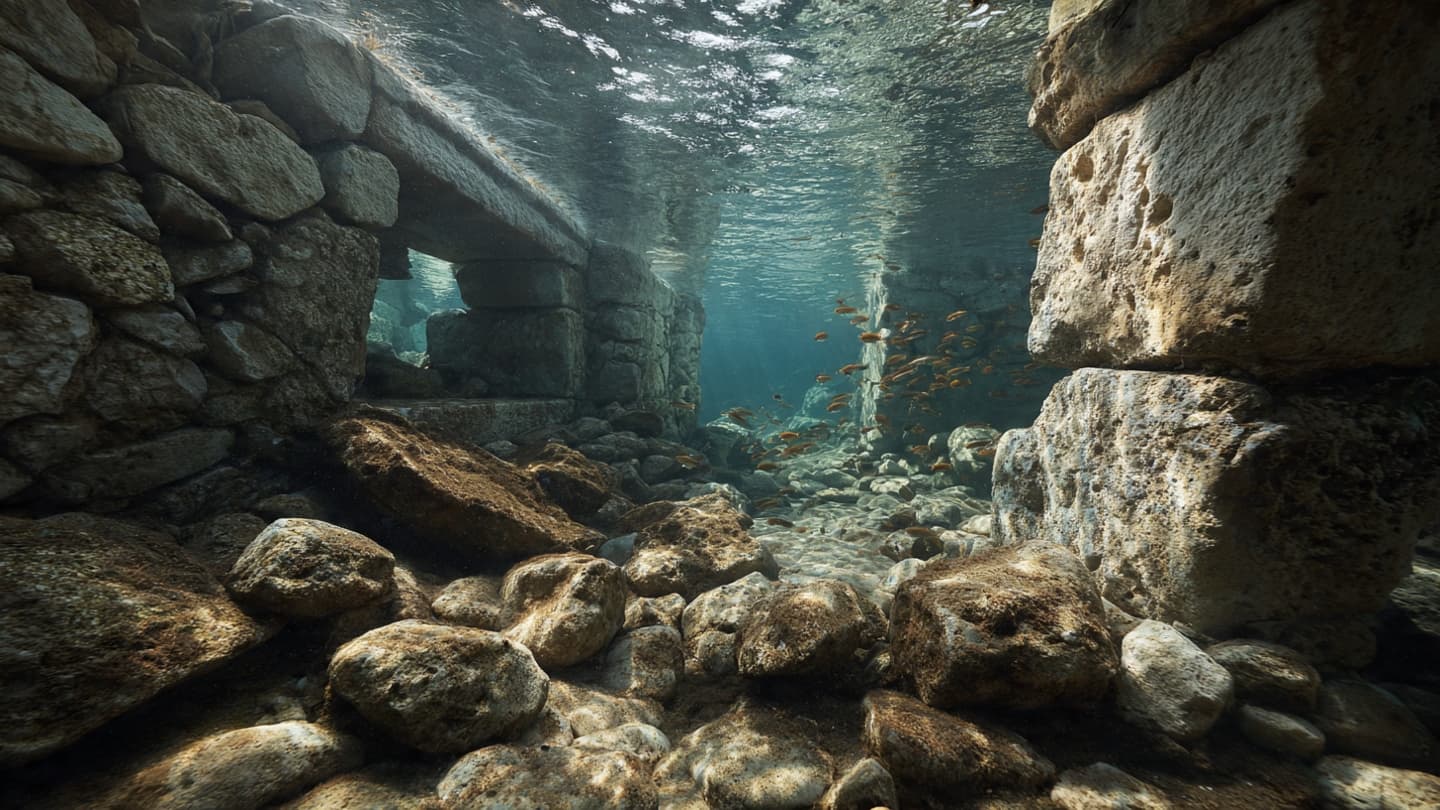
The sea has long been a keeper of stories. Beneath shifting currents and layers of sediment lie traces of journeys, settlements, and civilizations that once thrived along ancient coastlines. Occasionally, technology and persistence allow fragments of those stories to surface once more.
Recent archaeological research has uncovered evidence of an ancient settlement beneath the Mediterranean seabed. The discovery offers researchers a valuable opportunity to study how early communities lived, traded, and adapted to changing environmental conditions thousands of years ago.
Marine archaeologists employed advanced sonar systems, underwater imaging technologies, and remote exploration tools to map the site. These methods revealed structural patterns suggesting the presence of organized human habitation rather than naturally occurring formations.
The Mediterranean region has served as a crossroads of cultures for millennia. Ancient trade networks connected distant communities, facilitating exchanges of goods, knowledge, and traditions that shaped the development of numerous civilizations.
Researchers believe the settlement may have become submerged as sea levels changed over long periods. Geological processes, coastal shifts, and climatic variations have repeatedly transformed shorelines throughout human history, occasionally preserving archaeological sites beneath the water.
Artifacts recovered from similar underwater locations have previously provided insights into agriculture, craftsmanship, architecture, and social organization. Scientists hope that continued investigation of the newly discovered settlement will contribute to a deeper understanding of daily life in the ancient world.
Marine archaeology presents unique challenges. Researchers must contend with water depth, visibility conditions, preservation concerns, and the technical demands of underwater excavation. Nevertheless, advances in exploration technology continue expanding opportunities for discovery.
Historical sites located beneath the sea often remain remarkably well preserved. Sediment layers can protect structures and artifacts from many of the environmental factors that affect land-based archaeological remains.
The discovery also highlights the relationship between environmental change and human settlement patterns. Studying ancient responses to shifting coastlines may provide valuable perspectives on how societies adapted to changing conditions in the past.
For now, archaeologists continue documenting the site while planning future research. Hidden beneath the Mediterranean for centuries, the settlement serves as a reminder that many chapters of human history still await discovery beneath the world's oceans.
AI Image Disclaimer
Illustrations were produced with AI and serve as conceptual depictions.
Source Check Credible sources identified:
Reuters National Geographic Smithsonian Magazine Archaeology Magazine European Association of Archaeologists
Published by Banx Network. This article is part of the Banx decentralized media programme, powered by the BXE token on the XRP Ledger.