
Key Highlights
- Over 500 Rohingya refugees feared dead in maritime tragedy.
- Two boats capsized off Myanmar's coast in late June and July.
- UN agencies call for urgent search-and-rescue efforts and regional cooperation.
The sea, often viewed as a pathway to hope and opportunity, has tragically transformed into a site of despair for many Rohingya refugees. Recent reports indicate that over 500 individuals are feared dead following the capsizing of two boats off the coast of Myanmar. This incident marks one of the deadliest maritime tragedies involving Rohingya refugees in recent years, highlighting the perilous conditions faced by those fleeing conflict and persecution.
According to the United Nations, the two vessels departed from Myanmar's Rakhine State in late June. One boat, carrying approximately 250 people, lost contact shortly after setting sail. The second vessel, believed to have been carrying around 280 passengers, reportedly sank off Myanmar's Ayeyarwady coast on July 8. As authorities work to verify the incidents, the full extent of the casualties remains uncertain.
Most of the individuals on board were Rohingya refugees, many of whom had traveled from overcrowded camps in Cox's Bazar, Bangladesh. They embarked on these dangerous sea crossings in search of safety, stability, and improved living conditions, as ongoing conflict and humanitarian crises continue to plague the region. The desperation driving these journeys underscores the dire circumstances faced by displaced populations.
The UN Refugee Agency (UNHCR) and the International Organization for Migration (IOM) have expressed profound concern over the reports, emphasizing the urgent need for enhanced search-and-rescue operations and greater regional cooperation to safeguard vulnerable individuals undertaking such perilous maritime journeys. They reiterated calls to address the root causes that compel refugees to risk their lives on unsafe routes.
Humanitarian organizations have long warned that the Bay of Bengal and Andaman Sea are among the most treacherous migration routes globally. Factors such as overcrowded vessels, harsh seasonal weather, and limited access to rescue operations have contributed to repeated maritime disasters involving displaced individuals. The recent shipwrecks serve as a stark reminder of the ongoing risks associated with irregular migration in the region.
These tragic events occur against a backdrop of continued instability in Myanmar's Rakhine State and challenging conditions in refugee camps throughout the area. Aid agencies have raised alarms about dwindling humanitarian funding and prolonged displacement, which have left many families with few safe alternatives. This situation has heightened the risks associated with irregular migration, forcing individuals to undertake dangerous journeys across the sea.
As investigations into the incidents continue and casualty figures remain subject to confirmation, the reported disaster has reignited international attention on one of the world's longest-running refugee crises. UN agencies stress that sustained humanitarian assistance, regional collaboration, and protective measures are crucial to mitigating the risks faced by those seeking safety across the sea.
In light of these developments, it is imperative that the international community responds with urgency to prevent further loss of life and to address the humanitarian needs of the Rohingya people. The sea, once a symbol of hope, has become a haunting reminder of the challenges faced by those in search of refuge.
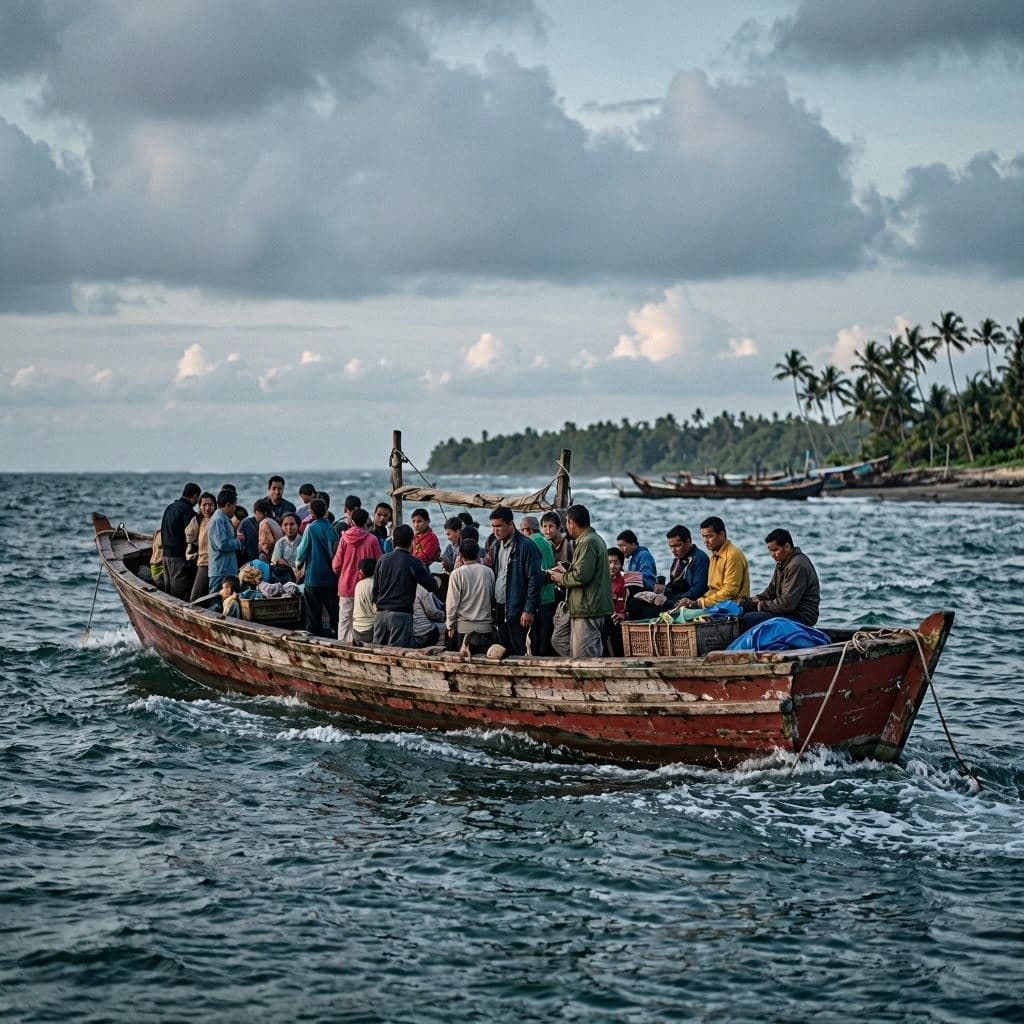
AI Image Disclaimer: The accompanying visuals are AI-generated illustrations intended to represent the reported humanitarian situation and are not authentic photographs from the incident.
Published by Banx Network. This article is part of the Banx decentralized media programme, powered by the BXE token on the XRP Ledger.



